A refined tent interior balances visual depth, tactile comfort, and real-world performance by mixing fabrics intentionally. This guide explains why layering texture matters — how fabric weight, translucency, and acoustic properties change perception — and gives practical steps for choosing and combining materials for weddings, corporate events, and private galas. You’ll see which fabrics work best for ceilings, walls, and accents, how to balance contrast with harmony, and which draping and lighting strategies amplify texture. We also link flooring and furniture choices to fabric schemes, outline event-specific combinations, and cover trends and sustainable options that preserve a luxury look while cutting waste. Throughout, the focus is actionable: technical constraints like flame-retardancy and rigging limits, step-by-step pairing guidance, and testing protocols you can use in mock-ups and material samples. Quick-reference lists, comparison tables, and pairing matrices make decisions faster for planners and designers aiming for elevated tent interiors.
What Are the Key Fabrics and Textures for Luxury Tent Interiors?
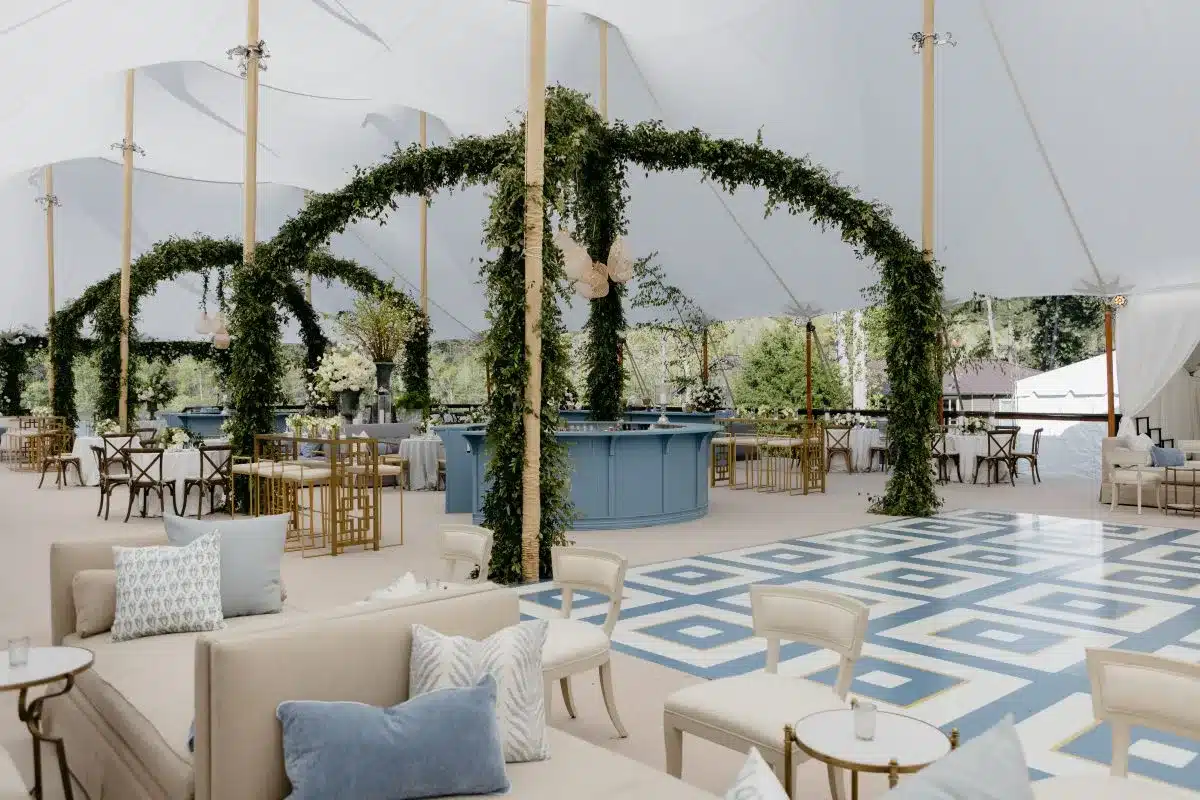
Luxury tent fabrics are chosen for weight, translucency, sheen, and acoustic behavior — and those qualities determine where each material performs best. Sheers such as chiffon and voile create soft ceiling swags that diffuse light and tame harsh shadows. Heavier textiles like velvet and wool offer plush wall surfaces that absorb sound and add perceived warmth. Satin and organza provide selective sheen that reads as richness under directional lighting, while linen and canvas bring tactile, natural anchors that hide seams and ground a palette. Practical limits — flame-retardancy, cleaning, and rigging load — dictate choices for wide spans and windy sites, so designers balance the visual intent with engineering requirements to ensure safety and longevity. With those properties understood, the next step is matching fabrics to the event atmosphere and spatial role.
Which Fabric Types Enhance Tent Interior Ambiance?
Chiffon, organza, velvet, linen, and satin each create distinct moods when deployed thoughtfully. The right pick depends on the desired feeling, photographic priorities, and acoustic needs. For romantic weddings, sheer chiffons and voiles form luminous ceilings that soften daylight and camera flash, giving flattering highlights to portraits and gowns. Corporate or brand-forward events typically use matte linens and wool blends as restrained backdrops that reduce glare on signage and screens. Velvet shines in lounge areas where tactile luxury and sound absorption matter — ideal for VIP seating or intimate dinners. Start with the event goal — romance, drama, or quiet luxury — then test material samples under your planned lighting to confirm the effect.
Fabrics trade translucency for opacity, and that trade affects light diffusion, color saturation, and perceived depth. High-sheen satin reflects directional light and intensifies color, making jewel tones pop but also exposing seams and hardware. Matte linens subdue color and highlight weave, offering an artisanal, forgiving backdrop. Coarser natural fibers can make a large tent feel cozier; very fine, even fabrics visually enlarge space by smoothing detail. Factor these optical behaviors alongside maintenance — cleaning, wrinkle resistance, and flame-treatment compatibility — so selections meet both aesthetic and operational needs.
How Can You Effectively Mix Textures and Fabrics for Depth and Harmony?
Mixing textures well starts with a clear hierarchy: one dominant texture, one supporting texture, and one accent. Each should have a defined spatial role to create visual rhythm across the tent. Dominant materials — typically ceiling spans or large wall panels — set the room’s character and must suit the scale and performance needs. Supporting textures add contrast without competing, and accent textures highlight focal points like the stage, lounge clusters, or arch. Balance contrast by pairing opposite weights (for example, chiffon ceiling with velvet walls) while keeping tones unified so the palette reads cohesive. Always test: request swatches, build small mock-ups under event lighting, and check how color and sheen shift when fabrics are backlit. That iterative approach minimizes surprises on install day.
What Are the Principles of Balancing Contrast and Harmony in Tent Draping?
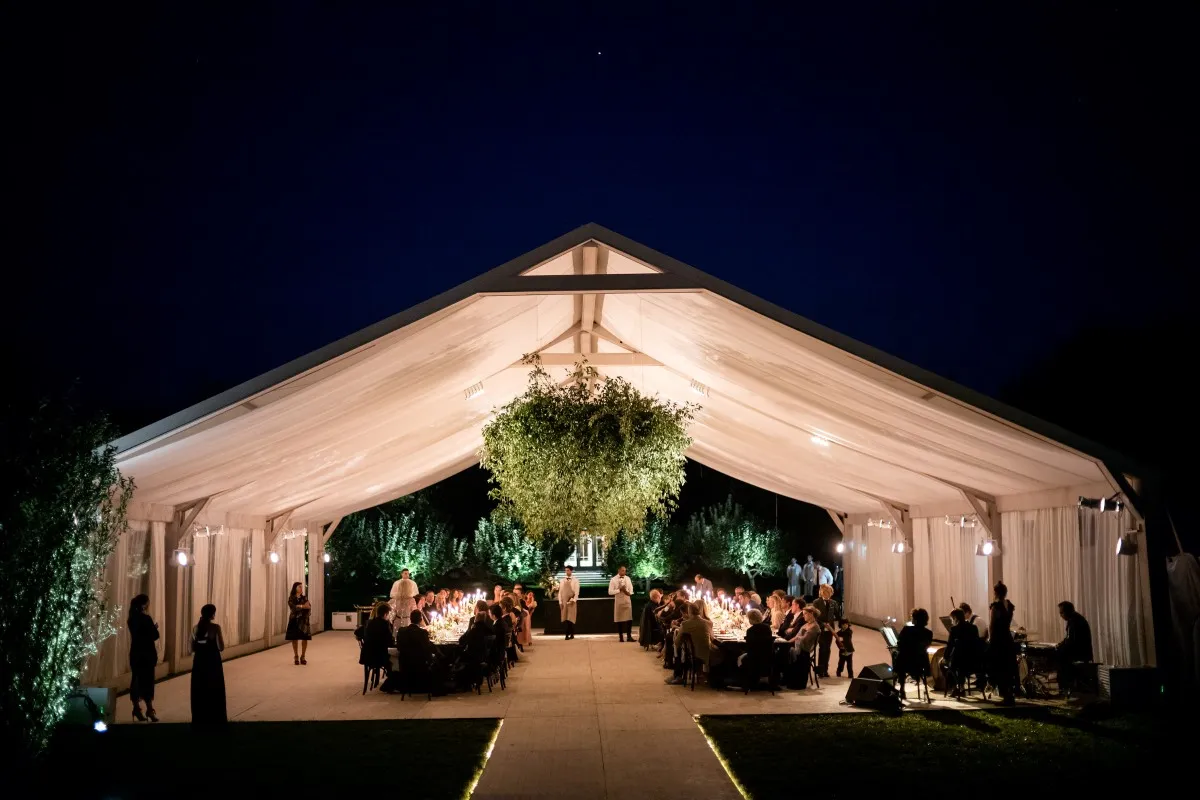
Designers use a simple checklist to balance contrast and harmony: set texture hierarchy, anchor with neutral solids, repeat key textural cues across zones, and keep color temperature consistent across materials. Choose a dominant fabric for large masses, then introduce an opposing supporting fabric to add depth — airy chiffons overhead with a linen perimeter and velvet seating accents is a common, reliable formula. Repeat a trim or tieback fabric across swags and pole wraps to unify different textures. Avoid stacking multiple high-sheen elements that compete for attention; instead, reserve sheen as a deliberate accent to draw focus to key moments while preserving an overall sense of restraint.
To make these principles actionable, use a testing protocol before final selection: assemble three-swatch groupings, view them under planned lighting, and photograph at different exposures. This reveals how sheen, translucency, and nap respond to event lighting and anticipates camera behavior — essential for weddings and editorial shoots. Testing also informs structural choices, such as whether to add lining to protect delicate sheers from wind or to improve opacity for projection needs, ensuring the chosen mix performs both visually and technically.
Practical pairing recommendations turn principles into ready combinations; the table below maps recommended pairings, explains the rationale, and notes suitable event types to speed specification during planning.
These pairings show how combining translucency and weight creates cohesive interiors tailored to specific event types and performance needs.
What Innovative Draping Techniques Elevate Tent Interior Design?
Thoughtful draping turns a tent into an immersive space by manipulating volume, direction, and layered texture. Good techniques account for rigging, fabric weight, and lighting. Ceiling swags add sculptural volume, conceal mechanicals, and distribute fabric rhythmically across the roof. Layered wall treatments pair opaque anchors with translucent overlays to tune sightlines and photographic depth. Pole wraps and cascading panels provide vertical texture, framing key moments like dance floors or altars, while modular layered draping creates zones without hard partitions. Every technique requires technical coordination — placement of rigging points, wind-load calculations, and fabric weight limits — to execute safely and keep the intended look consistent across multi-day or reconfigurable events.
Which Draping Styles Create Luxurious and Inviting Tent Spaces?
Reliable draping styles for luxury results include full ceiling swags for dramatic volume, layered wall panels for depth and acoustic control, pole wraps for vertical texture, and tiered underlays to soften transitions from structure to finish. Anchored ceiling swags convert a tall tent into a softer, cloud-like interior that diffuses overhead lighting and produces flattering highlights; avoid heavy fabrics overhead unless structural support is confirmed. Layered walls — an opaque base with a semi-sheer overlay — let designers dial privacy and sound while adding translucency near entrances and lounges. Pole wraps finish structural elements and create vertical rhythm that complements horizontal swags.
Integrate draping into the full production by coordinating services such as custom flooring, elevated platforms, glass walls, climate control, and power. For example, raised platforms paired with layered draping create premium seating where fabric, floor height, and lighting combine to form distinct guest experiences. Glass walls with targeted drapes can frame outdoor views while keeping acoustic privacy. These integrated solutions show draping as one part of a broader design and technical ecosystem that produces refined tent interiors. Read more in Can I Customize the Tent Design to Fit My Event Theme.
Lighting is essential to draping: direction, color temperature, and intensity redefine texture and sheen. Design lighting alongside draping so fabrics perform under both daylight and artificial scenarios. Warm uplighting deepens velvet and enriches jewel tones; cooler washes clarify sheer translucency and emphasize organza edges. Directional pin spots reveal weave and nap on textured fabrics, creating perceived depth, while diffuse chandeliers provide even ambient light that flatters matte linens. A layered lighting plan — ambient, accent, and functional — lets the same fabric support multiple moods throughout an event. You may also find Creative Event Lighting Design Ideas for Tents helpful.
- Ceiling swags: Sculptural overhead drama that softens and spreads light across the space.
- Layered wall panels: Adjustable opacity, depth, and improved acoustics for dining and ceremony areas.
- Pole wraps: Refine structural elements, add vertical texture, and guide circulation.
- Tiered underlays: Smooth transitions from floor to drape while supporting thermal and acoustic performance.
Combined thoughtfully, these techniques lift a tent interior from simple shelter to a curated environment that supports mood, sightlines, and logistics. Read more in Explore the Latest Luxury Tent Interior Design Trends Today.
How Do Flooring and Furniture Choices Complement Tent Fabric Combinations?
Flooring and furniture serve as tactile anchors that either reinforce or gently contrast fabric schemes. Choose them to follow your texture hierarchy and acoustic goals. Hardwood or engineered floors read formal and provide consistent, camera-friendly surfaces for dancing and staging; rugs and carpet tiles add warmth, improve acoustics, and define intimate zones. Furniture finishes — metallic accents, matte wood, or upholstered velvet — should reference accent textures for cohesion: brass pairs well with satin highlights, textured wood complements linen backdrops. Practical constraints like load-bearing for raised platforms, HVAC routing for climate-controlled tents, and installation logistics will often determine which flooring systems and furniture configurations are feasible on site.
What Flooring Options Best Support Refined Tent Interiors?
Choose flooring based on event type and performance needs: floating hardwood or engineered panels for formal galas and weddings; carpet tiles for modular acoustic control and easy replacement; raised platforms for stages and VIPs; and area rugs to define lounges. Each option has tradeoffs: hardwood feels premium and photographs well but needs a stable substructure and moisture control. Carpet tiles improve speech intelligibility and are modular for heavy traffic but can look less refined unless layered with rugs. For outdoor ceremonies, interlocking raised flooring keeps guests level and hides wiring and heating without disturbing the finish. Weigh these tradeoffs so flooring complements fabric treatments and remains operationally practical.
How Should Furniture Be Selected to Match Tent Textures and Fabrics?
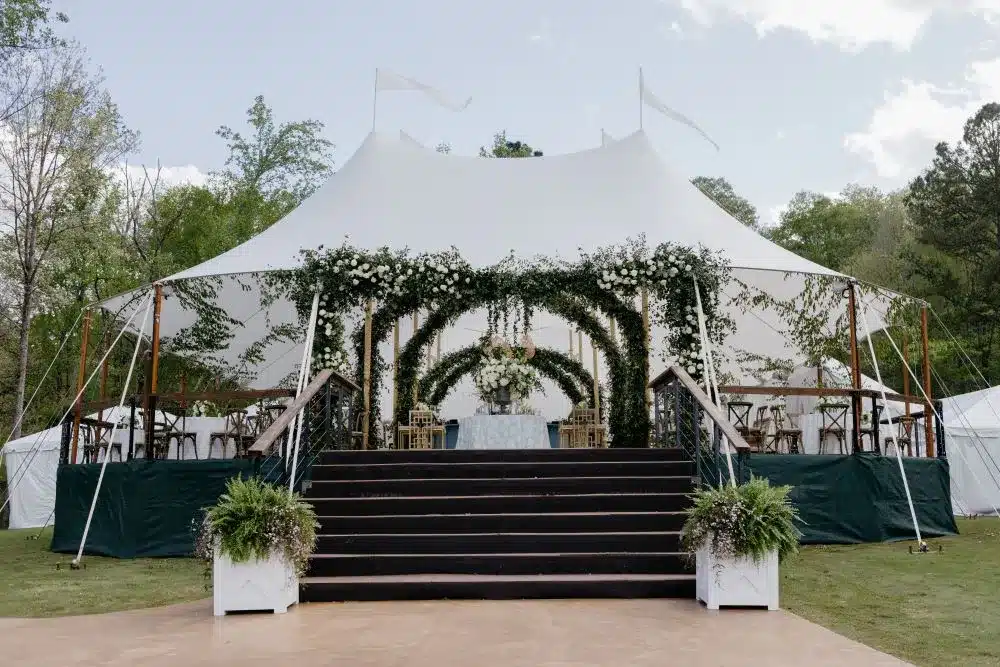
Pick furniture by scale, finish, and upholstery rules: match the piece’s visual weight to the surrounding fabrics, echo accent textures selectively, and prioritize durable upholstery for repeat corporate use. Under chiffon ceilings and linen walls, choose streamlined seating in matte fabrics that keep attention upward. Where velvet walls anchor a lounge, select plush upholstery and low-sheen wood to reinforce intimacy. Consider ergonomics and circulation so seating supports flow and sightlines, and specify cleanable fabrics to reduce mid-event touch-ups. These choices close the loop between ceiling, wall, floor, and furnishings.
- Formal weddings: Hardwood floors, velvet lounge furniture, and chiffon ceilings for ethereal photography and warmth.
- Corporate galas: Engineered flooring, linen drapes, and tailored upholstered seating for readability and brand alignment.
- Private parties: Layered rugs, modular seating, and mixed draping to create intimate, flexible zones.
How Are Fabric and Texture Combinations Tailored for Different Event Types?
Tailoring fabric mixes means aligning aesthetic goals with practical priorities. Weddings focus on photographic softness and comfort; corporate events prioritize legibility and brand consistency; private parties welcome playful textures and experiential layering. For weddings, designers favor sheer overheads, warm uplighting, and plush seating to flatter photography and support conversation. Corporate setups use neutral, low-sheen backdrops that work with projection and branded elements, adding satin or organza sparingly for logo moments. Private events allow bolder textures and color pops to create memorable, photo-ready vignettes. Start with the event brief, then test materials in situ to confirm performance.
What Fabric Mixes Create Romantic Wedding Tent Interiors?
Romantic wedding schemes often pair sheer ceiling swags with soft uplighting, satin aisle runners, and velvet lounge pockets to balance airiness and intimacy. A typical configuration uses chiffon or voile overhead for gentle diffusion, satin runners or table accents for subtle sheen, and velvet or plush upholstery in lounge zones to reduce noise and invite lingering. Palettes favor warm neutrals, blush, and muted jewel accents that translate well on camera. Designers frequently add underlays or linings to control translucency and privacy, ensuring smooth transitions from daylight ceremony to candlelit reception.
How Do Corporate Event Tent Fabrics Reflect Sophistication and Brand Identity?
Corporate clients use fabric as a backdrop for messaging: neutral, durable drapes create a clean canvas, with targeted color or texture used for logo moments and stage backdrops. Flame-retardant linens and wool blends work well for repeat use and transport, maintaining a consistent look across venues. Accent fabrics — satin highlights, organza overlays, or textured trims — introduce brand color without impairing legibility on screens; keep sheen low near projection surfaces to avoid glare. The result is a sophisticated environment that reads clearly in presentations, photographs, and attendee experience.
Frequently Asked Questions
What are the benefits of using eco-friendly fabrics in tent interiors?
Eco-friendly fabrics such as organic linen and recycled polyester reduce environmental impact while delivering premium looks and usable performance. Organic linen offers breathability and a tactile, natural surface; recycled polyester brings strength, cost-efficiency, and compatibility with flame treatments. Choosing sustainable options helps meet client values, supports quieter event footprints, and can improve the long-term durability of a rental inventory when selected and cared for correctly. For more detail, see our article Discover Beautiful Decorative Options for Event Tents.
How can lighting enhance the effects of fabric textures in a tent?
Lighting dramatically changes how fabric reads. Warm uplighting deepens velvet and enriches jewel tones; cool washes clarify sheer translucency and define organza edges. Directional pin spots reveal weave and nap to add perceived depth, while diffuse chandeliers create flattering, even light for matte linens. Designing lighting at the same time as the draping plan ensures fabrics perform as intended across daylight and evening conditions.
What are some common mistakes to avoid when mixing fabrics in tent design?
Common missteps include using too many competing textures or colors, mismatching fabric weights that strain rigging or look unbalanced, and failing to test combinations under event lighting. Avoiding these requires a clear texture hierarchy, selective repetition of cues across the space, and pre-install testing of swatches and mock-ups to confirm visual and structural performance.
How do you ensure that fabric choices are suitable for outdoor events?
For outdoor use, prioritize weather resistance, flame-retardancy, and ease of maintenance. Treated polyester and canvas are good for exposed sites; always confirm flame-treatment certificates and consider wind load when choosing delicate sheers. Test fabrics in the conditions they’ll face — light, temperature, and moisture — and plan for practical needs like cleaning and storage.
What role does acoustic performance play in fabric selection for tent interiors?
Acoustic performance matters where speech clarity and ambiance are priorities. Heavy fabrics such as velvet and wool blends absorb sound and reduce reverberation, improving conversational comfort in dining or presentation areas. Lighter sheers reflect sound and may require added acoustic solutions. Consider fabric choice as part of a broader acoustic strategy that includes flooring, rugs, and suspended treatments. You may also find Creating Comfortable Guest Arrival Areas for Fall Events helpful.
How can planners effectively test fabric combinations before an event?
Gather swatches, build three-swatch groupings, and view them under the planned lighting. Photograph groupings at multiple exposures and from different distances to see how sheen, translucency, and nap behave. Assemble small mock-ups if possible to check drape, weight, and wind behavior. This iterative testing reveals both visual and technical issues before installation day.
Conclusion
Thoughtful mixing of textures and fabrics elevates tent interiors visually and functionally — improving acoustics, comfort, and photographic results. Understanding material properties and testing combinations under real conditions lets planners create cohesive, inviting spaces tailored to each event. Embracing sustainable materials and repeatable design strategies keeps interiors elegant and responsible. For hands-on guidance and turnkey execution, Skyline Tent Company can help specify fabrics, coordinate technical services, and deliver an install plan that meets both design and performance goals. For inspiration from past installs, browse our tent gallery.