

Hosting a luxury backyard event is about more than décor and guest lists, it’s about creating a refined, fully functional environment that feels intentional, comfortable, and seamless from start to finish. Whether you’re planning an elegant dinner party, a milestone celebration, or an upscale private gathering, the foundation of a successful outdoor event lies in professional-grade tenting and thoughtfully selected rentals.
At Skyline Tent Company, backyard events are approached with the same level of precision and expertise as large-scale venues. The right tent defines the space, establishes flow, and protects guests from unpredictable weather while elevating the overall aesthetic. When paired with proper flooring, lighting, climate control, and layout planning, a backyard can be transformed into a polished event setting that rivals traditional venues.
This guide outlines the essential rentals and planning considerations needed to execute a high-end backyard event with confidence. From selecting the right tent style to coordinating infrastructure and logistics, these insights help ensure your outdoor gathering is not only beautiful, but also comfortable, well-organized, and professionally executed.
What Are the Must-Have Rentals for a Successful Backyard Event?

A successful backyard event begins with professional-grade rentals that balance form and function. High-quality event infrastructure not only enhances the visual appeal of the space but also ensures guests remain comfortable and the event flows smoothly from arrival to close. Rather than selecting items individually, experienced hosts focus on creating a cohesive environment built around structure, layout, and comfort.
- Tents: The tent serves as the foundation of the event, defining the footprint, protecting guests from the elements, and establishing the overall tone. A properly selected and installed tent transforms a backyard into a purposeful venue while allowing flexibility in layout and design.
- Seating: Comfortable, well-spaced seating encourages guests to relax and stay engaged. Chair and bench selections should align with the event style while supporting dining, conversation, and movement throughout the space.
- Tables: Tables anchor functional zones for dining, cocktails, and displays. Thoughtful sizing and placement ensure catering operations run efficiently while maintaining a clean, organized layout.
- Lighting: Lighting is essential for both ambiance and safety. Well-planned lighting highlights key areas, guides guests through the space, and creates a warm, inviting atmosphere as daylight fades.
- Climate Control: Temperature management plays a critical role in guest comfort. Fans or heaters, properly sized for the tented space, help maintain consistent conditions regardless of weather changes.
Which Tent Types Best Suit Luxury Backyard Parties?
Selecting the right tent style is a key design and logistical decision. The ideal tent balances aesthetics, guest experience, and site conditions while supporting the scale and flow of the event.
- Sailcloth Tents: Sailcloth tents feature soft, translucent fabric and graceful silhouettes that allow natural light to filter through the canopy. Their warm, romantic appearance makes them especially well-suited for garden parties, intimate celebrations, and evening events with elegant lighting.
- Century Tents: Century tents are defined by their high peaks and clean architectural lines. They provide a sophisticated backdrop for formal dinners, receptions, and dancing, and can be easily enclosed with sidewalls for added weather protection without compromising style.
- Frame Tents: Frame tents offer unobstructed interiors and flexibility for tighter spaces or mixed surfaces, making them a practical choice for many backyard layouts.
- Pole Tents: Pole tents deliver a classic, peaked look and work best in open grass settings where staking and drainage conditions are ideal.
- Engineered Structures: For larger gatherings or events with heightened weather sensitivity, engineered tent structures provide maximum durability and performance. These systems are designed to withstand changing conditions while accommodating complex layouts, production needs, and extended event durations.
What Essential Equipment Completes Your Outdoor Event Setup?
Beyond the tent itself, supporting equipment ensures the event remains comfortable, functional, and operational from start to finish.
- Climate Control Solutions: Portable heaters and fans help regulate temperature within the tented space, improving comfort during cooler evenings or warmer afternoons. Proper placement and sizing ensure even airflow without disrupting the event layout.
- Event Lighting: Lighting selections such as string lights, chandeliers, and uplighting add visual depth while supporting safe movement throughout the space. Layered lighting enhances ambiance and transitions the event seamlessly from day to night.
- Power and Electrical Support: Reliable power is essential for lighting, sound, catering equipment, and other technical needs. Generators or temporary power hookups should be planned alongside the tent layout to ensure consistent performance and discreet integration.
How to Choose the Right Tent for Your Backyard Entertainment Rental
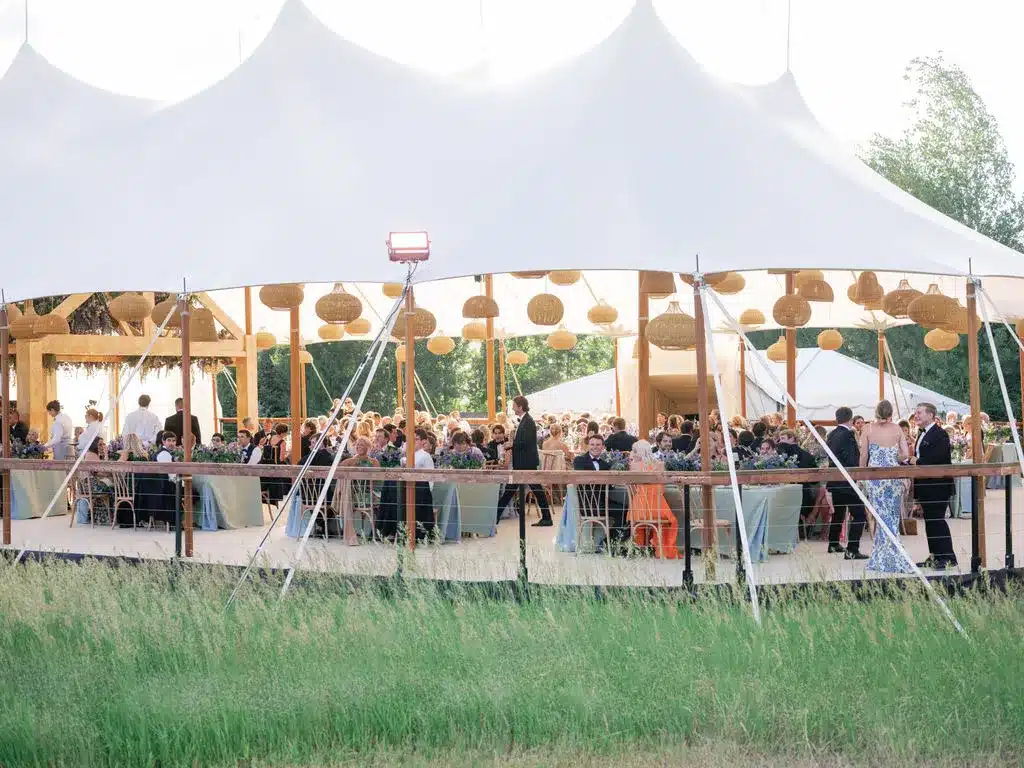
Selecting the right tent is one of the most important decisions in backyard event planning. The tent sets the scale of the event, defines how guests move through the space, and determines how well the environment performs throughout the day and evening. A thoughtful tent selection balances aesthetics with practical considerations such as guest comfort, layout requirements, and weather readiness.
What Are the Benefits of Sailcloth, Century, and Engineered Tents?
Each tent style offers distinct advantages depending on the scale and tone of the event.
- Sailcloth Tents: Sailcloth tents are known for their soft, translucent canopies and warm, natural glow. They photograph beautifully and create an inviting atmosphere, making them ideal for intimate celebrations, garden parties, and elegant evening gatherings.
- Century Tents: Century tents feature high peaks and clean architectural lines that suit formal dining, dancing, and structured layouts. Their height and shape provide a refined backdrop that can be easily customized with lighting, draping, and sidewalls.
- Engineered Tent Structures: Engineered structures offer maximum durability and interior flexibility. Designed to perform in uncertain weather conditions, these tents accommodate larger guest counts, production needs, and complex layouts while maintaining a polished, venue-like feel.
How to Match Tent Size and Style to Your Event Needs
Proper sizing and styling ensure the tent supports both comfort and flow. Several key factors guide this process:
- Guest Count: Plan approximately 10–12 square feet per seated guest, with additional space for dining, bars, entertainment, and circulation. Accurate sizing prevents overcrowding and supports a relaxed guest experience.
- Venue Layout: Careful measurement of the backyard is essential. Mapping pathways, service access, and sightlines ensures the tent fits seamlessly within the space while maintaining safe, efficient movement for guests and vendors.
- Event Theme and Atmosphere: The tent style should reflect the event’s tone. Sailcloth tents suit relaxed elegance and natural settings, while century tents complement more formal or structured designs. Engineered structures are ideal when performance and versatility are top priorities.
What Amenities Enhance Comfort and Ambiance in Backyard Events?
Thoughtfully selected amenities play a crucial role in transforming a backyard into a refined event environment. Beyond aesthetics, these elements contribute to guest comfort, safety, and the overall flow of the experience. When planned alongside the tent and layout, amenities feel intentional and integrated rather than supplemental.
At Skyline Tent Company, comfort and ambiance are achieved through infrastructure decisions that support both form and function, ensuring the space remains welcoming from arrival through the final moments of the event.
How Does Climate Control Improve Guest Experience?
Temperature management is essential for maintaining a comfortable atmosphere throughout an outdoor event. Portable fans help circulate air during warmer months, while heaters provide consistent warmth during cooler evenings or transitional seasons.
Properly sized and strategically placed climate control equipment ensures even coverage without disrupting the event layout. When guests remain comfortable, they stay engaged longer, move freely throughout the space, and enjoy the event without distraction.
Why Are Custom Flooring and Elegant Lighting Important?
Custom flooring and professional lighting elevate both the look and functionality of a backyard event, creating a polished, venue-like setting.
- Custom Flooring: Event flooring provides a level, finished surface that improves stability and protects footwear, décor, and equipment. Flooring also helps unify the space visually while improving accessibility and comfort, particularly on grass or uneven ground.
- Elegant Lighting: Lighting defines the atmosphere as daylight fades. Well-designed lighting plans highlight dining areas, pathways, and focal points such as the dance floor, while enhancing safety and guiding guest movement. Layered lighting creates warmth and depth, transforming the backyard into an inviting evening environment.
What Are the Key Steps in Planning and Executing a Backyard Entertainment Rental?

Successful backyard events are the result of thoughtful coordination between design and logistics. Planning these elements together ensures the space functions smoothly while maintaining a polished, intentional look. From site evaluation to installation timing, a structured approach allows each component of the event to work in harmony. We cover this further in Evaluate Site Logistics for a Flawless Outdoor Event Setup.
Partnering with an experienced tent and rental provider early in the process helps streamline decisions, identify potential challenges, and ensure the backyard is properly prepared to host guests comfortably and safely.
How to Assess Your Site and Address Permit Requirements
Before finalizing rentals or layouts, the event site should be carefully evaluated to confirm feasibility and compliance. Read more in Complete Guide to Your Event Tent Rental Checklist.
- Site Evaluation Considerations: A thorough site assessment includes reviewing usable square footage, surface conditions, and elevation changes. Delivery access, installation space, and emergency vehicle clearance should be confirmed in advance, along with the removal or accommodation of obstacles such as trees, fencing, or landscaping features.
- Permit Requirements in Charlottesville and Albemarle County: Depending on the size and scope of the event, local regulations may require permits for large tents, amplified sound, or sizable gatherings. Requirements can vary by location, so it’s important to confirm guidelines with the City of Charlottesville or Albemarle County well ahead of the event date.
- Logistics and Site Flow Planning: Logistical planning should account for guest arrival and departure, parking availability, restroom access, and waste management. Coordinating these elements from setup through teardown helps ensure the event runs efficiently without disrupting the surrounding property.
What Is the Ultimate Step-by-Step Backyard Event Rental Checklist?
A clear planning sequence keeps the process organized and reduces last-minute adjustments. This framework supports both design vision and operational efficiency. You may also find Essential Event Planning Checklist for Tent Rentals helpful.
- Step 1: Define the Event Vision
Clarify the purpose, style, and overall tone of the event. This guides tent selection, layout, and rental decisions.
- Step 2: Finalize the Guest Count
Confirming attendance early allows for accurate sizing of the tent, seating, and supporting infrastructure.
- Step 3: Select Core Rentals
Reserve the tent, seating, tables, lighting, flooring, and climate control needed to support both comfort and functionality.
- Step 4: Design the Layout
Map key zones such as dining, bar areas, entertainment, and circulation paths to ensure smooth guest flow.
- Step 5: Confirm Logistics and Timing
Finalize delivery schedules, installation timelines, and coordination with other vendors to ensure a seamless setup.
- Step 6: Installation and Setup
Professional installation ensures all elements are placed correctly, safely, and according to the approved plan.
- Step 7: Enjoy the Event
With planning and logistics handled, hosts can focus on welcoming guests and enjoying the experience. For more detail, see our article Outdoor vs Indoor Event Planning: A Comprehensive Checklist.
Core Rental Elements and Their Benefits
Frequently Asked Questions
What is the best time of year to host a backyard event?
Late spring and early fall are often ideal for milder temperatures and lower rain risk. Summer can work with shade and cooling; cool seasons benefit from heaters and layered seating. Always monitor forecasts and have contingencies.
What are some creative themes for backyard events?
Themes range from garden parties with florals to rustic barn elements or a tropical luau. For formal evenings, consider a black-tie dinner under lights; match décor to the season for cohesion.
How do I handle unexpected weather changes during my event?
Reserve a tent or sidewalls, monitor forecasts, and communicate changes. Keep blankets, heaters, fans, or shade on standby and design a flexible layout for quick adjustments.
What are the best ways to entertain guests at a backyard event?
Mix live music or a DJ with interactive elements like photo booths, food stations, or lawn games. Curated experiences, tastings or live cooking, add memorable moments. Answers to common rental questions are in our tent rental FAQs.
How can I ensure the safety of my guests during the event?
Survey for hazards and address them, provide clear lighting on paths, manage alcohol service responsibly, keep a first aid kit accessible, and know nearby medical resources. When you are ready to plan your tent, request a quote from the Skyline team.
Conclusion
Luxury backyard events are attainable with thoughtful planning and the right rentals. Prioritize a tent that suits your guest list and style, invest in comfort-focused amenities, and follow a clear checklist. Partnering with experienced professionals helps you enjoy the event and your guests. Explore rental options with Skyline Tent Company to bring your vision to life. Read more in Backyard Event Tent Setup Checklist for Perfect Parties.