

Backyard events feel personal, but they come with planning challenges that traditional venues already solve for you. Uneven ground, limited power access, unpredictable weather, and tight setup windows can all create stress if they’re overlooked. A tent checklist helps you think through those details early, so nothing gets missed when event day arrives.
Whether you’re hosting a casual gathering or a polished celebration, having a clear plan ensures your tent is installed safely, looks intentional, and supports guest comfort from start to finish. This checklist is designed to guide homeowners, hosts, and planners through each phase of the process, from early decisions to final setup, so your backyard event runs smoothly and feels effortless.
Why Put a Tent Up in the Backyard? Key Benefits to Consider
A tent gives you control over weather, space, and atmosphere. It protects guests from sun or rain, creates a defined event area, and makes decorating simpler. With the right tent, your backyard transforms into a reliable, inviting venue for any celebration.
What Practical Benefits Do Event Tents Bring?
- Weather protection: Keeps rain, wind, and strong sun from interrupting the party.
- Polished look: Different tent styles lift the visual feel of your event, simple to elegant.
- Guest comfort: Easier to control temperature, lighting, and overall comfort under a covered space.
These practical advantages make tents a smart choice for outdoor gatherings, small or large.
How Do Shelter and Ambiance Improve Outdoor Celebrations?
Having a shelter removes the guessing game around the weather and lets you focus on the party itself. A well-dressed tent also sets the mood, soft lighting and thoughtful decor can turn a plain backyard into a memorable venue. Guests notice comfort and details; both boost enjoyment and create lasting impressions.
Even modest touches, string lights, linens, or a focal floral arrangement, can change a simple canopy into a standout setting.
Picking the Right Tent for Your Backyard Gathering
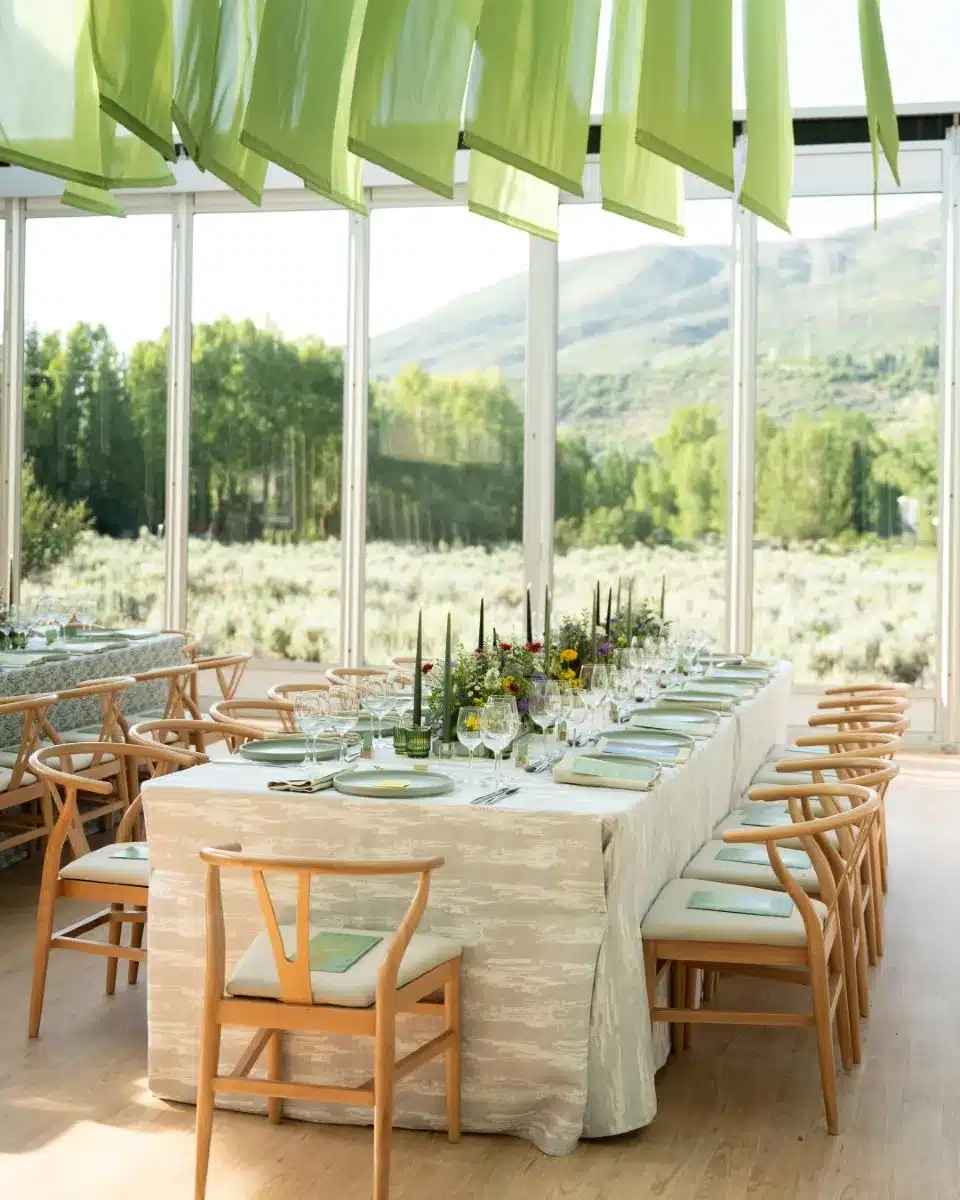
The right tent choice depends on your guest count, event type, and overall vision. Each tent style serves a different purpose, so understanding the options helps you select a structure that fits both your layout and your property. A well-matched tent supports guest flow, enhances comfort, and reinforces the atmosphere you want to create.
How Do Sailcloth, Frame, and Pole Tents Differ?
Here’s a quick comparison of common tent styles to help you decide:
Each option has distinct advantages. Matching the tent style to your guest list, site conditions, and desired aesthetic ensures the space functions well and looks intentional.
How to Size Your Tent for Guests and Event Style
Tent size should be planned around how guests will use the space. As a general guideline, allow 10–12 square feet per person for seated dinners and 6–8 square feet per person for standing or cocktail-style receptions.
For example, hosting 100 seated guests typically requires 1,000–1,200 square feet. Be sure to account for additional space if your event includes a dance floor, buffet or food stations, bars, staging, or lounge areas. Planning for these elements up front prevents crowding and keeps traffic flowing comfortably.
Site Prep: What to Do Before Tent Day
A smooth installation starts with proper site preparation. Walking your yard ahead of time helps identify potential challenges and ensures the setup crew can work efficiently on event day.
How to Inspect and Ready Your Yard for a Tent
Before installation, review the area with logistics and safety in mind:
- Level the ground: Reduce slopes and low spots to prevent water pooling and uneven flooring.
- Ensure equipment access: Confirm that delivery vehicles and crews can reach the site without obstruction.
- Watch for overhead and surface obstacles: Identify tree branches, utility lines, landscaping features, or structures that may interfere with installation.
Taking these steps early helps avoid delays and supports a safe, stable setup.
Which Permits and Utility Checks Matter?
Always confirm local requirements and underground conditions before installing a tent:
- Local regulations: Check whether permits are required for temporary structures in your area.
- Utility locates: Have underground utilities marked to prevent damage during staking.
- Permit timing: Apply early, as approvals can take several days or longer depending on your municipality.
Addressing permits and utilities in advance protects your event and helps avoid fines, interruptions, or last-minute changes.
Essential Equipment for a Safe, Comfortable Tent Setup
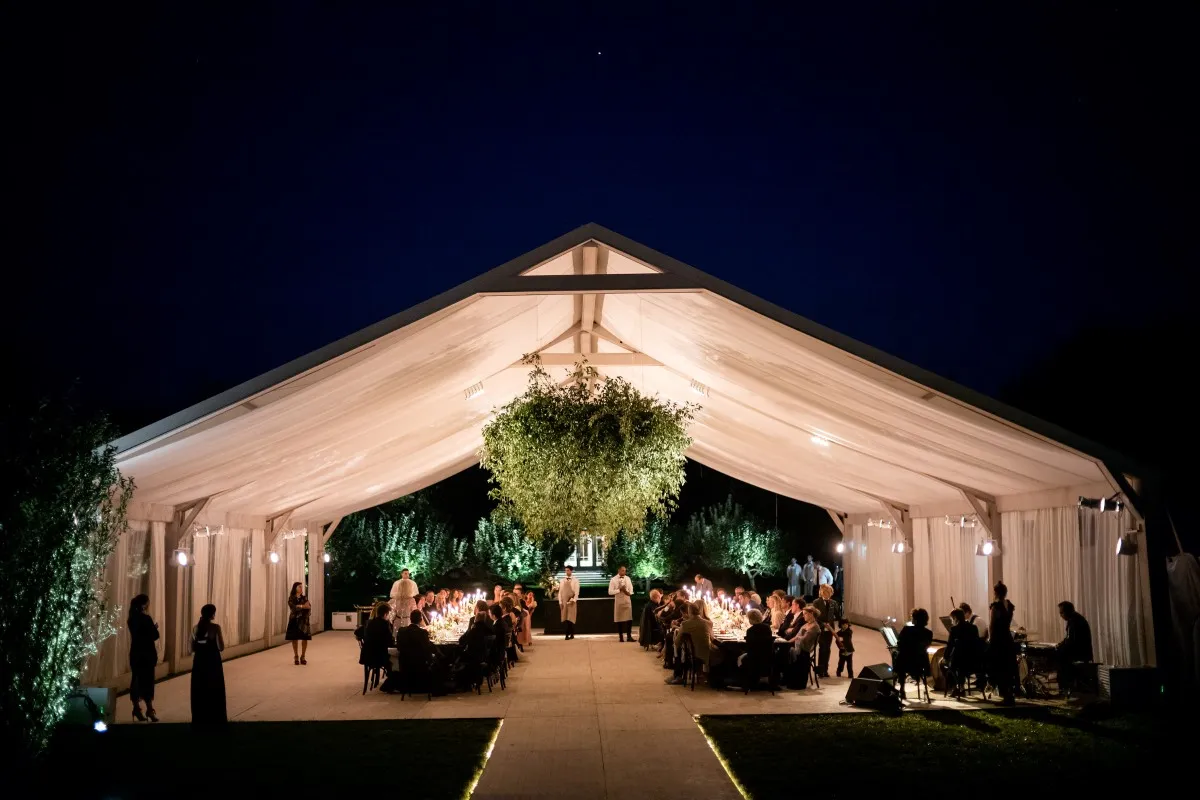
Beyond the tent itself, the right equipment ensures stability and guest comfort. Anchoring systems, flooring, lighting, and climate control all play important roles in creating a reliable and inviting environment.
Which Anchors and Tools Keep Tents Secure?
Proper anchoring is critical, especially in changing weather conditions. Common options include:
- Tent stakes: Driven into the ground for secure installation on grass or soil.
- Weighted ballasts: Used when staking isn’t possible, such as on patios or concrete.
- Ratchet straps: Add tension and reinforce stability where needed.
Using the appropriate anchoring method for your surface and local conditions helps keep the tent secure throughout the event.
How Do Flooring, Lighting, and Climate Control Improve the Experience?
Thoughtful upgrades significantly enhance comfort and presentation:
- Flooring: Creates a clean, stable surface for walking, dining, and dancing on uneven ground.
- Lighting: Layered lighting—string lights, lanterns, or uplighting—adds ambiance and ensures visibility after dark.
- Climate control: Fans, portable air conditioning, or heaters help maintain a comfortable temperature regardless of the season.
These additions elevate the space and allow guests to focus on enjoying the event rather than reacting to the weather.
Step-by-Step Tent Installation Overview
Successful tent installation follows a clear, methodical process. Below is a general sequence that supports safe and efficient setup.
How to Put Up Frames and Drape Fabrics Properly
A typical installation includes:
- Assembling the frame: Secure structural components according to manufacturer guidelines.
- Draping the fabric: Pull covers evenly over the frame to maintain proper tension and alignment.
- Securing the tent: Anchor the perimeter using stakes or weights, then double-check stability.
Working carefully and deliberately prevents issues and ensures the structure performs as intended.
Best Practices for Securing and Weatherproofing
Prepare for changing conditions with these best practices:
- Use multiple anchoring points: Distribute tension to resist wind and shifting.
- Choose weather-resistant materials: Treated fabrics and sealed seams reduce the risk of leaks.
- Have an emergency plan: Establish evacuation routes and a shutdown procedure for severe weather.
Planning for contingencies keeps guests safe and protects your investment.
Designing the Tent Interior for the Right Party Vibe
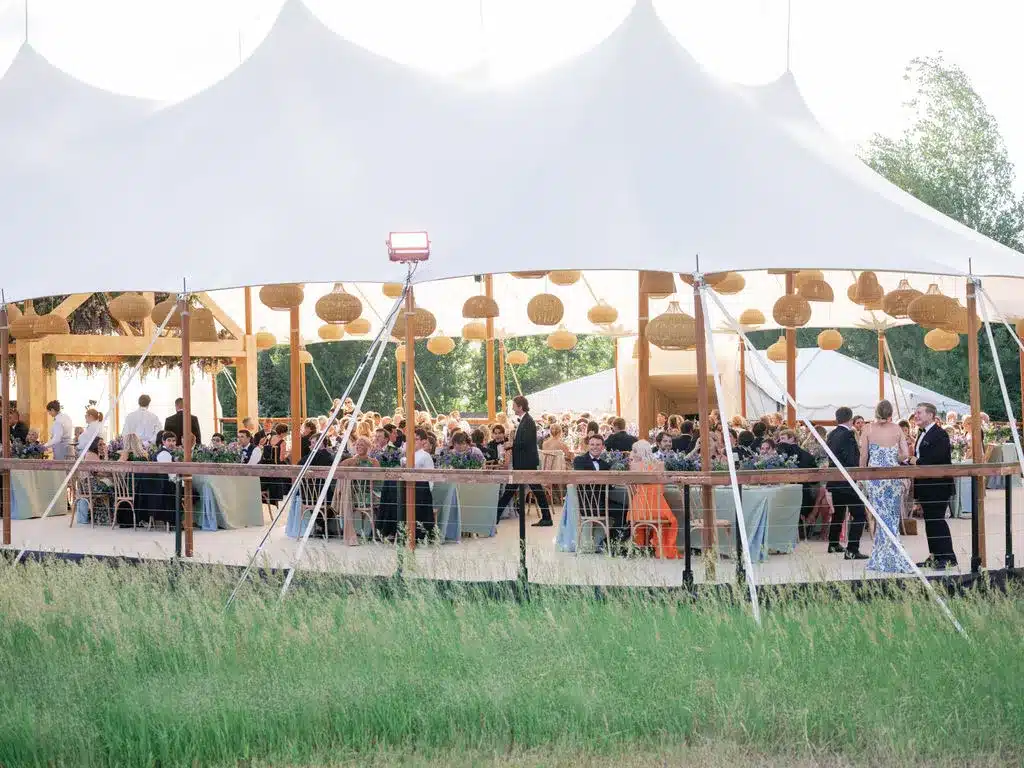
Interior design plays a major role in how guests experience the event. Thoughtful layout and décor choices help the space feel comfortable, organized, and welcoming.
What Layouts and Seating Work Best?
Select seating based on how you want guests to interact:
- Round tables: Encourage conversation and work well for seated dinners.
- Long tables: Create a communal, family-style atmosphere.
- Clear traffic paths: Maintain open, accessible walkways for easy movement and service.
Allow enough space for guests to circulate comfortably without congestion.
How to Use Decor and Lighting to Set the Mood
Décor should support your theme while keeping the space functional:
- Decor elements: Centerpieces, draping, and coordinated linens add polish without overwhelming the layout.
- Lighting strategies: Combine ambient lighting with focused task lighting for dining and bar areas.
- Cohesive theme: Repeat colors, textures, and materials throughout the tent for a unified look.
When design and lighting work together, the tent feels intentional, comfortable, and memorable.
A Simple Timeline for Backyard Tent Planning
Planning ahead reduces stress and helps ensure your preferred tent styles and accessories are available, especially during peak event seasons. Use this timeline as a general guide to keep your backyard tent planning organized and on track.
8–12 Weeks Before the Event
Start by finalizing your guest count and confirming your event date. These two details drive nearly every other decision. Select a tent style that aligns with your event type and aesthetic, and begin researching local permit requirements for temporary structures. This is also the ideal time to contact tent rental providers to check availability and schedule site evaluations if needed.
4–6 Weeks Before the Event
Confirm your tent size, layout, and accessory needs. Decide on flooring, lighting, climate control, and any sidewalls based on the season and expected weather. Coordinate with other vendors — such as caterers, entertainment, and rental companies — to align power needs, load-in access, and space requirements within the tent.
1–2 Weeks Before the Event
Review the extended weather forecast and finalize contingency plans, including rain or temperature adjustments. Confirm delivery times, installation schedules, and access points for setup crews. Walk the site again to ensure no new obstacles, landscaping changes, or utility concerns have come up since your initial planning.
Event Week
Allow ample time for tent installation, final walkthroughs, and small adjustments to layout or décor. Having the tent fully installed ahead of time gives you flexibility and peace of mind, so you can focus on hosting and enjoying the event rather than managing last-minute logistics.
Frequently Asked Questions
What is the best time of year to host a backyard event with a tent?
Timing depends on your local weather, but spring and early fall are often most comfortable. Summer works too when you plan for heat, fans or AC help. Check local forecasts and pick a date that maximizes guest comfort.
How can I ensure my tent is safe for guests during the event?
Start with proper anchoring and regular inspections during the event. Keep exits and walkways clear, watch for fabric wear, and have a basic first aid kit available. If conditions worsen, follow your emergency plan and evacuate if necessary.
What are some creative ideas for tent decor to enhance the atmosphere?
Focus on layered lighting, textured linens, and simple centerpieces that reflect your theme. Add greenery or seasonal flowers for freshness. Small, well-placed details, like coordinated signage or elegant draping, go a long way.
How do I handle unexpected weather changes during my event?
Have a backup plan: extra covers, sidewalls, or an alternative indoor space. Monitor forecasts and communicate changes to vendors and guests. Provide blankets, heaters, or fans as needed, and secure the structure if winds pick up.
What are the costs associated with renting a tent for an event?
Rental costs vary by tent type, size, and add-ons. Expect a wide range, roughly $200 to $2,000 or more depending on needs. Get several quotes and factor in delivery, setup, and takedown when budgeting.
Are there any specific maintenance tips for tent care after the event?
Clean the fabric with mild soap and water, rinse well, and let it dry completely before storing to prevent mold. Store the tent in a cool, dry place out of direct sunlight. Inspect hardware and fabric for damage and repair promptly.
Conclusion
A well-chosen tent and thoughtful setup make backyard events more reliable and enjoyable. With the right prep, site checks, proper anchoring, and a few comfort-focused extras, you’ll create a space where guests can relax and celebrate. Ready to plan? Begin with this checklist and reach out if you require expert assistance in bringing the vision to life.
