
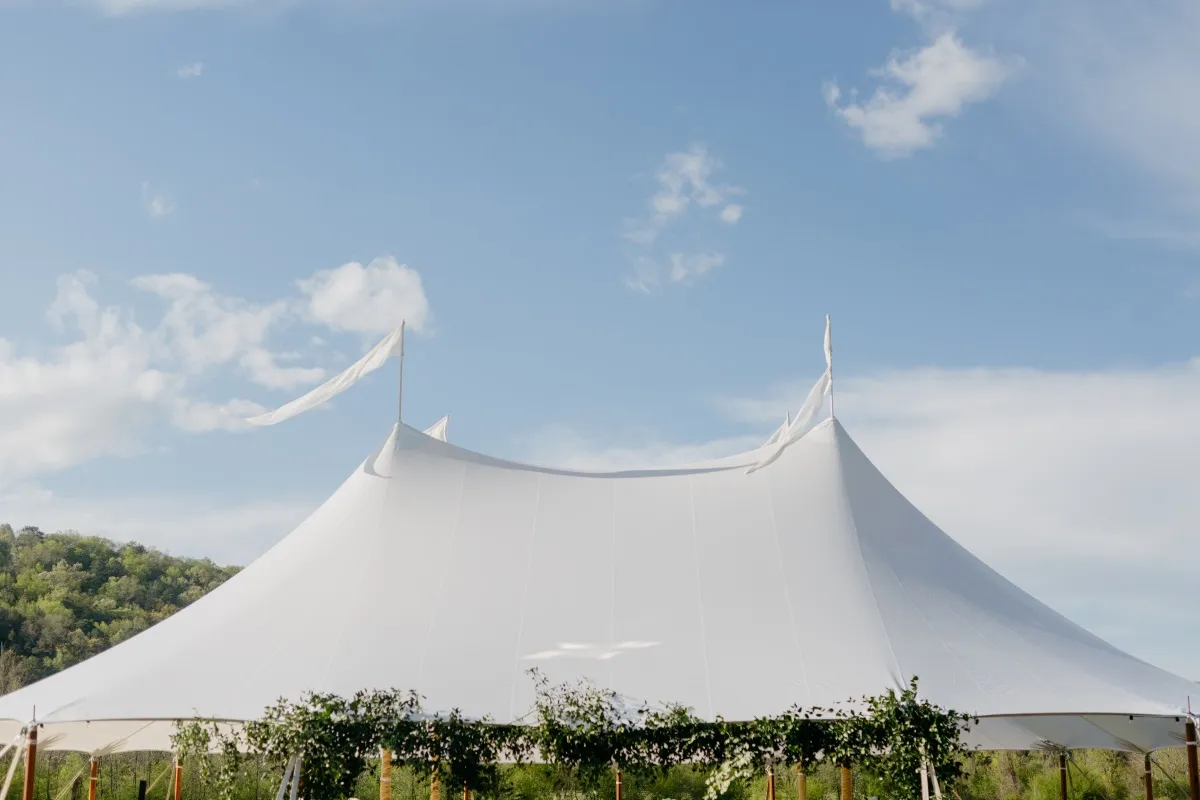
Your outdoor wedding deserves a tent that looks beautiful and keeps guests comfortable. This guide walks you through tent types, sizing, weather planning, customization, and the rental process so you can choose with confidence. We cover the essentials, from pole, frame, and clear-span tents to how to size for dining, dancing, and gear, plus practical tips that help avoid common problems couples face when planning an outdoor ceremony or reception.
Throughout, you’ll find hands-on advice to brief vendors, compare proposals, and design a layout that supports catering flow, guest comfort, and safe installation. Where useful, we include checklists and sample layout ideas you can turn into clear, vendor-ready instructions.
What Are the Different Types of Outdoor Wedding Tents?
Knowing the main tent styles makes the choice straightforward. Each type has advantages depending on the venue and wedding aesthetic, pole tents, frame tents, and clear-span tents are the three you’ll encounter most often.
When comparing styles, think about the footprint you need, the surface the tent will sit on, and how tent lines interact with landscaping or walkways. Some styles need extra clearance for stakes or weights; others let you place the tent close to buildings or over paved areas.
How Do Pole, Frame, and Clear Span Tents Compare?
Pole tents use center poles and guy lines, creating a classic, romantic silhouette that’s perfect for lawns and open fields. They need room for their lines, so layout planning is essential. Frame tents use a metal skeleton with no center poles, making them a good choice for patios and hard surfaces where a clean, modern look is preferred. Clear-span tents have no interior supports, so they deliver uninterrupted floor space, ideal for large receptions, long head tables, or elaborate decor. Each style has trade-offs; match the tent’s strengths to your site and design priorities.
Practical considerations:
- Site attachment: Pole tents typically require soft ground for stakes; frame tents can be secured with weights on hard surfaces.
- Interior features: If you plan heavy chandeliers, floral rigs, or large suspended decor, confirm the structural rating for your chosen tent.
- Visual impact: Ceiling shape affects lighting and acoustics, higher peaks feel airy but may need more lighting for even illumination.
Which Tent Styles Best Suit Various Wedding Themes?
Match the tent to your theme. Pole tents complement rustic or garden weddings when dressed with draping and string lights. Frame tents fit minimalist or contemporary events with tidy lines and flexible layouts. Clear-span tents are the best choice for grand celebrations needing wide-open space for seating plans, stages, or large dance floors. Let your venue, guest count, and decor plan guide the decision.
To choose, rank priorities: guest comfort, sightlines, decor flexibility, and overall planning. If unobstructed views to a stage or band are critical, a clear-span or large frame tent usually outperforms a pole tent. If you want a romantic look for photos, pole tents are easier to dress with fabric and lights.
How to Determine the Right Tent Size for Your Wedding?
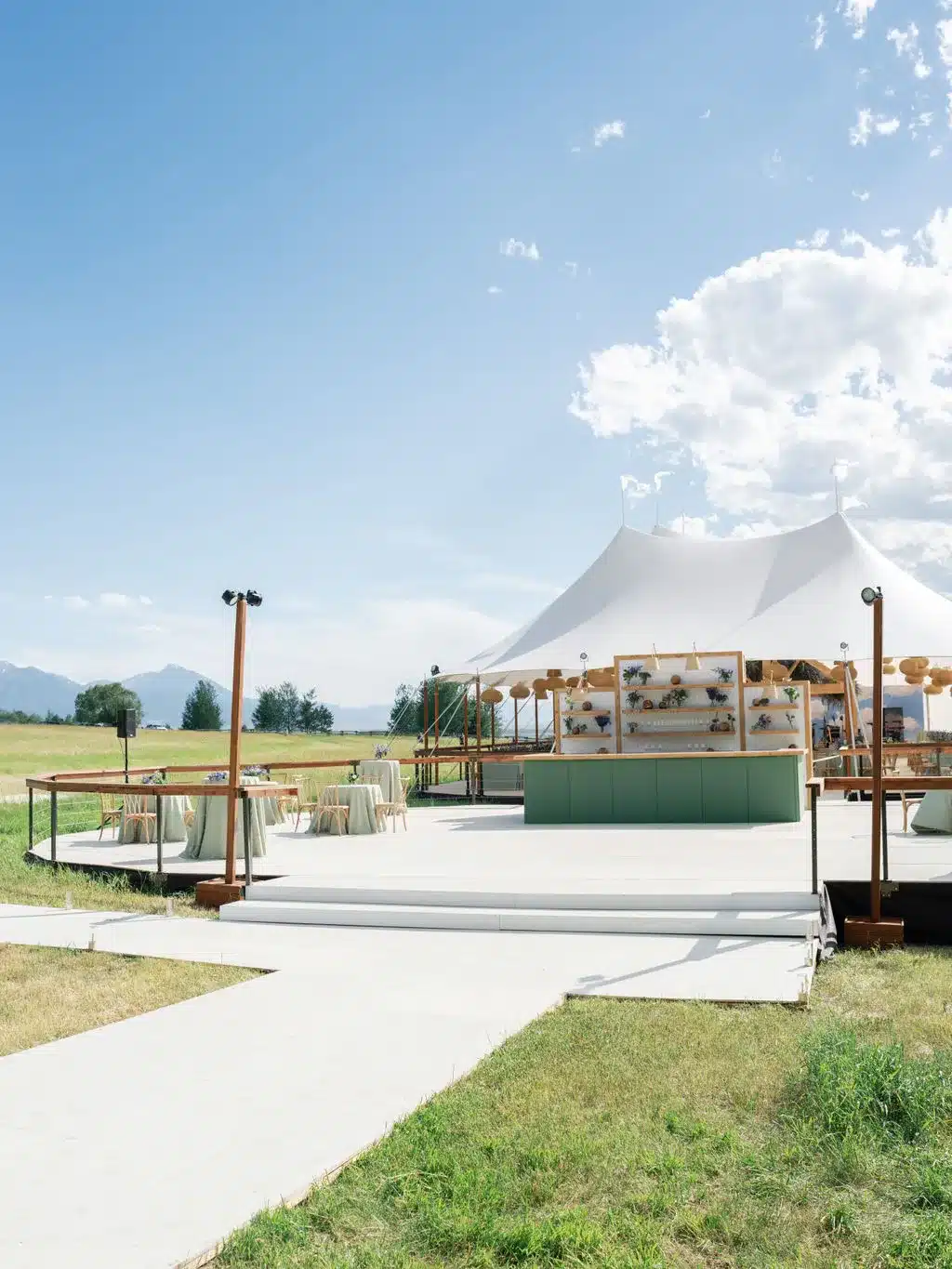
Right-sizing your tent keeps guests comfortable and avoids crowded layouts. Consider seating, circulation, service areas, and extras like dance floors or stages when deciding on square footage.
Start with a list of spaces you’ll need inside and adjacent to the tent: dining, service/buffet, bar, cake table, DJ or band, ceremony area (if inside), lounge seating, coat check, vendor access, and ADA routes. Each element increases the overall footprint you should reserve.
What Are the Standard Outdoor Event Tent Sizes and Guest Capacities?
Tents commonly range from 10×10 up to 40×100 and larger. As quick planning benchmarks: a 20×20 tent seats about 40 guests for a seated dinner, while a 30×60 tent can accommodate roughly 180 seated guests. Use these as starting points and adjust for your table shapes, aisles, and extra spaces.
Common table layouts and their effects:
- Round tables (60-inch): typically seat 8–10 and need more circulation room for servers.
- Rectangle or banquet tables: more space-efficient for long layouts and useful for maximizing guest counts in narrow footprints.
- Cocktail / standing receptions: require less area per guest but still need room for bars, lounge groupings, and buffet lines.
How to Use Tent Size Planning to Ensure Guest Comfort?
Plan layouts before reserving a tent. A useful guideline is 10–12 square feet per guest for a seated dinner and 5–6 square feet per guest for cocktail-style events. Don’t forget space for the dance floor, buffet lines, bar areas, staging, and accessible walkways, those add to the total footprint.
Practical layout checklist:
- Dining area square footage (guest count × per-guest allowance)
- Dance floor size (often 15–20% of guest count in square feet or a dedicated 12×12 to 24×24 for typical counts)
- Buffet line length and approach space: allow two-way flow and a staging area for plates/utensils
- Bar footprint and queue space: allow room for service and guest lines
- AV and band/DJ placement: include equipment zones and load-in/out access
If you’re unsure, pick the next larger tent size. Extra space helps with ventilation, traffic flow, and keeping staging areas out of guests’ sightlines.
What Weather Considerations Affect Outdoor Wedding Tent Selection?
Weather is a major variable for outdoor events. Choose a tent and accessories that give you protection and flexibility when conditions change.
Think seasonally: spring and fall may need sidewalls and heating; summer needs ventilation and shade; cold-weather events demand insulation and covered walkways. Talk through expected conditions with your rental provider and confirm lead times for climate-control equipment.
Which Tent Materials Offer the Best Weather Resistance?
Durable vinyl and quality polyethylene are common choices. Vinyl is tougher, better at shedding rain and resisting wind, while polyethylene is lighter and a practical choice. Sidewalls and window options help block wind and rain; review those choices with your rental team so you get the right coverage for your site.
Other material considerations:
- Fire retardancy: Verify material fire ratings and request certificates if required by the venue or local code.
- UV protection: In sunny climates, consider fabrics with UV coatings and plan shaded entries.
- Maintenance: Heavier vinyl lasts longer under repeated rentals and rigging; lighter fabrics are easier to transport but may show wear sooner.
Solid engineering and tested designs matter, especially when wind or heavy weather are possible.
How to Prepare for Rain and Wind with Tent Accessories?
Plan for rain and wind with sidewalls, weighted anchoring, and proper stakes. Sidewalls offer protection and privacy; weights and anchors secure tents on hard or soft ground. Always have a backup plan, an indoor option or covered secondary space, so the day can continue if weather becomes severe.
Accessory checklist for weather resilience:
- Full sidewalls and clear PVC windows for daylight while blocking wind.
- Weighted bases or concrete anchors for setups over asphalt or stone where stakes aren’t possible.
- Flooring options to prevent mud in wet conditions and provide a stable surface for tables and chairs.
- Rain gutters or covered walkways between tented areas and permanent structures to keep guests dry while moving between spaces.
Coordinate anchor placement with your rental crew to avoid utilities, septic systems, or protected tree roots. Many venues require a site plan that marks proposed anchor points in advance.
What Is the Process for Renting and Setting Up a Wedding Tent?
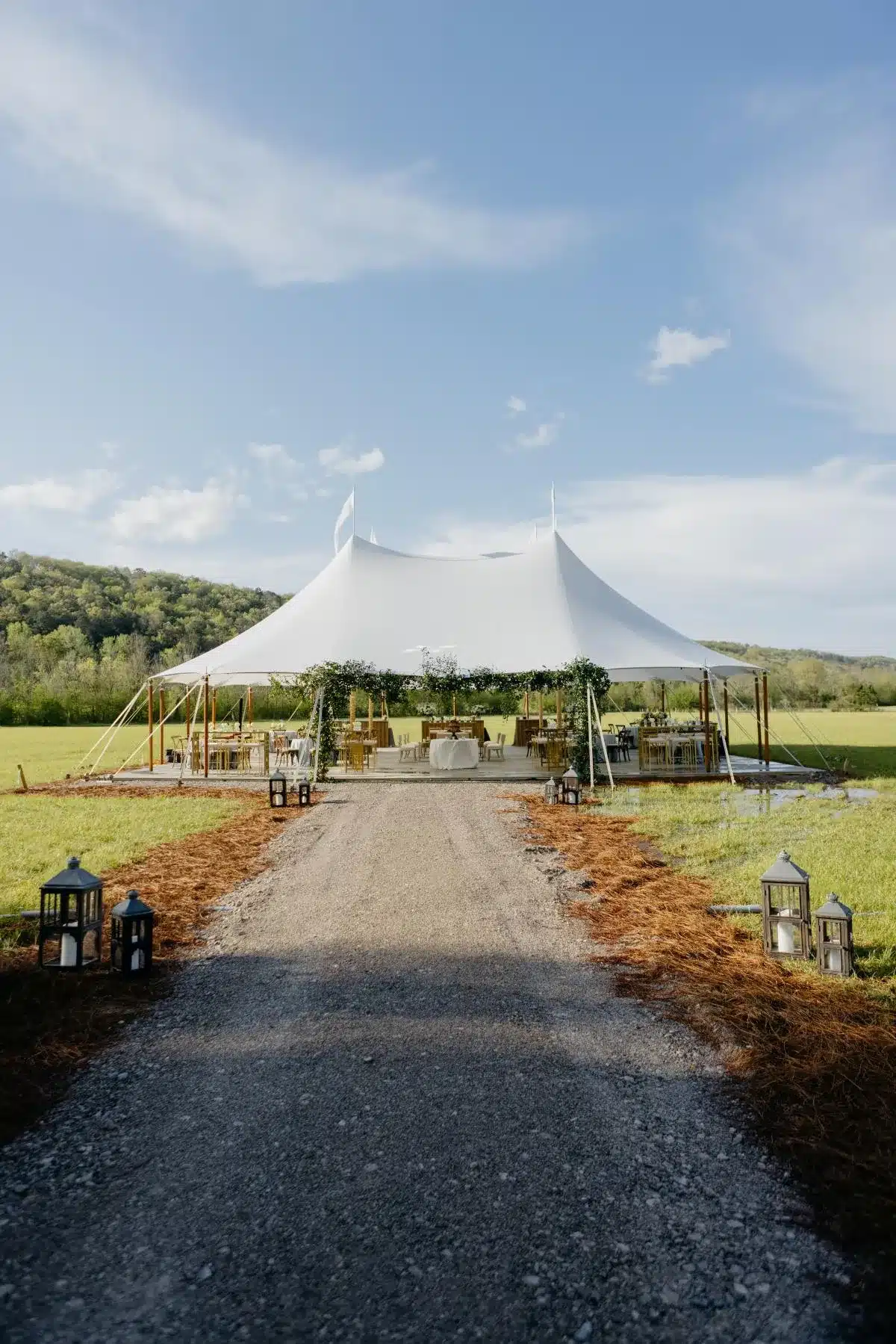
Understanding the rental timeline and setup steps makes coordination with vendors and the venue much smoother.
Begin with a site survey. A site visit identifies grade changes, obstacles, overhead lines, and the best routes for delivery trucks. Installers also confirm anchor options and access for heavy equipment during the survey.
How Early Should You Book Your Wedding Tent Rental?
Reserve your tent 4–6 months ahead, especially during peak wedding season. Early booking secures the style, size, and extras like flooring, lighting, or heaters.
Tips for securing the right inventory:
- If your date falls in high season, book 6–12 months out for specialty items like clear-span rigs or chandelier-ready frames.
- Ask about contingency availability, if the original tent is damaged or unavailable, what are the vendor’s backup plans?
- Request itemized proposals listing each included component (stakes, sidewalls, flooring, lighting circuits) and exclusions so you can compare vendors accurately.
What Does a Wedding Tent Setup Checklist Include?
Your checklist should cover tent type and dimensions, layout, sidewalls, flooring, lighting, HVAC or heaters, and any staging or dance floor needs. Share it with your rental company and venue so everyone aligns on logistics before install day.
Detailed setup checklist to share with vendors and planner:
- Site map with tent footprint, vehicle access, and nearest permanent power source.
- Anchoring plan and any venue restrictions (no-spike zones, root protection).
- Lighting and electrical needs by zone, including required circuits and fixture heights.
- Flooring type and transitions to adjacent surfaces (temporary ramps for ADA compliance).
- Delivery and pickup windows with a staging area for equipment and a dedicated on-site contact.
- Emergency contact list for the rental company and point people at the venue/planner.
On install day, request a walkthrough after the tent is up so you can confirm sightlines, safety, and final touches with the crew before other vendors arrive.
How Can You Customize and Decorate Your Outdoor Wedding Tent?
The right decor turns a tent into your wedding venue, mix structure and finishing touches to match your vision.
Consider how the tent’s ceiling geometry interacts with draping, suspended pieces, and lighting. Lower ceiling areas need lightweight decor; high peaks allow dramatic chandeliers and large floral installations, confirm load capacities with your rental team before hanging anything heavy.
What Are Popular Custom Wedding Tent Designs and Decoration Ideas?
Popular upgrades include fabric draping, layered lighting (string lights, chandeliers, uplighting), and floral installations. Draping softens the ceiling and lighting sets the mood. Coordinate centerpieces and linens with the tent’s scale so everything feels balanced.
Design tips that work across styles:
- Layered lighting: combine perimeter uplights, strings across the ceiling, and focal chandeliers over the dance floor or head table to add depth.
- Texture balance: pair heavier linens on tables with lighter overhead fabrics to avoid a visually heavy space.
- Sightline testing: before committing to large installations, check sightlines from the farthest seat to the ceremony focal point or stage.
How to Coordinate Tent Customization with Wedding Themes?
Match colors, textures, and fixtures to your theme, rustic events benefit from lanterns and natural fabrics; formal affairs suit chandeliers and elegant draping. Work with your planner or rental rep to test sightlines and ensure decorations won’t interfere with tent hardware or safety elements.
Create a visual mock-up or mood board and share it with the rental company. They can advise on fabric weights, hanging points, and whether additional reinforcement is needed for heavier decor.
What Are the Typical Rental Options for Wedding Tents?
Rental options vary by tent type, size, accessories, and rental duration. Understanding what influences these options helps you make informed decisions.
Factors influencing rental options to consider:
- Tent size and installation complexity (clear-span systems usually require more labor and equipment).
- Accessory packages: flooring, lighting, HVAC, and specialized rigging each contribute to the overall offering.
- Delivery distance and site access: tight urban locations or remote rural roads can increase labor hours.
- Permitting and engineering: some venues require stamped plans or city permits for larger structures.
How Do Rental Duration and Tent Features Affect Rental Options?
Longer rentals and larger tents influence the scope of the offering, as do specialty items like flooring, climate control, and premium lighting. Ask for a clear, itemized proposal so you can see where adjustments will have the biggest impact on your plan.
Tips for securing the right options:
- Ask which items are essential versus optional and whether bundling accessories optimizes the overall offering.
- Compare proposals that include delivery, setup, and teardown to ones that list those services separately so you understand the full service level.
- Confirm any additional service charges for weekend or off-hour installs that may affect the final arrangement.
What Are the Best Wedding Tent Rental Options in Charlottesville VA?
Skyline Tent Company serves Charlottesville and the surrounding areas with pole tents, frame tents, and clear-span systems. Our inventory and local experience help couples choose a tent that fits their site and style, and our crew supports delivery, setup, and on-site needs to keep the day running smoothly.
Local vendors often understand municipal permitting and typical site constraints for the region, ask potential providers about recent installs at similar venues to evaluate their local experience. A local crew can also recommend electricians, flooring vendors, and caterers familiar with tented events nearby.
How to Ensure Safety and Compliance in Wedding Tent Setup?
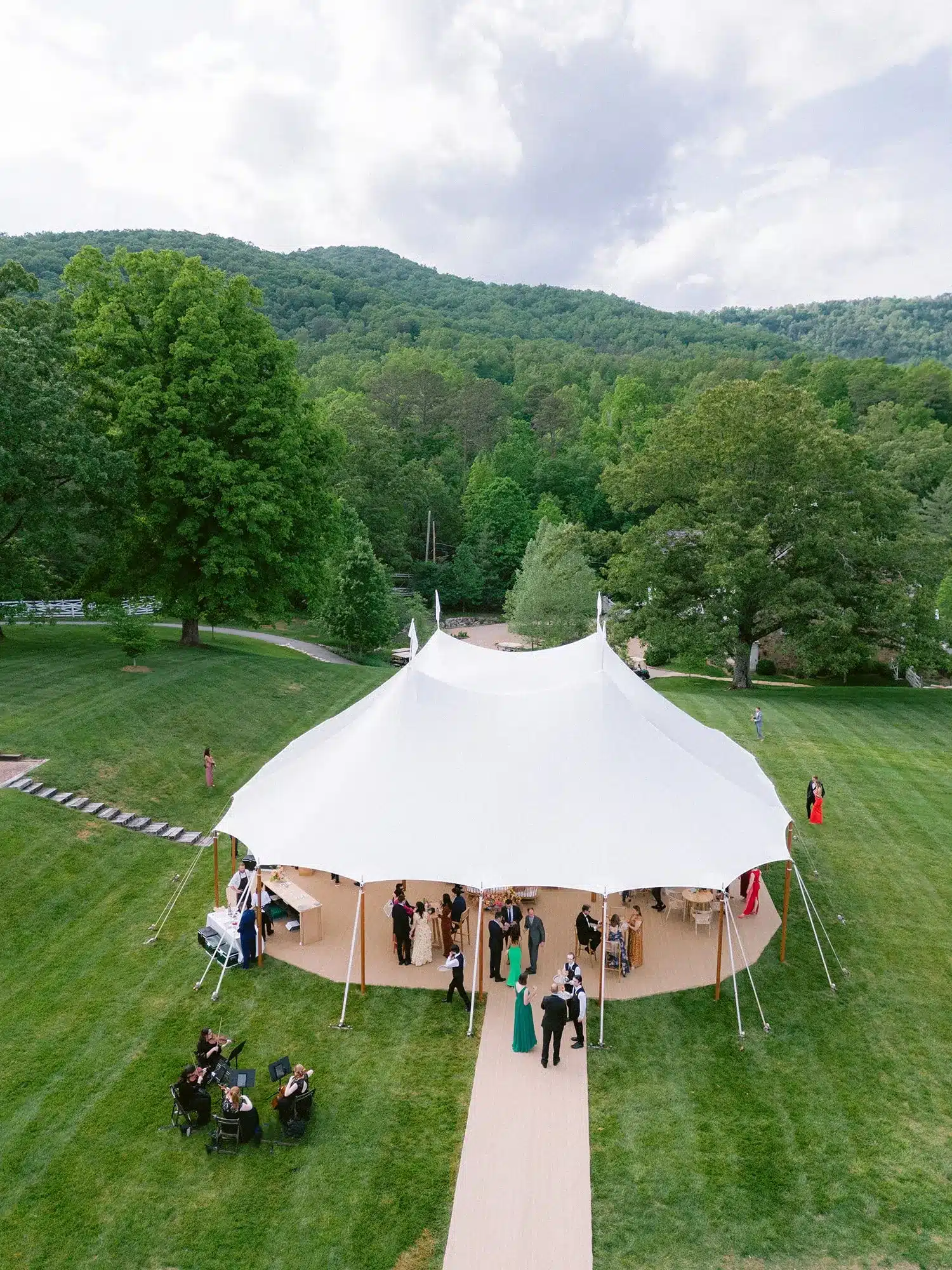
Safety and code compliance are essential. Proper anchoring, electrical installation, and inspections protect guests and staff.
Basic safety steps every planner should require:
- Verify the rental company’s insurance and request proof that names the venue and planner as additional insured if needed.
- Confirm that electrical work is done by a licensed electrician and that circuits are documented with load calculations.
- Request written confirmation of anchoring methods and any load ratings for suspended elements inside the tent.
What Are Key Safety Guidelines for Outdoor Wedding Tents?
Secure anchoring and correctly installed electrical systems are non-negotiable. Inspect fittings, guy lines, and fabric before the event. Follow local permitting rules and work with vendors who understand code requirements for temporary structures.
On-site safety checklist:
- Verify emergency exits are clear and clearly marked; keep egress paths unobstructed.
- Confirm fire extinguisher placement and staff familiarity with basic use.
- Check for trip hazards at floor transitions and cable runs, use cable ramps and secure coverings.
- Document final inspection sign-off with the rental company to confirm the structure meets agreed safety measures.
How Do Professional Installation Services Enhance Event Security?
Professional installers bring experience with weather, site challenges, and safe assembly. Hiring a trained crew lowers risk and gives you confidence the tent meets safety standards, so you can focus on the celebration.
Ask rental teams for references and photos of recent installs with similar site constraints. Reputable companies will provide examples and explain how they solved issues like sloped sites, underground utilities, or limited access.
Where Can You Find Expert Consultation for Outdoor Wedding Tent Planning?
Consultations with experienced tent professionals and planners help avoid surprises and refine your plan to match the site and schedule.
Many vendors offer design consultations that include CAD-style layout sketches and recommended load plans for lighting and decor. These planning services save time and reduce last-minute changes on install day.
How Do Wedding and Event Planners Collaborate with Tent Rental Companies?
Planners and rental companies coordinate layout, timing, and vendor flow so setup and breakdown work smoothly with catering, entertainment, and venue rules. This collaboration saves time and prevents conflicts on the event day.
Coordinated planning practices:
- Set a clear timeline for load-in, setup completion, vendor access, rehearsals, and teardown.
- Hold a site coordination meeting with the caterer, rental company, venue manager, and entertainment provider to align expectations and access windows.
- Designate a single point of contact for install day to avoid confusion and ensure decisions move quickly.
What Are the Benefits of Tailored Tent Solutions from Skyline Tent Company?
Skyline Tent Company provides tailored tent options and local installation expertise. We’ll help you choose the right tent, accessories, and layout so the venue supports your guest count and design, leaving you free to enjoy the day.
Value-adds to ask about when choosing a vendor:
- On-site supervision during install and a post-install walkthrough to verify safety and appearance.
- Flexible inventory so upgrades like clear walls or extra lighting can be added quickly if the weather changes.
- Guidance on permitting and documentation required by local jurisdictions to keep your event compliant.
Frequently Asked Questions
What factors should I consider when choosing a location for my wedding tent?
Look for level ground and good drainage, easy access for delivery trucks, and proximity to restrooms and parking. Plan the layout so dining, dancing, and service areas flow logically. Natural features like trees add shade or a windbreak, but account for root zones and overhead branches when deciding where to place stakes or anchors.
Also consider guest circulation between the ceremony and reception if they’re in separate spaces. Shorter walking distances and clearly marked paths reduce confusion and keep guests comfortable. If the site slopes, ask about terracing or stepped flooring to ensure level table setups.
How can I ensure my wedding tent is secure during inclement weather?
Use rated anchors or weights for your tent type, add sidewalls when wind or rain is likely, and inspect materials and fittings before the event. Have an alternate plan, an indoor backup or reinforced structure, and review weather protocols with your rental company.
Create a weather response plan that sets thresholds for action (for example, sustained high winds or heavy rain) and names who will decide to modify or cancel outdoor portions. Share that plan with the venue, coordinator, and key vendors.
What are the benefits of using a wedding planner for tent setup?
A planner coordinates timelines, vendor arrivals, and site logistics so the tent install fits the broader event plan. They negotiate with vendors, manage contingencies, and handle last-minute choices so you can focus on the ceremony and guests.
Planners often work with trusted rental companies and can recommend solutions that fit your plan and timeline. They also run through setup checklists and confirm safe installation practices with crews before tables and decor are placed.
How do I choose the right lighting for my wedding tent?
Decide on the mood first: romantic, bright, or dramatic. Combine string lights for warmth with focal fixtures like chandeliers for impact. Factor in tent size and ceiling heights, larger tents usually need layered lighting and multiple circuits for even illumination.
Consider dimmable circuits and separate controls for general lighting, accents, and dance-floor lights so you can shift the atmosphere as the evening progresses. Plan power distribution early and mark where circuits and dimmer packs will sit relative to load-in points for entertainment and catering.
How can I incorporate my wedding theme into the tent design?
Bring your theme into the tent with coordinated linens, draping, lighting, and centerpieces. Match textures and colors across the ceiling, tables, and floral elements so the space reads as one cohesive look. A designer or planner can help balance visual elements so nothing overwhelms the tent’s scale.
Mock-ups and mood boards are useful, share them with your rental company so they can advise on fabric weights and hanging methods that achieve the look without compromising safety.
Conclusion
Choosing the right tent sets the stage for a successful outdoor wedding. By matching tent type and size to your site, planning for weather, and working with experienced rental professionals like Skyline Tent Company, you’ll create a safe, comfortable, and beautiful event. Reach out early, we’ll help turn your plan into a smooth, memorable day.
Summary action items:
- Book a site visit with your rental company to confirm layout and anchoring options.
- Create a checklist of required tent accessories (lighting, flooring, sidewalls) and share it with vendors.
- Confirm permits, insurance, and inspection requirements with the venue and local authorities.
- Keep contingency plans for weather and vendor issues so you can pivot quickly if conditions change.
With thoughtful planning and the right team, a tented wedding combines beautiful outdoor scenery with controlled comfort, so your celebration is both lovely and secure.
