
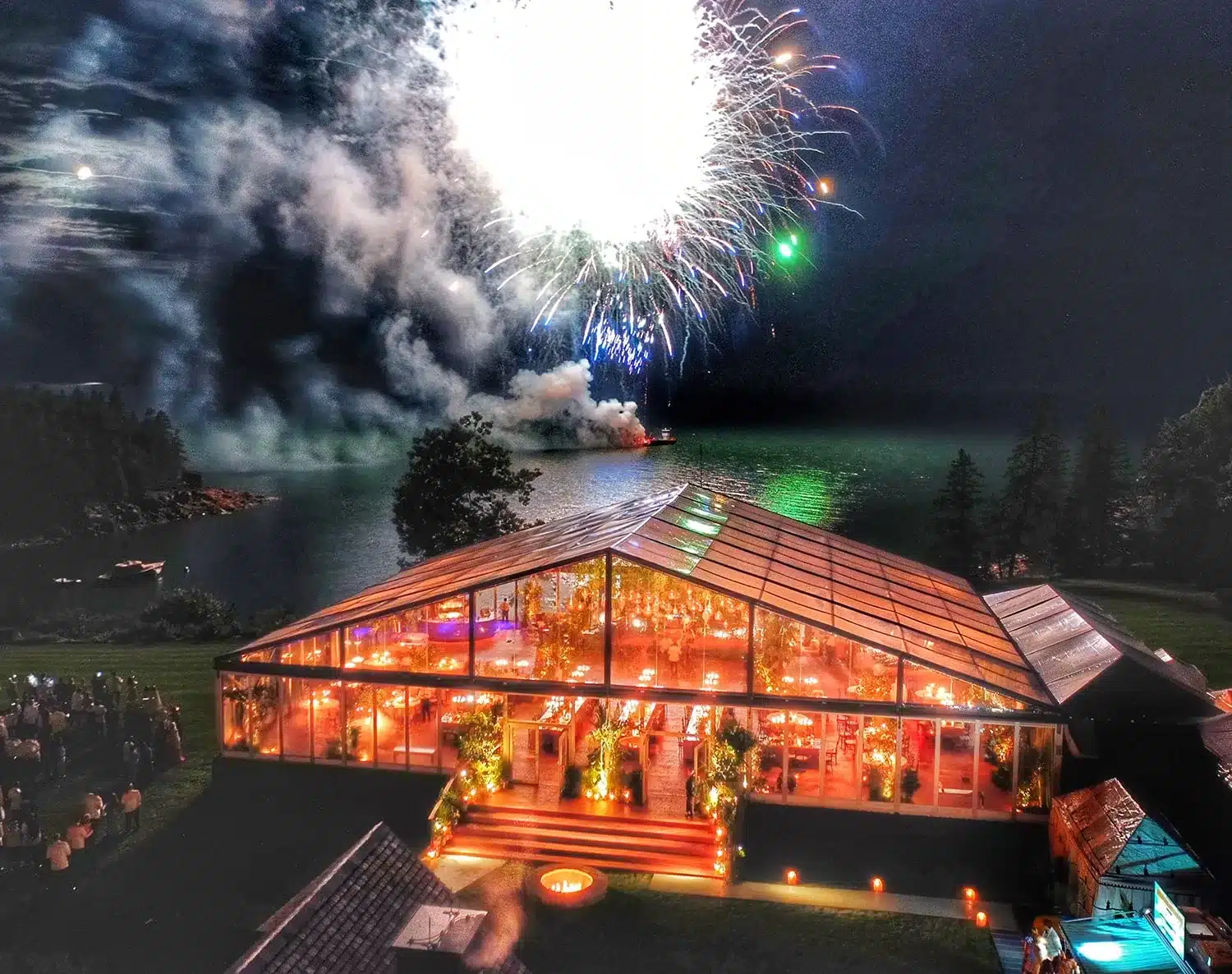
Lighting is what brings a tent to life. When paired with the right tent architecture, it shapes how guests move, where they look, and how the space feels—from the ceremony moment to the final song of the night. Thoughtfully planned lighting reinforces safety, highlights key features, and gives every detail—ceilings, tables, stages, and dance floors—its visual presence.
This guide explains how lighting works in harmony with tent design, including peak height, fabric translucency, and structural style, to create polished, guest-ready environments for weddings, galas, and large-scale celebrations. You’ll learn how different lighting layers support ambiance and visibility, how layouts influence flow and comfort, and what to consider when planning power and installation. With clear guidance and design-focused examples, this overview helps turn lighting concepts into cohesive, beautifully executed tented spaces.
Why Is Lighting Essential for Tent Events?
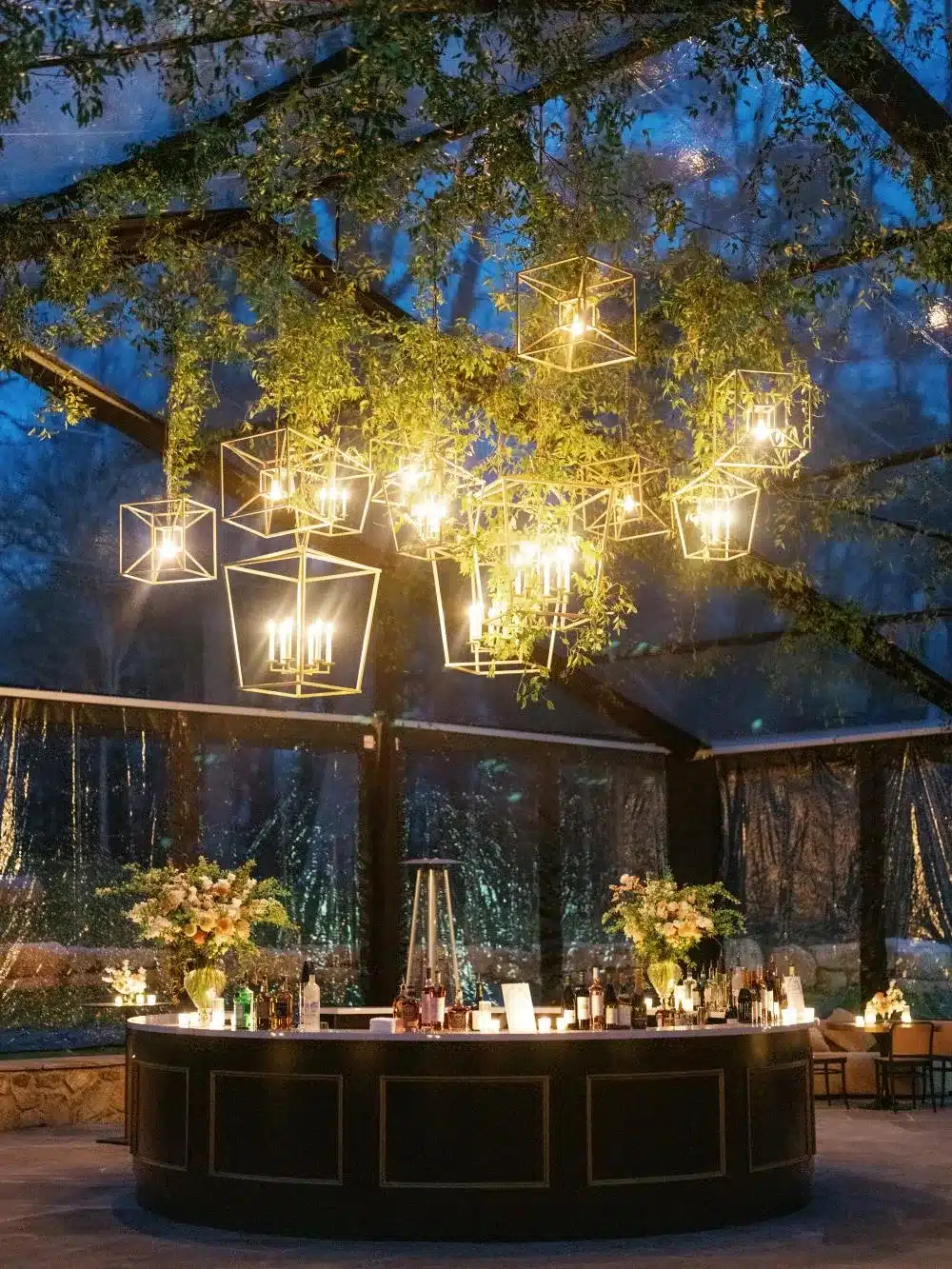
In tents, lighting shapes both emotion and operation: it sets the mood, clarifies sightlines, marks egress, and highlights program moments. Thoughtful tent lighting balances color temperature, brightness, and contrast to produce everything from a warm, intimate dinner to a high-energy dance floor—while avoiding trip hazards and preserving clear, code-compliant paths. Fixture choice and tent fabric work together to control glare and diffusion; for example, a high-peaked Sailcloth roof will diffuse a chandelier very differently than a low-profile engineered frame. Smart plans therefore balance ambiance, visibility, and load capacity so events feel immersive and run safely for guests and crew.
Lighting affects ambiance and safety in three clear ways:
- Ambiance: Color temperature and fixtures create perceived warmth and mood for ceremony, dining, or dancing.
- Safety: Pathway and egress lighting, integrated exit signage, and protected cables reduce trip risks and speed evacuation.
- Focal Control: Spotlights, gobos, and uplights direct guest attention to stages, bars, and ceremony points.
Those three functions—ambiance, safety, focal control—drive the fixture choices that follow and inform the practical mapping of lighting roles to commonly used gear.
How Does Lighting Influence Event Ambiance and Safety?
Ambiance and safety are managed with color temperature, beam shaping, and placement. Warm 2700–3000K sources read intimate for weddings; cooler 3200–4000K sources improve clarity for corporate events. Beam control and shields reduce glare on tables and performers, while dimming and scene control let you shift seamlessly from ceremony to cocktail hour to dancing. Safety comes from layered illumination—general ambient light plus task lighting for service zones and pathway markers—combined with wet-location-rated fixtures and GFCI protection outdoors. The right plan makes the event feel intentional and keeps guests and crew safe.
What Are the Main Types of Lighting Used in Tent Structures?
Tent lighting is typically divided into ambient, accent, and task layers, each served by different fixture families. Ambient choices include chandeliers and string/bistro lights for an even, welcoming glow; accents like uplights and pin spots sculpt architecture and florals; task lighting supports bars, food stations, and service aisles with focused, glare-controlled light. Fixture selection also depends on tent compatibility, power draw, and control needs—LEDs run cool and integrate with DMX, while incandescent chandeliers deliver a particular warmth at higher wattages and rigging requirements. Mapping roles to fixtures simplifies early design work and informs the load calculations that follow.
What Are the Best Tent Lighting Types for Different Event Designs?
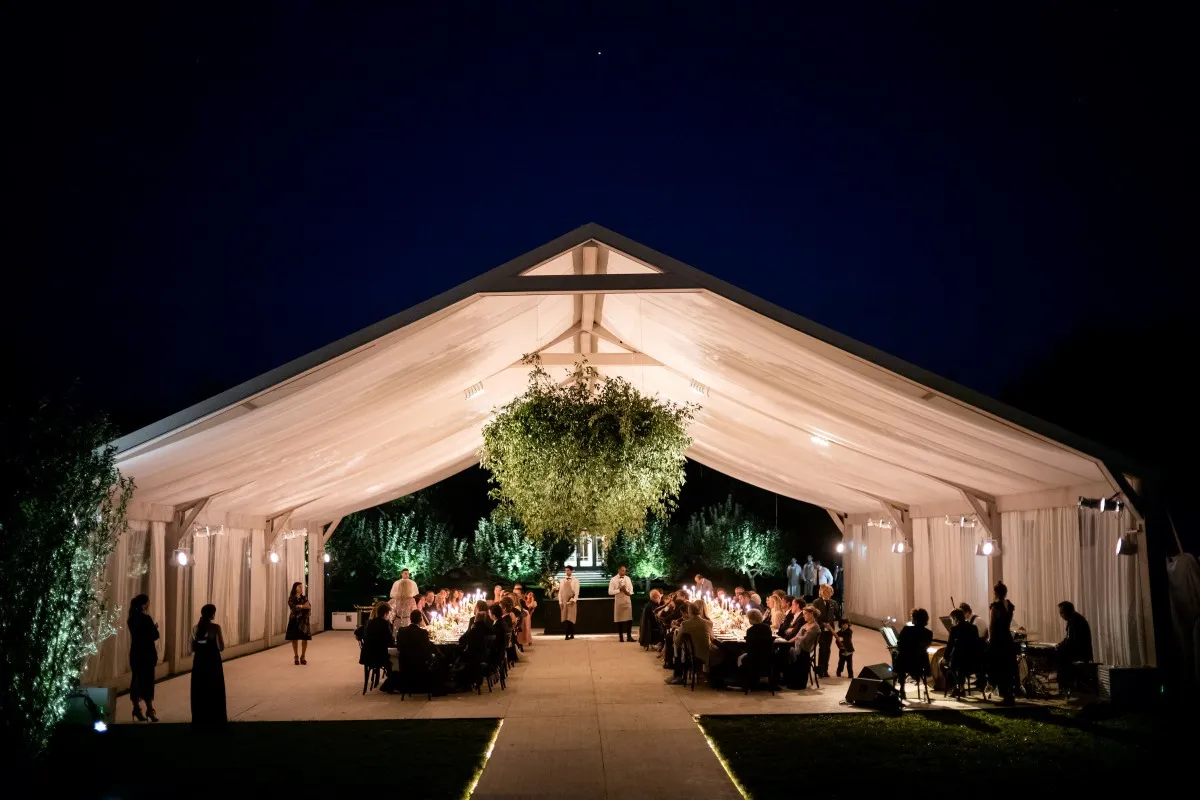
The right fixture depends on event style, tent type, and installation limits. The H3 sections below explain common fixture choices and rental considerations designers use to match ambiance to structure. When planning, confirm vendor inventory, weatherproof ratings, and available rigging adaptors—ask whether fixtures are compatible with Sailcloth, Century, and Engineered structures and request inventory or a quote early in the process. If you’d like, we can check stock and recommend options tailored to your tent type.
Use the quick comparison below to choose fixtures by ambiance, power draw, and tent compatibility.
That comparison helps match visual goals to technical fit. After you pick types, confirm the rental provider’s inventory and any installation constraints that affect feasibility.
How Do Chandeliers Enhance Luxury and Wedding Tent Lighting?
Chandeliers create vertical anchors that raise perceived scale and luxury in wedding tents by drawing the eye upward and framing the reception. Their impact depends on crystal style, scale, and suspension height: in high-peak Sailcloth tents multiple chandeliers layer beautifully, while engineered frames may rely on temporary trusses or certified rigging points. Always check the tent’s load chart and use certified hardware and riggers—chandeliers can be heavy and draw more power, so plan distribution and confirm rental availability well in advance.
What Are the Benefits of String Lights and Bistro Lights for Cozy Outdoor Events?
String and bistro lights deliver warm, scalable ambient light that reads as inviting for casual receptions and festival-style gatherings. They’re straightforward to install in radial, zig-zag, or perimeter patterns using poles, tent peaks, or adjacent structures, and clear bulbs create a continuous canopy effect. Low per-bulb wattage reduces generator demand and leaves room for battery or low-voltage options on smaller jobs; weatherproof versions add reliability in damp conditions. Use simple spacing rules of thumb (see layout section) and confirm splice and adaptor options with your rental supplier.
How Does Uplighting Create Dramatic Effects in Tent Spaces?
Uplights (LED wash fixtures) color fabric walls, emphasize peaks, and sculpt floral installations to turn a neutral tent interior into a shifting palette over the evening. Placed at pole bases, around perimeters, or behind drapery, uplights blend to create even fields of color while DMX control enables coordinated fades and scenes. LEDs run cool and use little power, which lets you place them near soft goods and florals—just choose appropriate beam angles and diffusion to avoid washing out skin tones or reducing stage legibility.
When Should Fairy Lights and Twinkle Lights Be Used for Romantic Ambiance?
Fairy and twinkle lights are perfect as a delicate layer where a star-like effect enhances romantic moments—think bridal tables, canopy ceilings, arbor backdrops, and intimate lounge nooks. They are low-output accents rather than primary illumination, so pair them with chandeliers or uplights for functional visibility. Battery or low-voltage options give flexible placement without heavy cabling; always check IP ratings for outdoor exposure and avoid placing even low-heat strings in direct contact with delicate florals or fabrics. Layer them for depth and visual interest.
How Do Spotlights and Gobo Projections Support Branding and Focal Points?
Spotlights and gobo projectors create sharp focal areas for speakers, product displays, and logos, producing high-contrast imagery when projected onto appropriate surfaces like floors or stage backdrops. Crisp projection depends on surface opacity and texture—tent fabrics differ in translucency, so gobos often need opaque backdrops or interior scrims for best results. Plan throw distance, lumen output, and color temperature so logos remain legible under ambient washes, and coordinate placement with sightlines to keep presenters and branding visible from main seating zones.
Why Are LED Lighting Solutions Ideal for Sustainable and Energy-Efficient Events?
LED fixtures cut energy use and heat output, enabling designers to achieve dynamic color and control while lowering generator demand and carbon footprint. Watt-for-watt savings compared with incandescent gear allow more fixtures per circuit and make battery-backed options more practical in remote locations. LEDs also offer integrated color mixing and DMX control for programmable scenes that sync with AV and music. For greener events, specify LED washes, low-voltage string options, and battery accents to get the same visual impact with a smaller operational load and longer runtimes.
How Can Event Designers Create Effective Tent Lighting Layouts?
Good layouts balance even coverage, focal emphasis, and clear sightlines by using repeatable patterns and layering strategies that let you estimate fixture counts quickly. Choose a primary pattern (radial, perimeter, zig-zag) based on tent geometry and event flow, then add accent fixtures for stages, head tables, and bars. Layer ambient, accent, and task lights so the space reads well and remains functional—ambient for overall comfort, accent for drama, task for service. The table below offers spacing heuristics and fixture-count examples to sketch initial plans fast.
Use these patterns to visualize fixture counts and spacing before you move into power and rigging details.
What Are Radial, Perimeter, and Zig-Zag Lighting Patterns?
Radial patterns run lines from a tent’s apex to the perimeter and create a starburst canopy that emphasizes the peak and central dance area; spacing depends on the peak diameter and string length. Perimeter uplighting focuses on wall and drape illumination to build a continuous color field—great for intimate dinners when table-level light is lower. Zig-zag or grid layouts provide consistent ceiling coverage in rectangular tents and work well for banquets or festival areas. Choose the pattern that best matches tent shape, program flow, and sightline priorities.
How Does Layering Lighting Add Depth and Dimension to Tent Spaces?
Layering mixes ambient fixtures for general light, accent fixtures to sculpt architecture and florals, and task lights for service functions—together they create depth and clarity. For example, use chandeliers for table glow, uplights to color walls, pin spots on centerpieces, and low-level pathway lights for safety. DMX scenes let you fade layers for ceremony, dinner, and dancing while holding key focal elements. Layering also helps manage power by allowing selective switching of nonessential circuits during transitions.
How Can Lighting Be Integrated Seamlessly with Tent Structures and Decor?
Integrating lighting with tent architecture and décor means matching fixture forms to structural features and coordinating materials to avoid heat or safety conflicts while achieving a cohesive look. Consider fabric translucency, roof pitch, and accessible attachment points when placing chandeliers or running strings, and sequence soft-goods and lighting so drapes or florals don’t block beams or create hazards. Sailcloth tents often benefit from chandeliers and uplights that accentuate translucency; engineered structures prefer truss-mounted fixtures and linear washes. Confirm mounting adaptors and compatibility for Sailcloth, Century, and Engineered structures early in the planning process.
When combining lighting with drapery, florals, and flooring, follow these practical rules:
- Avoid placing high-heat fixtures in direct contact with organic materials; specify LEDs near fabrics.
- Backlight drapery to create luminous silhouettes and use uplights behind architectural elements for depth.
- Coordinate floor reflectance with uplighting to minimize glare and preserve photographic quality.
Skyline Tent Company specializes in Sailcloth, Century, and Engineered structures and offers lighting, electrical distribution, power generation, climate control, custom flooring, and project management to coordinate inventory and installation for cohesive results. Reach out to discuss inventory or request a site consultation.
How Does Lighting Complement Different Tent Types Like Sailcloth and Engineered Structures?
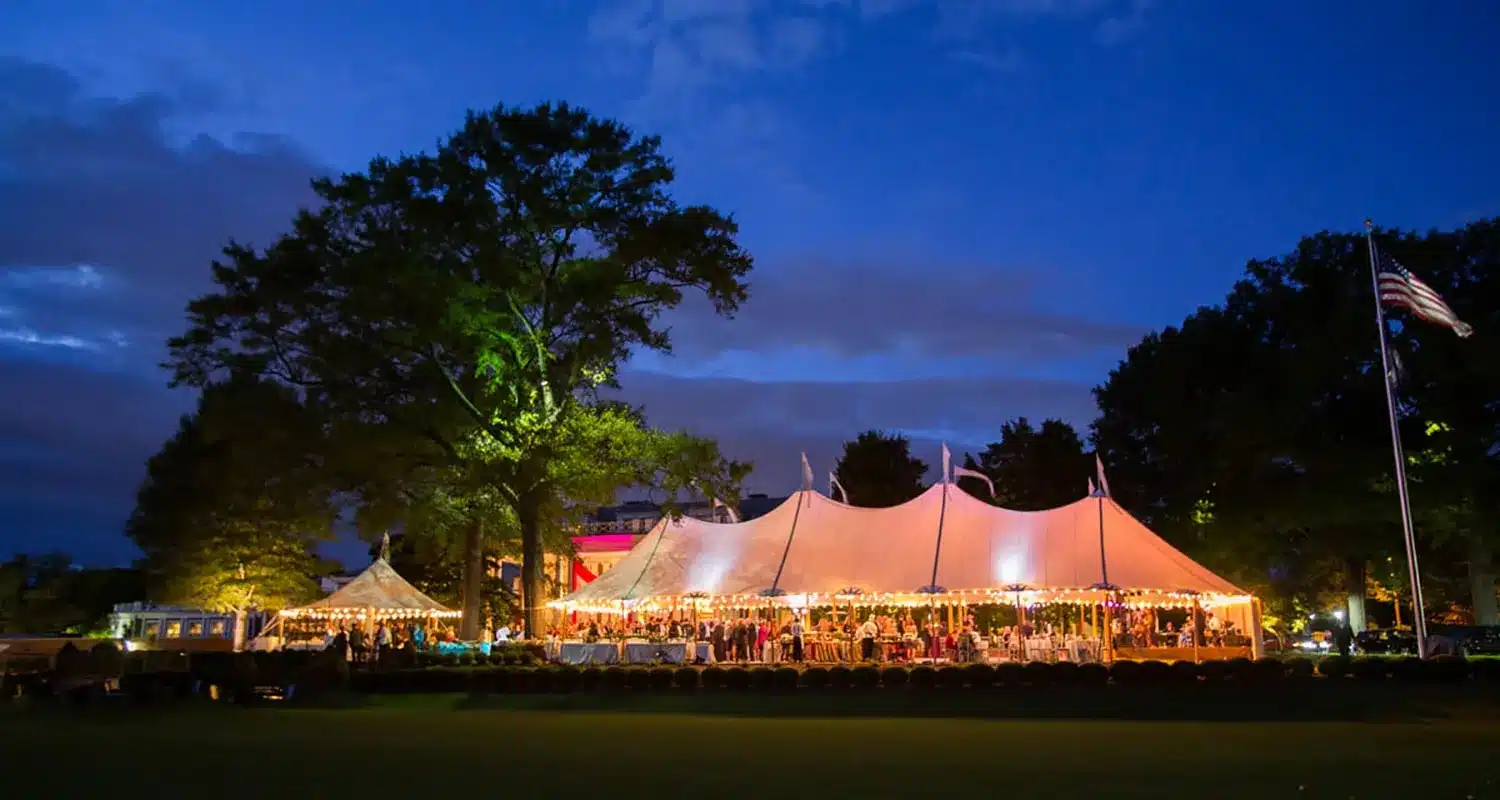
Sailcloth tents have translucent fabric and high peaks that diffuse light into a soft, luminous ceiling—perfect for chandeliers and uplights that create a romantic feel. Engineered structures and frame tents provide consistent hard points and straight lines, which favor truss-mounted fixtures, linear washes, and projection gear with predictable rigging. Century tents, with classic peaked profiles, can support suspended chandeliers or perimeter uplighting depending on pole layouts. Matching fixtures to tent architecture ensures even diffusion, safe attachment, and the desired visual result without overstressing load points.
What Are Effective Ways to Combine Lighting with Drapes, Florals, and Flooring?
Plan layers and clearances: position drapery so uplights can backlight fabric, avoid enclosing high-heat fixtures in dense florals, and choose low-heat LED spots for close-proximity accents. Harmonize color temperature across floor, fabric, and floral palettes—warm uplights with warm wood floors, or cooler washes for contemporary white surfaces—to keep the mood consistent. Flooring reflectivity affects how washes read, so coordinate samples early. Sequence heavy rigging before delicate soft-goods to prevent damage during load-in.
What Are the Latest Trends in Event Tent Lighting for 2026 and Beyond?
The most in-demand tent lighting today is equal parts elevated and efficient—designed to feel immersive without feeling complicated. Clients are asking for lighting that can transition seamlessly from ceremony to cocktail hour to reception, while keeping power use lower, installs cleaner, and the overall look more refined. That’s driving three clear trends: LED-first design, scene-based control, and smarter power strategies.
Here are the trends shaping premium tented events:
- LED-First Looks: Cooler-running fixtures, richer color options, and a cleaner finish—ideal for liners, peaks, and fabric washes.
- Programmed Moments: Lighting that shifts throughout the night (soft + romantic early, brighter for dinner, dynamic for dancing) without changing the physical design.
- Hybrid + Low-Voltage Power: More flexible placement with fewer visible cables, and reduced generator demand where conditions allow.
- Monograms + Immersive Accents: Logo projections and ceiling/floor effects that add “wow” without overwhelming the space—best when planned with the right surfaces and sightlines.
These trends impact more than aesthetics—they influence layout, power planning, and installation strategy. The goal is the same: a tent that looks intentional, feels luxurious, and performs beautifully all night.
How Are LED, Dynamic, and Customized Lighting Transforming Tent Events?
Modern lighting makes it possible to design the tent in “chapters.” Instead of one static look, you can create distinct scenes—ceremony, cocktails, dinner, and dancing—through controlled shifts in brightness and color. LED fixtures also allow dramatic fabric washes and ceiling glow with lower heat and lower power demand, which helps keep the space comfortable and the build clean.
Customized elements like monograms and focused projections add a personal or branded layer when they’re planned into the layout early—so placement, backgrounds, and viewing angles stay crisp and photo-ready.
Why Is Sustainability Becoming a Priority in Tent Lighting Solutions?
Sustainability is increasingly tied to both performance and experience. LED-forward systems reduce heat, lower fuel use, and often require less generator support—while keeping the look high-impact. Hybrid and low-voltage options can also reduce noise and visible infrastructure, which matters at private estates and premium venues where discretion is part of the luxury.
The takeaway: today’s best lighting delivers more control and more atmosphere—with a lighter operational footprint.
Frequently Asked Questions
What factors should be considered when selecting lighting for different tent types?
Start with the tent’s architecture—peak height, interior volume, and fabric translucency—because these determine how light spreads. Sailcloth tents glow beautifully with chandeliers and warm uplighting, while engineered structures often support cleaner, more precise layouts using rigging points and linear washes. Also consider ceiling liners/draping, décor density, and where you want focal moments (dance floor, head table, stage).
What is the best lighting for a wedding tent reception?
Most wedding receptions benefit from a layered approach: chandeliers or statement pendants for elegance, bistro/string lighting for warmth, uplighting for depth on tent walls/liners, and pin/focused lighting for tables and florals. This combination photographs well and transitions smoothly from dinner to dancing.
How many bistro/string lights do I need for a tent?
It depends on tent size and the pattern (zig-zag, perimeter, or radial). As a guideline, tighter spacing creates a luxury “ceiling canopy” look, while wider spacing reads more casual. For accurate counts, confirm tent dimensions, peak height, and where chandeliers or draping will sit so the layout stays balanced and uncluttered.
How do I calculate power needs for tent lighting and generators?
Create a fixture list, total the wattage, and include a safety margin to avoid overloads—then plan distribution so circuits are balanced and guest areas stay clear of cabling. Generator sizing should consider all event loads (lighting, climate control, catering, AV), not lighting alone—this is where coordinated planning matters most.
How can event designers ensure safety when installing lighting in tents?
Prioritize weather-rated equipment, GFCI-protected distribution, and protected cable routing (ramps/trays or overhead runs where appropriate). Overhead fixtures should be installed with professional rigging to approved attachment points, and final electrical work should follow local requirements. Safety should look invisible—clean installs are safer installs.
What are the advantages of using LED lighting in event tents?
LEDs run cooler, use less power, and offer flexible color and dimming control—making them ideal for liners, fabric washes, and scene changes throughout the night. They also reduce generator demand and help keep the environment comfortable, especially in enclosed or draped interiors.
Can you hang chandeliers in a tent?
Yes—when it’s planned correctly. Chandelier selection depends on the tent type, rigging method, and where the fixture will sit in relation to liners, florals, and guest sightlines. The goal is a statement piece that feels effortless—securely installed and perfectly scaled to the space.
How can lighting enhance the overall theme of a tented event?
Lighting sets the tone through warmth, contrast, and focus. Soft warm light and gentle uplighting create romance; cleaner whites support modern or corporate looks; color can be used sparingly to reinforce branding or highlight architectural features. The best results come from aligning lighting with flooring, draping, florals, and the event timeline.
What are common mistakes to avoid when planning tent lighting?
The big ones: underestimating power needs, placing fixtures without considering tent height/fabric diffusion, over-lighting (which flattens the room), and leaving cable routing as an afterthought. Another common issue is skipping a scene plan—great lighting should evolve through the event, not stay static.
How can event designers communicate lighting plans to clients clearly?
Present lighting in “moments” (ceremony, cocktails, dinner, dancing) with simple visuals: a layout, a few reference photos, and a short list of what each layer does (ambient, accent, task). Clients respond best to outcomes—how it will feel, where the focal points are, and how it photographs.
What role does technology play in modern tent lighting design?
Technology enables scene-based control—smooth transitions, dimming, and timed shifts that match the night’s energy. It also supports cleaner installs through more efficient fixtures and streamlined control options, helping deliver high impact without adding visual clutter.
Conclusion
Thoughtful tent lighting makes events feel elevated, safe, and visually cohesive. When fixture choices are matched to tent architecture—and planned alongside layout, power, and installation—the result is a space that looks intentional and performs beautifully all night. Explore Skyline’s lighting options to elevate your next event, and connect with our team to schedule a consultation and build a plan that fits your tent, your vision, and your venue.
