
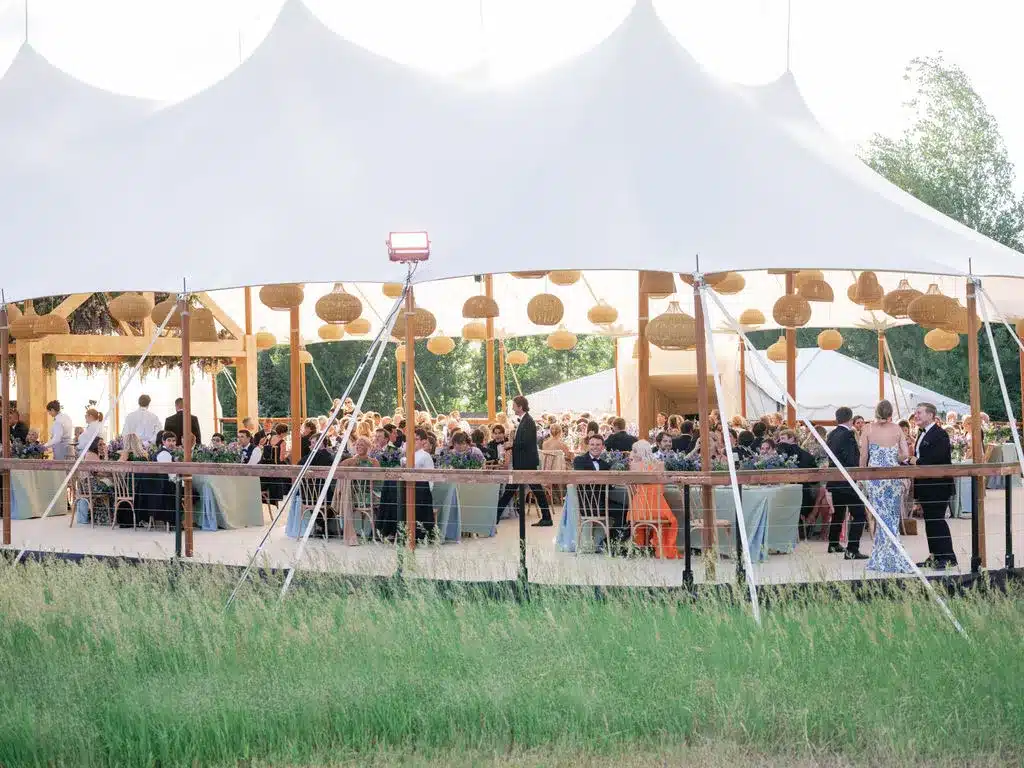
For a truly upscale event, tent size shapes everything: guest comfort, sightlines, and how people move through the space. This guide breaks down how tent capacity, square footage per guest, and layout choices work together to create a refined experience. You’ll find practical methods to translate a guest list into a tent footprint for weddings, galas, and product launches. Common mistakes, like overlooking service corridors, staging zones, or climate equipment, often shrink usable guest area; this article gives clear formulas, layout rules, and style-specific advice so you avoid those surprises. Read on for per-setup square-foot rules, sample footprints for typical guest counts, how tent style affects usable area, and how to allocate space for dance floors, bars, lounges, and back-of-house operations. The emphasis is practical: calculate confidently, interpret calculator output, and arrive prepared for a site-savvy consultation.
What Is the Ideal Tent Capacity for Your Luxury Event?
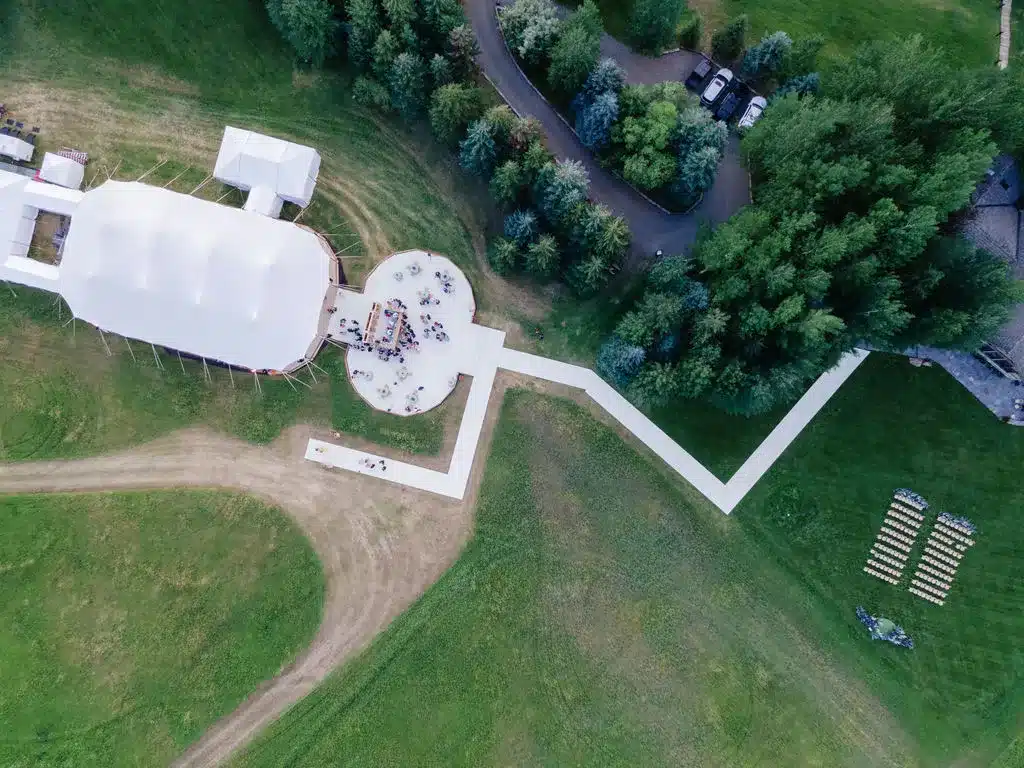
Tent capacity is the recommended number of guests a tent can host comfortably based on usable square footage. It varies by setup, circulation needs, and the footprint required for amenities. In practice, you calculate capacity by multiplying guest count by a per-person square-foot standard for the setup, then adding dedicated space for staging, catering, and vendor access to preserve a luxury feel. Accurate capacity planning prevents last-minute compromises to décor, sightlines, and service flow and is the first step in choosing the right tent style and footprint. The short table below summarizes typical square-footage guidelines planners use as a starting point for upscale events.
Industry research also shows seating format strongly affects overall capacity, offering important context for large-scale planning.
This table translates common setup types into recommended square feet per guest — a quick anchor for fast calculations and featured answers.
These ranges preserve dignity of space: use the higher end to protect sightlines, allow for larger centerpieces, and give vendors room to work, all important in luxury builds.
How Does Guest Count Influence Tent Size Requirements?
Convert guest count to a footprint with this formula: Required sq ft = guest count × sq ft per person + amenity footprints. For example, a 150-person seated dinner at 14 sq ft per person needs about 2,100 sq ft for seating alone; then add 300–500 sq ft for a generous dance floor plus staging and catering zones to reach the final tent size. Smaller celebrations (50 guests) often suit sailcloth or tensile tents that feel intimate without wasted space, while events around 300 guests usually call for engineered clearspan structures to preserve open sightlines and circulation. As a rule for luxury events, add a 10–20% buffer for floral installations, wider aisles, and dedicated vendor corridors so design elements don’t crowd guests.
What Square Footage Per Person Ensures Comfort and Elegance?
Square footage per person balances seating, circulation, and decorative allowances; upscale events typically use the high end of each range to preserve elegance. Recommended ranges are generally 12–15 sq ft per person for seated dinners with round tables, 8–10 sq ft per person for cocktail receptions with lounges and bars, and 6–8 sq ft per person for ceremony seating where rows are tighter but sightlines remain a priority. Table shapes matter: long banquet tables can reduce circulation unless aisles are widened, while 60-inch round tables often push planners toward the higher end of the seated-dinner range for comfortable service. Picking the higher value secures room for floral focal points, layered lighting, and clear service aisles, the hallmarks of a premium guest experience.
How Do Different Event Types Affect Tent Size and Layout?
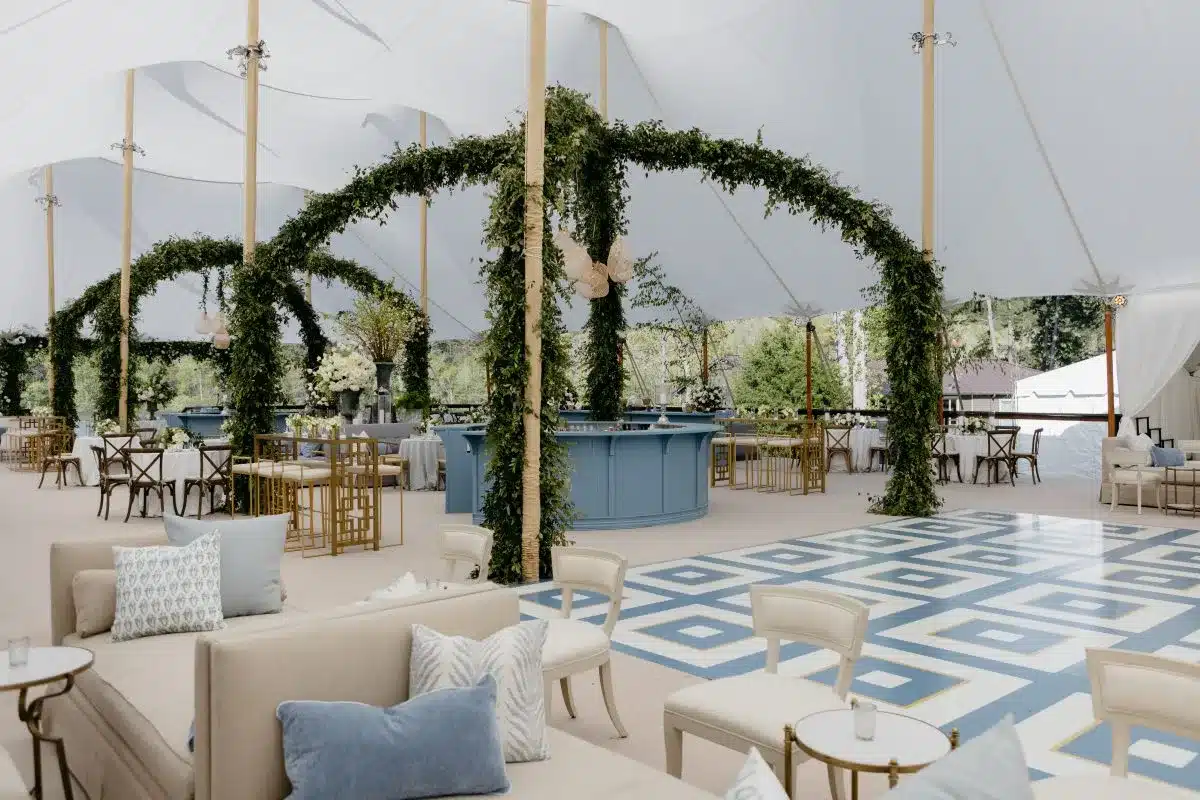
Event type determines which amenities and sightlines matter most, and that directly affects tent dimensions and layout. Weddings frequently combine ceremony and reception needs and require flexible zones; corporate galas prioritize AV sightlines and staging; product launches need clear floor for activations and predictable egress. Translating program requirements into a footprint means carving contiguous zones for seating, presentation, hospitality, and back-of-house support — and choosing a tent style that fits those priorities. The guidance below gives concise, event-type recommendations and example footprints planners can adapt to their guest counts.
What Tent Dimensions Are Recommended for Luxury Weddings?
Luxury weddings need generous circulation around seating and a dedicated ceremony area if both functions share a tent. Aim to reserve 10–15% of total area for floral and décor structures. For 150 seated guests, a common recommendation is a 50′ × 60′ footprint (3,000 sq ft) when using 12–15 sq ft per guest and including a modest dance floor and buffet staging; for 75 guests, a 40′ × 50′ footprint balances intimacy with room for décor. Ceremony-only setups can be narrower but must preserve a clear aisle and staging. When you combine ceremony and reception under one roof, a modular layout that provides separate sightlines and unobstructed vendor access is ideal. Account for raised altar platforms and substantial floral installations by choosing the higher per-person square-foot value to avoid crowding and protect photographic sightlines.
How to Plan Tent Sizes for Corporate Galas and Product Launches?
Corporate galas and product launches place greater emphasis on presentation, technical load, and networking flexibility, so priorities shift toward ceiling height, rigging capacity, and unobstructed floor. For seated presentations of 200 guests with a stage and AV rigging, plan roughly 14–16 sq ft per guest plus a stage sized for performers and equipment; very large activations may use a clearspan footprint of 80′ × 120′. Networking-focused launches with exhibits should plan activation zones (typically 50–200 sq ft each) and circulation corridors at least 6–8 feet wide. Technical needs — truss lines, power distribution, and screen sightlines — often require engineered structures with higher eave heights to safely support rigging and keep views clear.
What Are the Unique Sizing Considerations for Skyline Tent Styles?
Tent style affects usable floor area and mood, so choice is both aesthetic and practical. Each style changes how you count usable square footage, ceiling height, and interior obstructions. Sailcloth tents offer translucent peaks and elegant curves but may include center poles that reduce uninterrupted floor area. Century (vinyl tension) tents provide modular bays with fewer interior obstructions and greater weather resistance. Engineered structures and clearspans give you uninterrupted interiors, higher eave heights, and reliable rigging points, ideal for large galas and technical productions. The comparison below clarifies usable width/depth, interior obstructions, and the typical aesthetic impact for each primary style.
How Does Sailcloth Tent Capacity Enhance Luxury Wedding Experiences?
Sailcloth tents create a signature look with translucent peaks and graceful curves, which often justifies allocating more square footage per guest for the full visual effect. Center and perimeter poles typically reduce continuous floor area by about 5–15%, so either increase the nominal footprint or place poles strategically to protect ceremony sightlines and dining layouts. For intimate weddings of 50–100 guests, sailcloth tents deliver an immediate upscale atmosphere and let designers layer lighting and drapery; for larger weddings, carefully mapping pole locations and service corridors preserves elegant circulation. When choosing sailcloth footprints, prioritize aisle widths and photographer clearance to maintain the premium presentation guests expect.
What Are the Space Benefits of Engineered Structures and Century Tents?
Engineered clearspan structures deliver fully unobstructed interiors and higher ceiling planes, giving you flexible layouts and higher capacities without compromising circulation or sightlines. Century tents, vinyl tension systems, combine modular bays with fewer poles, offering durability and adaptability when weather protection and modular footprints matter. For large galas or product launches that need open floor and rigging, engineered solutions let you use every square foot for booths, stages, and dance areas without interior poles limiting sightlines. Choose Century or engineered systems when calculated capacity and technical needs demand continuous clear floor area and predictable interior planning.
How to Design a Luxury Event Tent Layout for Optimal Flow and Amenities?
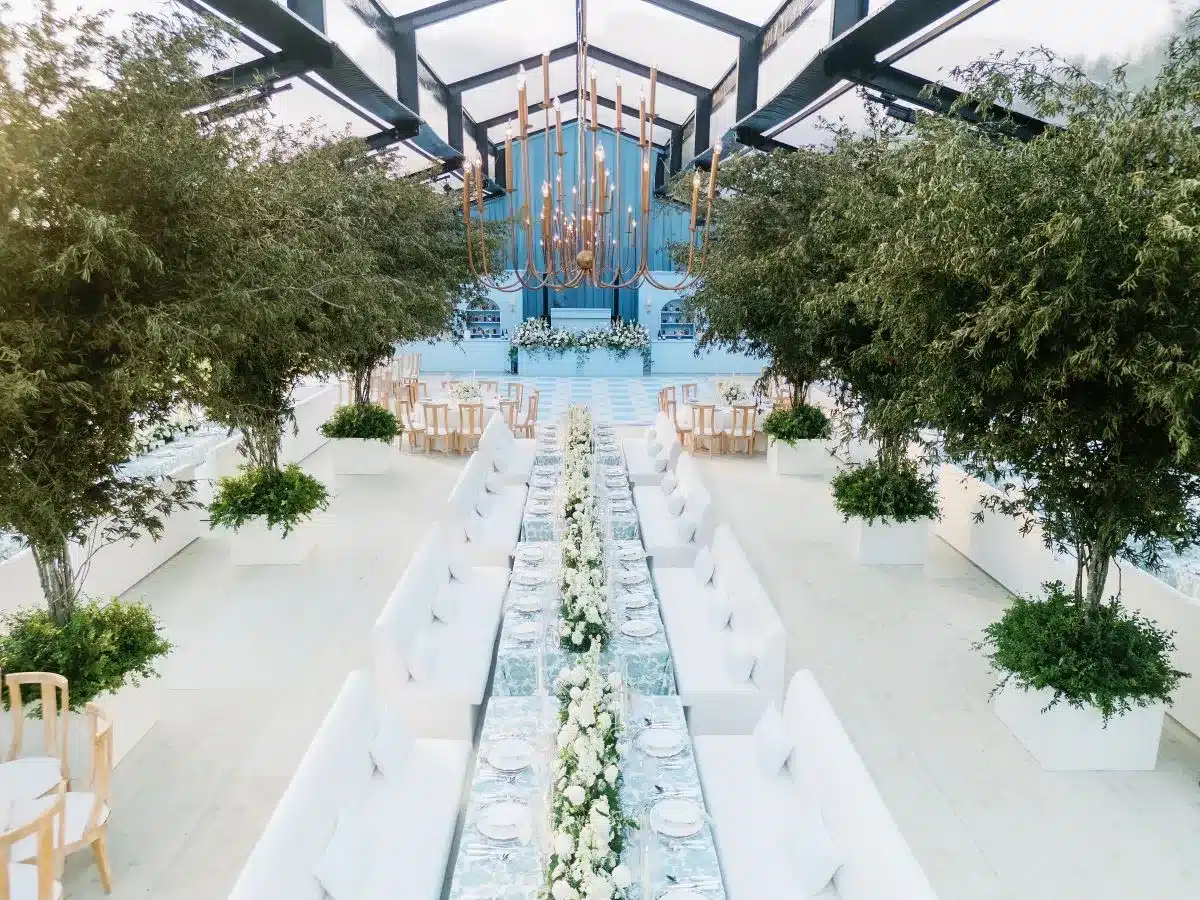
A luxury tent layout balances guest circulation, amenity footprints, and service corridors so hospitality feels effortless. Start with a primary circulation spine that links entry, seating, and key amenities. Place the dance floor and stage where sightlines and acoustics are strongest, and route catering and vendor access through service corridors away from guest views. Standard footprint allocations make it easier to translate a plan into a practical layout, below are typical amenity footprints and placement notes planners use to arrange floor plans.
Standardizing amenity footprints speeds decision-making and helps you assign space before locking a tent footprint.
- Dance floor (per 25 dancers): Allocate about 400–600 sq ft and position near the stage to keep flow central.
- Stage: Size between 12’×8′ and 24’×16′ depending on performers; provide backstage clearance and AV access.
- Bar zone: Plan 60–120 sq ft per bar with an additional 6–8 ft of queue space in front.
- Catering staging: Reserve 10–15% of total footprint for prep, plating, and circulation separate from guest areas.
How Much Space Should Be Allocated for Dance Floors, Stages, and Bars?
Base amenity footprints on expected participation and technical needs. A useful formula for dance floors is: dance floor sq ft = number of active dancers × 10–12 sq ft. So if about 50 guests will dance at peak, plan a 500–600 sq ft floor to allow movement and a small performance area. Stage size depends on performers and AV, a three-piece band typically needs a 16’×12′ stage plus rigging clearance; larger productions call for engineered structures with higher eave heights. Bars require queuing lanes; for a high-end event plan at least 6–8 linear feet of queue per bar and place bars to support natural traffic without creating bottlenecks.
What Are Best Practices for Incorporating Lounge and VIP Areas?
VIP and lounge areas should feel distinct but connected. Cluster comfortable seating into conversational pockets and allow roughly 40–60 sq ft per seating cluster depending on furniture. Place lounges adjacent to main activity areas but slightly set back to protect privacy and sightlines; use flooring or elevation to mark the zone without isolating guests. Select furniture and rug footprints conservatively to avoid overfurnishing; modular seating makes it easy to scale lounges up or down as headcount or program needs change.
Keep service access and clear egress routes so VIP zones feel exclusive without disrupting overall flow.
What Additional Factors Influence Tent Size Selection for Upscale Events?
Operational realities often govern tent size beyond guest math: climate control equipment, generators, permits, site slope, and service corridors can reduce usable interior area or require minimum clearances. Address these constraints early to avoid late-stage upsizing and permit problems. Integrate power, HVAC, and loading zones into footprint calculations so guest areas stay free of equipment and cables. The checklist below highlights non-guest elements that regularly affect tent sizing and layout planning.
- Generator and HVAC footprints: Equipment needs clearance and staging space adjacent to the tent.
- Permitting setbacks and access lanes: Local regulations may require buffer zones and restrict tent placement.
- Site slope and hardscape: Uneven ground requires platforms or graded pads that affect tent footprint choices.
How Do Climate Control and Power Services Affect Tent Space Planning?
Climate control and power infrastructure occupy site area and affect egress and airflow. HVAC units, ducting, and generator placement can use 5–10% (or more) of overall site area depending on system design. Plan equipment clearance and duct routes so air distribution doesn’t interfere with décor or guest comfort; site generators with safe exhaust and noise mitigation. When HVAC or high AV power is needed, choose tent styles and footprints that allow external gear placement with dedicated service corridors so guest space remains uninterrupted. Adding these systems late in the process often forces tent upsizing to preserve guest and amenity areas.
What Site Planning and Permit Considerations Impact Tent Dimensions?
Permits and site constraints often set the maximum tent footprint and where it can go. Setbacks, fire-code egress paths, and proximity to buildings or trees can limit usable area and require plan changes. Conduct a site survey early to document slopes, underground utilities, and hardscape that affect placement; sloped sites may need raised platforms or stepped configurations that change effective footprint. Coordinate with local permitting authorities early to confirm flame-retardant requirements, occupancy rules, and permitted generator locations to avoid redesign. Early coordination saves time and ensures the chosen tent size meets regulatory and site-specific constraints.
How Can You Use Tools and Resources to Determine the Perfect Tent Size?
Use practical tools — calculators, layout templates, and expert consultations — to turn a guest count into a defensible tent footprint and a complete site plan. An interactive tent size calculator that accepts guest count, seating type, amenity list, and tent style preference can produce an immediate recommended footprint and show which tent styles fit both aesthetic and capacity needs. Treat calculator output as a draft: validate it against site constraints and technical requirements. The list below clarifies typical calculator inputs and outputs to bring to an expert consultation.
- Inputs: Guest count, seating configuration, number of bars, dance floor size, stage size, and tent style preference.
- Outputs: Recommended tent footprint, suggested tent styles, amenity placements, and buffer allowances for technical equipment.
- Use: Convert outputs into a scaled site plan and verify against permits and service access.
How Does an Interactive Tent Size Calculator Assist in Luxury Event Planning?
An interactive tent size calculator translates program inputs into a recommended footprint, tent-style suggestions, and amenity allowances, cutting guesswork and speeding decisions. Typical inputs include guest count, seating type, desired dance-floor size, stage and AV needs, and whether climate control or raised platforms are required; the calculator then suggests a tent size and preferred style that align with the brief. Always follow calculator recommendations with a site-specific validation and consultation to account for permits and equipment constraints before finalizing plans.
Frequently Asked Questions
What factors should I consider when selecting a tent style for my event?
Consider the event’s desired aesthetic, functional needs, and guest count. Sailcloth, Century, and engineered structures each offer different levels of interior space, obstructions, and atmosphere. Sailcloth provides elegant translucency but may include center poles that reduce usable area; engineered structures maximize open floor for large gatherings. Also evaluate likely weather conditions and rigging or HVAC requirements before deciding.
How can I ensure my tent layout promotes good guest flow?
Establish a primary circulation spine linking entry, seating, and amenities. Position the dance floor and stage for optimal sightlines and acoustics, and place service areas like catering and bars to minimize disruption. Allocate enough space for queues and circulation to avoid bottlenecks so guests move freely throughout the event.
What are the common mistakes to avoid when planning tent sizes?
Common missteps include underestimating amenity space, overlooking service corridors, and ignoring how tent style affects usable area. Planners may also forget equipment footprints for HVAC and generators. Always build in a buffer for comfort and aesthetics so the final footprint supports the luxury experience you intend.
How do I calculate the space needed for catering and service areas?
Reserve roughly 10–15% of the total tent footprint for catering operations, including prep and plating. For example, a 3,000 sq ft tent should set aside about 300–450 sq ft for catering. Factor in staff movement and equipment access, and keep service areas separate from guest spaces to maintain a seamless experience.
What role do permits play in tent size selection?
Permits determine maximum allowable footprint and placement based on local rules. Fire-code egress paths, setback requirements, and proximity to structures or trees can limit usable area. Engage local authorities early to identify constraints and ensure compliance with safety standards to avoid costly redesigns or delays.
How can I effectively use a tent size calculator?
Use a tent size calculator to convert guest counts and event requirements into recommended tent dimensions. Input details like guest number, seating arrangement, and desired amenities to get a suggested footprint and tent style. Always validate the calculator’s output against site conditions and consult an expert to confirm logistical and regulatory factors before finalizing plans.
What are the benefits of consulting with a tent planning expert?
Working with an expert delivers tailored advice on tent selection, layout design, and equipment planning. Experts perform site assessments, spot challenges early, and propose solutions that protect the guest experience. They also ensure regulatory compliance and draw on past projects to inform your plan — saving time, reducing risk, and improving outcomes.
Conclusion
Choosing the right tent size is essential to guest comfort and a polished event look. By understanding capacity math, layout priorities, and how tent styles affect usable area, you can design a memorable, well-functioning celebration. If you’d like help, our consultation services guide you from initial calculations to a site-specific plan. Start planning your perfect event today.
