
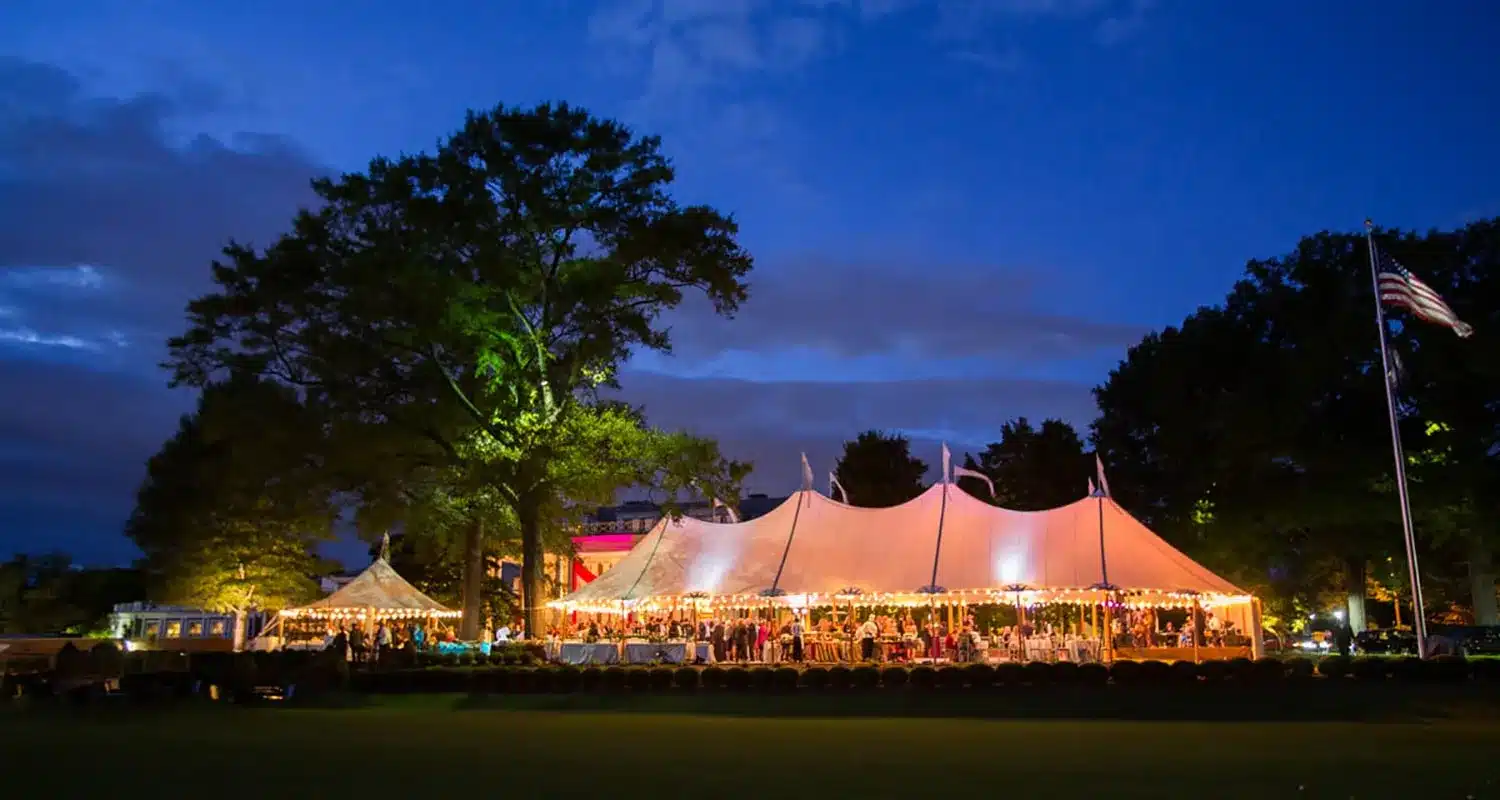
Beautiful nighttime tent events start with statement lighting, the pieces that make guests say “wow” and keep every moment comfortably, photo-ready bright. Think chandeliers that crown a sailcloth peak, warm bistro strands that soften a clear-span ceiling line, and uplighting that gives a century tent depth and dimension.
At Skyline Tent Company, we approach lighting as part of the full build: matching fixtures to the tent structure, planning clean power, and installing with the same attention we bring to flooring, walls, and layout. This guide breaks down what statement lighting is, which options read the most elevated, and how to layer light for arrivals, dinner, and dancing. So your tent feels intentional, luxurious, and effortless from first look to final song.
Which Statement Lighting Fixtures Create Luxury and Elegance in Tent Events?
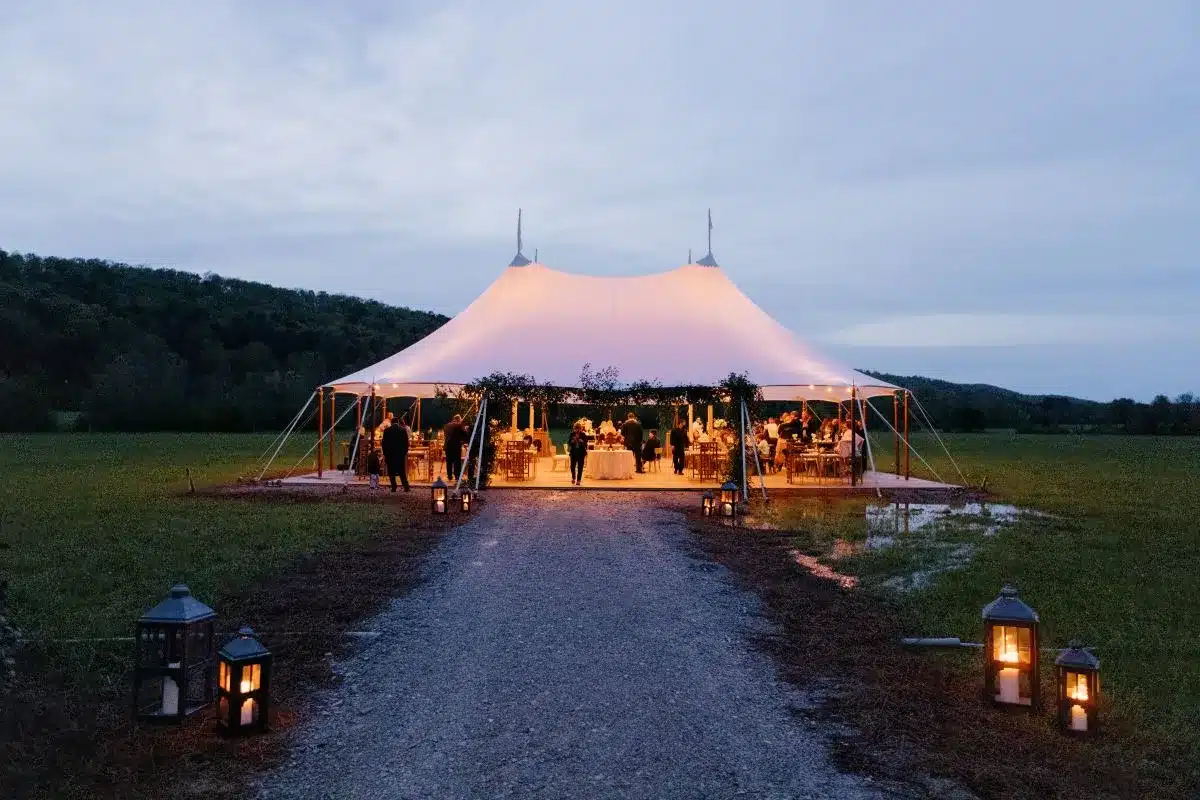
Statement lighting works best when it’s chosen with the tent structure in mind. Chandeliers deliver the “centerpiece” moment, uplighting shapes the tent’s architecture with color and depth, and bistro/string lights add warmth and rhythm overhead. The right mix depends on the build: sailcloth tents shine with suspended focal pieces, clear-span engineered structures support clean linear runs and larger installs, and century tents look especially elevated with perimeter washes that bring out the fabric lines.
This comparison keeps the focus on what reads most refined: fixtures that fit the tent geometry, enhance the architecture, and install cleanly.
How do chandeliers elevate tent decor in practice?
Chandeliers create an instant “designed” feeling—especially in tents where the ceiling height and peak lines beg for a focal point. Crystal adds sparkle and formal elegance, while modern shapes (matte metals, clean globes, layered pendants) feel editorial and current. The key is proportion: size chandeliers to the layout and hang them to complement the peak height without crowding sightlines. Because chandeliers concentrate weight, they should be planned early so rigging points and spacing align with the floor plan and overall ceiling design.
What are the benefits of uplighting for tent weddings and corporate events?
Uplighting is the fastest way to make a tent feel dimensional. It highlights pole lines, reveals fabric texture, and frames the perimeter so the space looks larger and more intentional. For weddings, warm ambers and soft blush tones read romantic; for corporate events, cool whites and brand-aligned hues create a polished, purposeful atmosphere. Consistency matters most here—even spacing, clean aiming, and scene-based controls so the look can shift smoothly from arrival to dinner to dancing.
How can string and bistro lights add warmth and elegance?
String and bistro lights are simple, but when they’re laid out with intention they look high-end—not “backyard.” Canopy, crisscross, and marquee patterns each create a different ceiling texture, and warm globe bulbs give the space that welcoming, golden glow guests love. They pair especially well with chandeliers (for focal drama) and uplighting (for depth), creating a layered result that feels both elevated and comfortable. The difference-maker is execution: straight runs, consistent spacing, and secure mounting so the install looks clean from every angle.
How Do You Design Layered Lighting for Elegant Nighttime Tent Events?
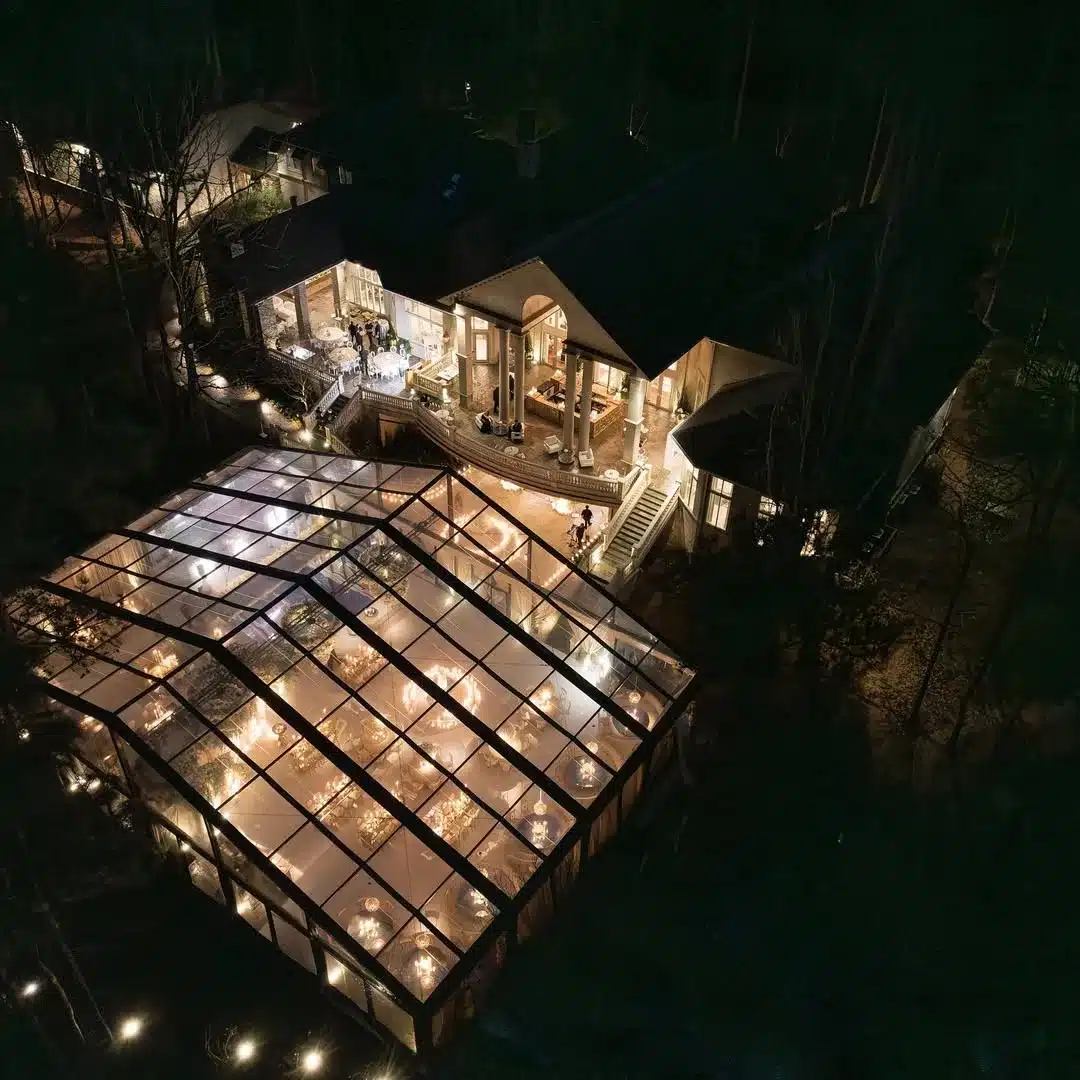
Elegant tent lighting isn’t one fixture, it’s a layered plan. By separating lighting into ambient, task, and accent, you create a space that feels warm and elevated, working smoothly for service, speeches, and dancing. The goal is simple: guests think the mood, staff has the visibility they need, and key moments look incredible on camera.
Start with a lighting plot that divides the tent into distinct zones (entry, dining, dance floor, bar, stage, and lounges). Then, choose fixtures for each layer and add dimming/scene control, allowing you to adjust the atmosphere throughout the night without altering the installation.
Layered Lighting at a Glance:
Defining these layers upfront also keeps planning efficient—equipment lists are cleaner, power is easier to allocate, and cues map naturally to the timeline (arrival → dinner → dancing).
What is the role of ambient, task, and accent lighting in tent settings?
Think of it like styling an outfit:
- Ambient is the foundation—comfortable brightness and a flattering tone throughout the space.
- Task is functional—light exactly where guests and staff need to see clearly (drinks, food, check-in).
- Accent is the jewelry—high-impact highlights that make the tent feel designed: peaks, poles, florals, the couple’s table, the stage, or a branded reveal.
For a typical reception, chandeliers and soft canopy wash create the ambient layer. Bar and service areas receive brighter task lighting, while accents highlight the head table, dance floor edges, signage, and architectural lines. With scene control, you can go welcoming and bright for arrivals, warm and intimate for dinner, then energized and dramatic for dancing—without swapping fixtures.
How does color theory influence mood and atmosphere in tent lighting?
Color temperature and saturation do most of the emotional work:
- Warm white (2700–3000K): romantic, candlelit, flattering for receptions
- Neutral white (3000–3500K): clean, natural skin tones, great for photos and corporate events
- Saturated color: best used as an accent—brand moments, entrances, stages, or quick “reveal” cues
A reliable formula: keep the ambient layer warm or neutral, then use subtle accents to add depth. Reserve bold color washes for short, intentional moments so the space stays elegant—not nightclub—unless that’s the goal.
What Are the Best Installation and Safety Practices for Tent Event Lighting?
The most beautiful lighting plan only works if it’s installed safely, powered reliably, and protected from weather. For tent events, that means three priorities from the start: power planning, professional rigging, and clean outdoor-rated electrical distribution. When these are handled early—alongside the tent layout—you avoid last-minute compromises, keep guest areas safe, and ensure lighting stays consistent through the full timeline.
Planning Checklist: Who Handles What
This approach keeps responsibilities clear and reduces day-of surprises—especially when timelines are tight and weather is unpredictable.
How is power managed for large-scale tent lighting?
Start by planning power the same way you plan floor space: by zones. Group lighting into logical areas (dining, dance floor, stage, entry, perimeter) so you can control scenes and isolate issues quickly if something trips. Then build the power plan with headroom, and keep lighting on dedicated circuits instead of sharing with other heavy loads.
Practical considerations that matter in real venues:
- Placement: keep generators accessible for fueling and far enough away to minimize noise near guest areas
- Cable runs: long distances require careful routing and protection so walkways stay clean and safe
- Redundancy: critical moments (speeches, stage, key walkways) should have priority planning so the event doesn’t go dark at the wrong time
A full-service partner can coordinate tent, lighting, and power as one system, so the structure, rigging plan, and distribution all work together cleanly.
What safety guidelines ensure a secure lighting setup?
A secure setup comes down to verified hanging, protected power, and thoughtful cable management. The essentials:
- Rigging is planned—not improvised. Hanging points must match the tent structure and use rated hardware.
- Electrical is protected. Outdoor connections are weather-resistant, circuits are protected as required, and distribution is organized and labeled.
- Cables don’t become hazards. Runs are routed away from guest paths when possible, and crossings are covered and secured.
- Weather is assumed. Even on a perfect forecast, installs should be ready for damp conditions, wind shifts, and overnight condensation.
Simple Safety Checklist (Planner-Friendly)
- Confirm approved hanging locations and load limits before any fixtures go up
- Keep lighting on dedicated circuits and build in reasonable capacity headroom
- Use outdoor-rated connections and protect exposed runs from moisture
- Route and secure cables to eliminate trip hazards and messy sightlines
- Label zones/circuits so troubleshooting is fast and unobtrusive
Done right, safety doesn’t compete with aesthetics—it supports it, ensuring the design looks intentional and performs flawlessly all night.
What Trends Are Shaping Sustainable and Interactive Tent Lighting Right Now?
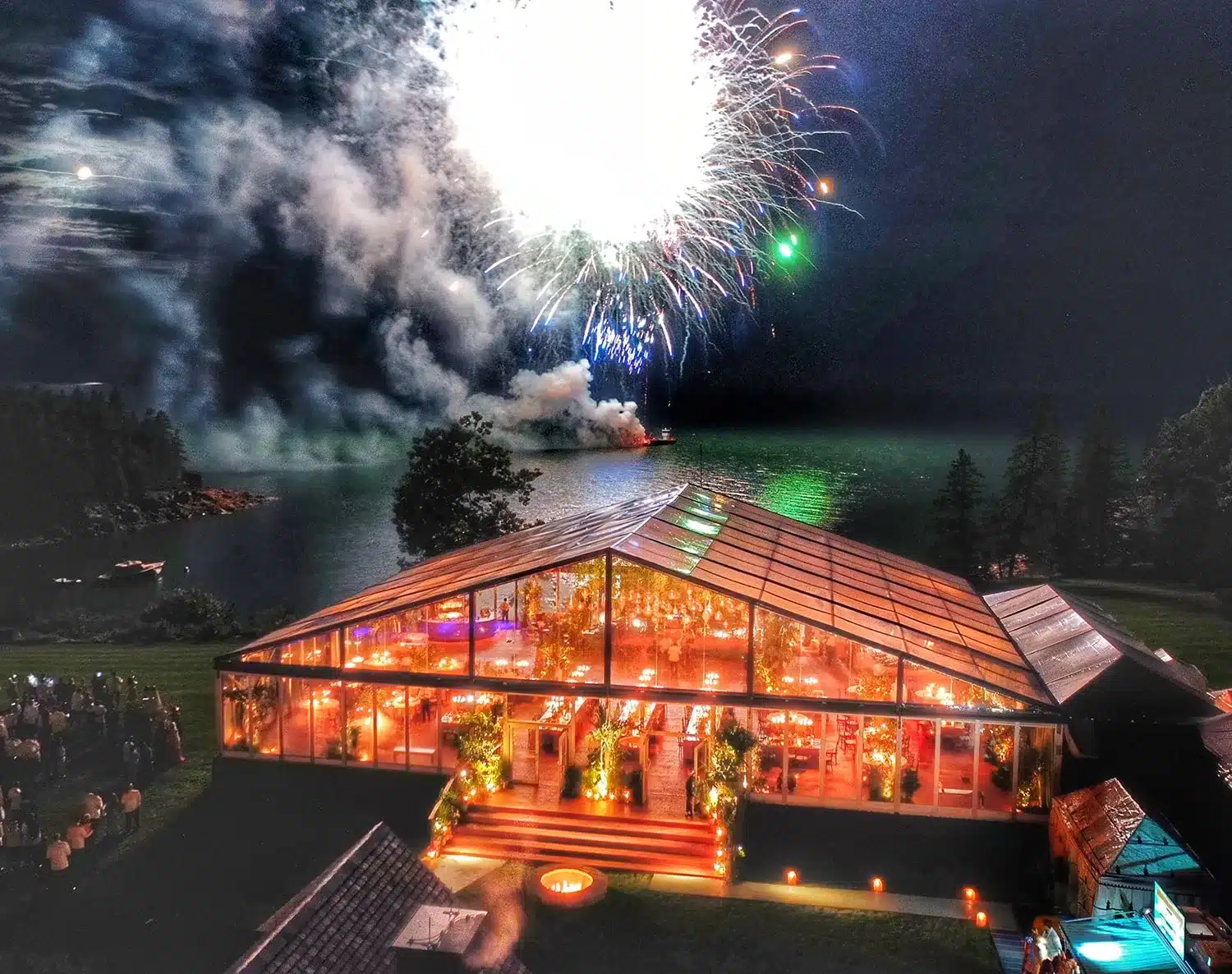
Today’s most-requested tent lighting is doing more with less: cleaner installs, smarter power use, and high-impact moments that feel intentional, not gimmicky. Planners are prioritizing efficiency (to reduce generator demand and cable clutter) while still wanting lighting that photographs beautifully and supports branded or “wow” moments.
Here are the biggest direction shifts influencing modern tent lighting:
- High-efficiency LED as the standard for chandeliers, uplighting, and washes—lower power draw without sacrificing atmosphere
- Battery-supported fixtures in targeted zones to reduce cable runs and speed up load-in/load-out
- Hybrid approaches that combine warm ambient looks with programmable accents (especially for entrances, stages, and brand moments)
- Intentional interactivity like timed reveals, logo gobos, and scene changes synced to the run-of-show—more “designed experience,” less “light show”
The key is balance: sustainable choices should simplify logistics, and interactive features should support the event story (arrival, reveal, first dance, keynote), not distract from it.
How do eco-friendly LED and battery-supported solutions benefit tent events?
LED-based systems help in three practical ways:
- Less power demand → smaller generator needs or more headroom for other essentials
- Cleaner installs → fewer heavy cable runs and a tidier guest-facing environment
- More flexibility → battery-supported fixtures can be placed in lounges, entries, or photo moments where cabling would be intrusive
For planners, it’s not just sustainability—it’s also a smoother build, faster transitions, and fewer visual distractions in the finished space.
What interactive lighting options actually enhance guest experience?
The most effective “interactive” lighting is controlled and purposeful. Instead of constant movement, think:
- Programmable gobos for monograms, logos, or patterned textures at entries and dance floors
- Scene-based transitions that shift the mood at key moments (doors open → dinner → speeches → dancing)
- Music-synced energy cues used selectively—best saved for the dance floor and short peaks, not throughout the night
Budgeting should always include time for pre-programming and on-site testing, so the experience feels polished and reliable.
How Can Skyline Tent Company Help You Achieve Elegant Nighttime Tent Lighting?
Skyline Tent Company delivers statement lighting as part of a cohesive, full-build plan—pairing elevated fixtures with the right tent structure and coordinating the details that make lighting look effortless: layout, rigging approach, power planning, installation, and overall design flow. For planners who want one partner to manage tenting and lighting together (and integrate upgrades like flooring or walls where needed), Skyline streamlines the process from concept to install.
What custom lighting services does Skyline offer for tent events?
Skyline supports lighting design and installation, fixture sourcing for chandeliers, uplighting, bistro/string lights, and gobo projection—plus coordination for power and climate needs so the lighting plan works with the full site build. The result is a design-forward look that’s structurally appropriate, photo-ready, and smooth to execute.
Frequently Asked Questions
What factors should you consider when choosing statement lighting for different tent types?
Start with the tent’s architecture and height, then choose fixtures that complement those lines instead of fighting them. Sailcloth tents are ideal for suspended chandeliers that highlight the peak; century tents come alive with perimeter uplighting that reveals fabric texture and length; clear-span engineered structures support clean linear runs, larger installs, and overhead canopies. Always confirm clearance, mounting options, and load limits to ensure the design appears intentional and installs safely.
How can lighting design impact the overall guest experience at tent events?
Lighting is what makes a tent feel warm, elevated, and easy to navigate. A good plan guides attention to the right places—entry, dining, dance floor, stage—while keeping everyone comfortable and photo-ready. Flattering color temperature and balanced placement reduce harsh shadows, enhance the appearance of faces and florals, and help key moments feel more cinematic and memorable.
What are best practices for integrating technology into tent lighting?
Use control systems to create repeatable scenes—such as arrival, dinner, speeches, and dancing—so that transitions feel effortless. Plan power and any control needs early, test during load-in, and allow time for programming so cues are smooth (not improvised). If you add interactive elements (like timed reveals, branded gobos, or music-synced dance-floor moments), keep them purposeful and limited—and always build in a simple backup look that still feels beautiful.
How can planners ensure safety during lighting installation?
The simplest rule: treat lighting as part of the build, not an add-on. Confirm hanging locations and load limits in advance, use professional-grade hardware, and rely on credentialed teams for complex installs. Keep electrical distribution organized and protected for outdoor conditions. Route cables to avoid trip hazards and label zones to facilitate fast and discreet troubleshooting.
What role does color temperature play in creating the right atmosphere?
Color temperature is one of the biggest drivers of “feel.” Warm white creates intimacy and romance, neutral white preserves natural skin tones for photography and corporate environments, and saturated colors work best as accents for entrances, stages, and brief reveal moments. The most elegant results typically maintain a warm or neutral base lighting, with color used intentionally—not everywhere at once.
What are the benefits of using sustainable lighting solutions for tent events?
Efficient lighting isn’t just greener—it’s cleaner and easier to execute. High-efficiency LEDs and battery-supported fixtures can reduce power demand, minimize cable clutter, speed up load-in/load-out, and offer more flexibility in where you place feature moments. For clients, it also supports sustainability messaging without sacrificing the elevated look they want.
Conclusion
Statement lighting is what transforms a tent from a structure into an experience, welcoming, polished, and unforgettable after dark. With the right fixtures, a layered plan, and professional installation, you can create nighttime tent events that look intentional, photograph beautifully, and run smoothly from first arrival to last dance. If you’re planning an event, connect with Skyline Tent Company to align tent options, lighting design, and power planning early—so the final result feels effortless on site.
