
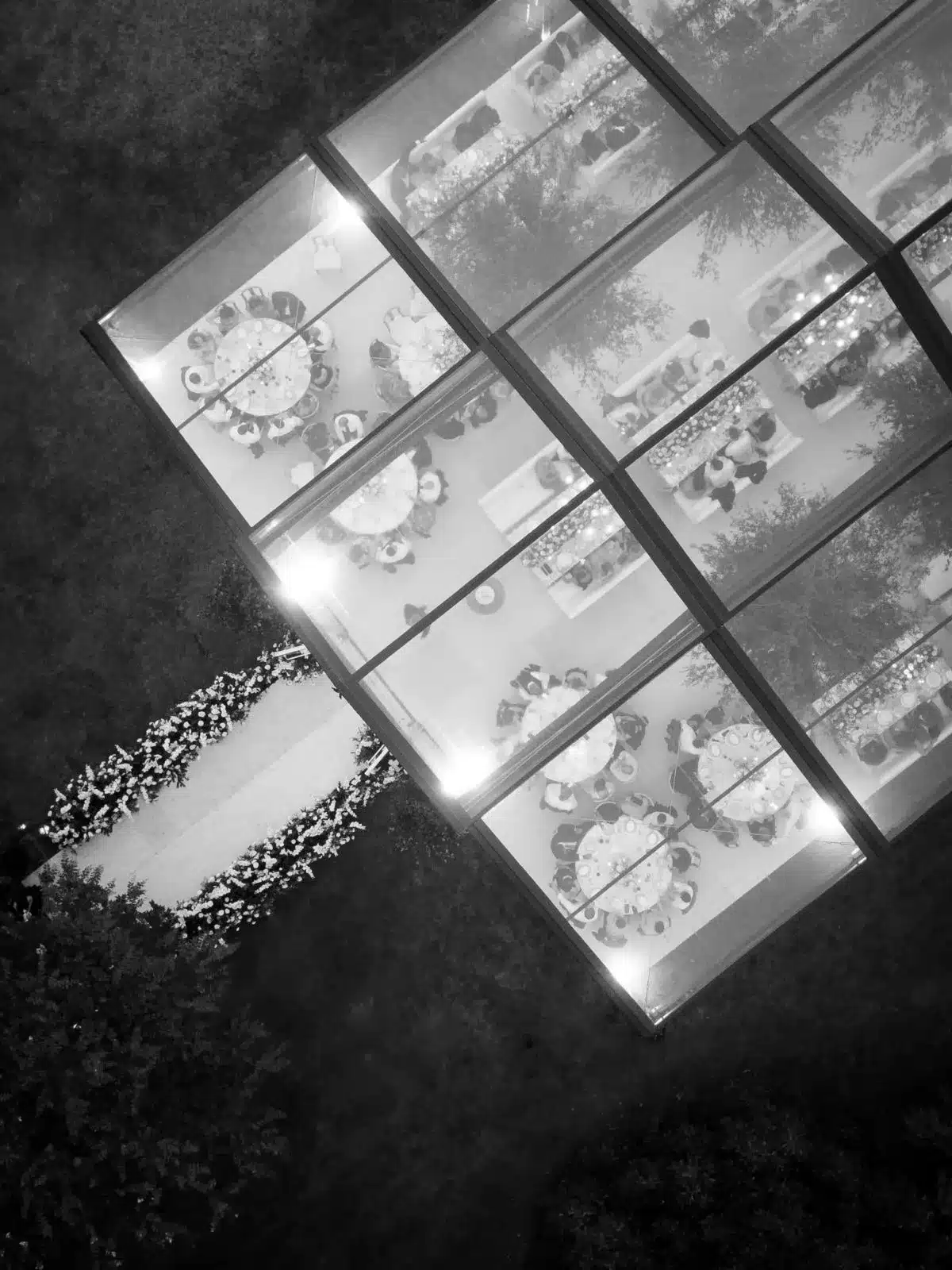
Luxury tent lighting is the intentional layering of decorative, ambient, and technical illumination to transform a temporary structure into a polished, photo-ready environment. When fixture selection, color temperature, and controls are planned together, lighting does more than “make it bright”, it creates focal moments, supports photography and video, and guides how guests move through the space from arrival to last dance.
This guide breaks down what reads as luxury in a tented setting and how to execute it with confidence. You’ll learn which fixtures perform best in sailcloth, century, and engineered clear-span tents, how lighting choices shape mood for weddings and corporate events, and which modern LED and control options reduce power demands while expanding creative possibilities.
Why Luxury Tent Lighting Matters for Event Ambiance
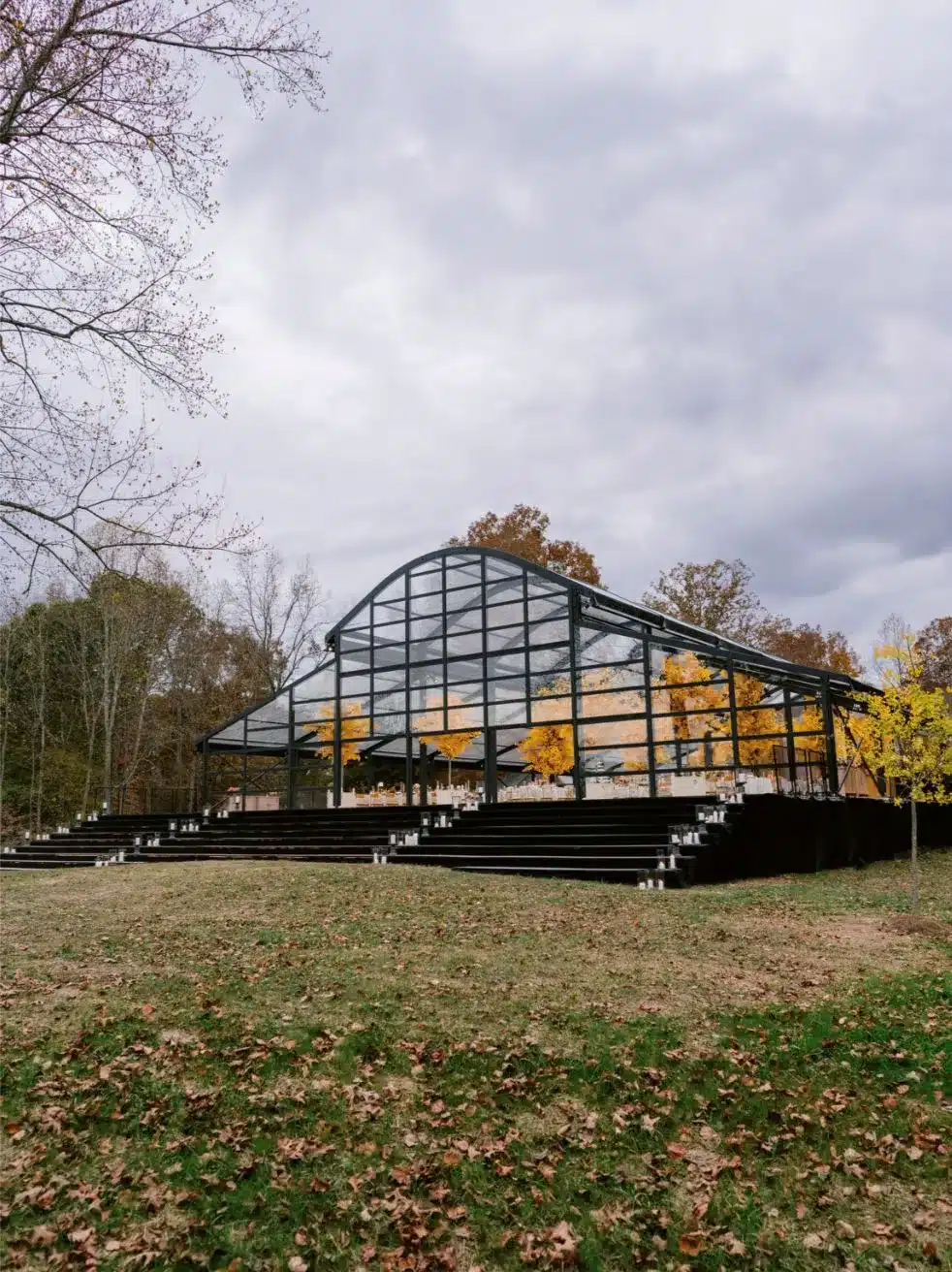
Luxury lighting defines atmosphere by shaping perceived texture, scale, and focal points inside what would otherwise be a blank canvas. It does this through layered ambient wash, accent uplighting, and decorative fixtures that guide attention and create emotional tone. Thoughtful lighting improves guest comfort and wayfinding, elevates photography and video, and highlights key moments—entrances, speeches, first dances—without changing the tent itself. On the practical side, lighting choices drive power needs and rigging plans, so coordinating early with tent and electrical teams prevents surprises during load-in. Below we break down how lighting affects mood and which elements reliably read as “luxury” in tented events.
How Lighting Shapes Mood and the Guest Experience in Tents
Lighting sets mood in tents through color temperature, contrast, and dynamic scenes that cue emotional responses: warm filament tones invite intimacy, while cooler washes support clarity for corporate moments. Layering—ambient overhead light plus uplights on drapery and targeted accents on tables or stages—adds depth and natural sightlines for guests and cameras. For weddings, soft warm scenes encourage lingering and conversation; for corporate events, controlled cool whites preserve legibility and brand color accuracy. Knowing how these elements interact helps planners specify scenes that support transitions like cocktail → dinner → dancing.
The Core Lighting Elements That Define a Luxury Tent Environment
Signature elements for luxury tent lighting include statement chandeliers, DMX-controlled uplighting and wash fixtures, string/bistro lights, gobo projection, and immersive LED pixel systems that add motion and texture. Chandeliers anchor the room, uplights color large surfaces, strings set warmth and scale, gobos add branding or pattern, and immersive systems enable synchronized storytelling. The right mix depends on tent translucency, ceiling height, and the guest experience you want to create—matching fixture scale to tent proportions prevents visual imbalance. These definitions help planners prioritize mood and logistics.
Signature Lighting Design Services from Skyline Tent Company
Our signature lighting process starts with a site survey and design concept that aligns fixture selection and control programming with tent type, finish, and event goals, then moves through procurement, professional installation, and on-site support. Common services include custom fixture rentals (crystal and contemporary chandeliers), LED uplighting and wash systems, string and bistro installations, gobo projection for logos and monograms, and immersive dynamic lighting tied to show cues. We integrate lighting with tent infrastructure—rigging points, power distribution, and climate control—so the design is both beautiful and compliant with structural limits. Below we explain tent-specific integration and on-site protocols that ensure smooth execution and reliable results.
How Custom Lighting Solutions Fit Different Tent Styles
Integration varies by tent type because Sailcloth, Century, and engineered structures differ in translucency, ceiling shape, and rigging capacity. In translucent Sailcloth tents, backlighting and soft uplighting accentuate drape and glow; Century tents with peaked geometry benefit from centrally located chandeliers that highlight the height. Engineered structures with exposed trusses support hard-mounted production fixtures and precise pixel-mapping, but they require thorough load calculations and approved rigging hardware. Choosing fixture scale and mounting methods to suit tent form preserves aesthetics while meeting safety and structural requirements.
Professional Installation and On-Site Support for Flawless Execution
Professional installs include a pre-event site survey, detailed power and distribution plans, certified rigging, coordinated load-in sequencing, and an on-site technical crew to run cues and troubleshoot. We prepare power generation and distribution drawings that tie tent electrical needs to mains or generators, and we stage cable runs to meet safety and accessibility standards. Safety checks, tagging and load testing for chandeliers, and DMX addressing for control systems are completed before show calls to reduce last-minute issues. Post-event strike and inventory procedures protect client timelines and rental assets while maintaining accountability.
Luxury Tent Lighting Types That Create Dramatic Visual Impact
A clear catalog of fixture types explains their visual effect, best uses, tent compatibility, and power needs so planners can compare options and anticipate logistics. The table below outlines commonly used fixtures in luxury tent settings and how they deliver transformation through focal impact, atmosphere, and technical requirements.
Use this comparison to balance aesthetic goals with tent form and technical commitments. Picking fixtures that match tent compatibility reduces install complexity and keeps power plans aligned with the design intent.
How Chandeliers Elevate Wedding and Corporate Tent Events
Chandeliers serve as visual anchors that instantly signal refinement; they offer decorative scale and practical downlight that complements table lighting for dining and photos. Styles range from crystal to modern metal frames—choice depends on event tone (classic, contemporary, or hybrid) and the tent’s ceiling geometry for visual balance. Logistics include verifying weight, specifying load-rated rigging points, and ensuring hardwired circuits for safe operation. When integrated properly, chandeliers create dramatic arrival moments and deliver photographic highlights that define event imagery.
Benefits of Dynamic Uplighting and Wash Lighting for Tents
Dynamic uplighting and wash fixtures provide programmable color scenes that shift mood across an event timeline, allowing smooth transitions from cocktail to dinner to dance without changing fixtures. DMX-controlled LED systems are energy-efficient and offer a wide palette of hues while reducing generator load compared with legacy tungsten gear. Programming supports cue-based changes tied to music or schedule, enhancing emotional dynamics and preserving brand color fidelity for corporate events. Because these fixtures are relatively low-power and flexible, they simplify color coordination and cabling when planned early.
How String and Bistro Lights Add Warmth and Intimacy
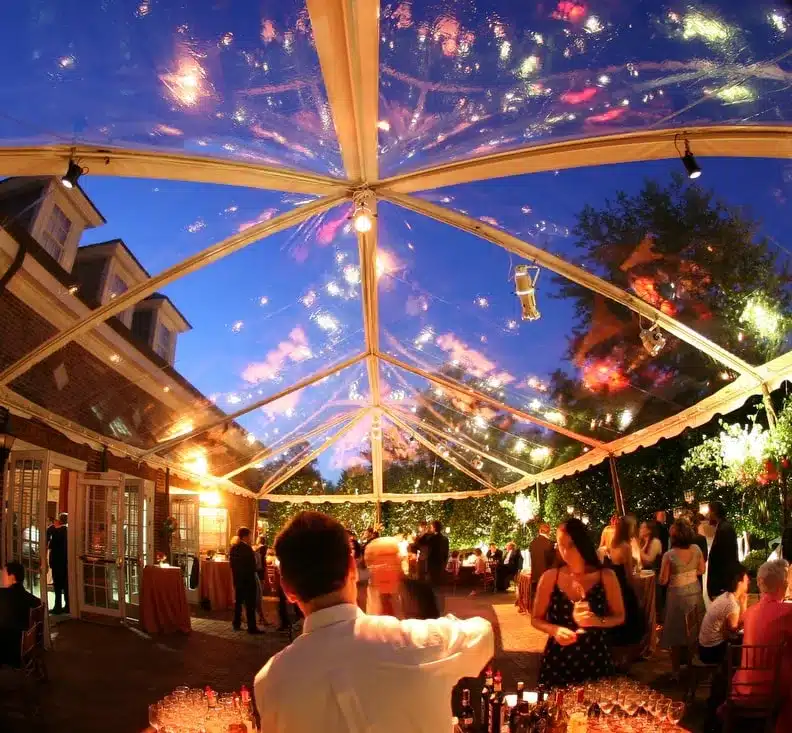
String and bistro lights create human-scale illumination that visually lowers the tent ceiling, adding romance and conversational pockets ideal for receptions and lounges. Installation patterns—crisscross canopies, radial spokes to a center point, or perimeter swags—dramatically change perceived texture and scale. LED filament bulbs provide a vintage look with energy efficiency, and battery or low-voltage hardwired options allow installation where mains access is limited. For intimate gatherings, careful spacing and dimming control set the scene without overpowering focal fixtures.
The Role of Gobo Projection in Branding and Theming
Gobo projection places logos, monograms, or textured patterns onto tent architecture to reinforce brand identity or wedding motifs without permanent signage. Effective projection needs the right throw distance, surface contrast, and lumen output; typical placements include entrances, the dance floor, or stage backdrops for maximum visibility. Gobos work well on drapery, flooring, and flat backdrops, and their temporary nature makes them a cost-effective branding tool. Used strategically, gobos turn empty surfaces into storytelling real estate that supports messaging and photography.
Immersive and Interactive Lighting Experiences That Stand Out
Immersive lighting—pixel mapping, perimeter LED, and synchronized shows—turns tents into dynamic environments by animating surfaces and creating motion guests experience together. These systems require tight coordination with AV, staging, and content teams to map fixtures and define cues that align with music and program flow. The result is sensory: coordinated movement and color shifts deepen engagement and can create a single unforgettable highlight. Budget and scale matter—immersive systems demand more power, control infrastructure, and design time than static approaches.
Popular Wedding and Corporate Lighting Ideas and Sample Packages
Sample packages clarify scope, guest counts, and setup time so planners can quickly find a match for their event goals; the examples below are starting points to customize by tent type and schedule. Wedding packages typically favor warm palettes and signature chandeliers, while corporate packages emphasize brand color accuracy, projection, and stage clarity. Combining decorative fixtures with DMX-controlled washes gives atmosphere and adaptability across program segments. Use the package table to compare options quickly—designers will adapt elements based on guest count, tent form, and timeline.
These samples show scalable approaches: weddings lean toward warmth and focal fixtures, corporate clients prioritize branding and clarity. They’re meant to be tailored—our designers will adapt elements to suit your guest count, tent form, and timeline.
Which Packages Best Match Wedding Ambiance and Themes?
Wedding packages align with common themes: Romantic Warmth focuses on warm color temperatures and filament-style strings for an intimate feel; Grand Ballroom emphasizes chandeliers and neutral uplighting for formality; Intimate Glow uses low-profile bistro lighting for smaller celebrations. Choice depends on guest count and tent height—larger tents can support grand chandeliers, while smaller tents rely on layered uplighting and strings to reduce perceived scale. Prioritize timeline and photography needs so key scenes are lit optimally; package flexibility lets you customize without starting from scratch.
How Corporate Lighting Strengthens Brand Presence and Atmosphere
Corporate lighting prioritizes color accuracy, clear stage lighting, and projection to ensure consistent brand delivery across photos, livestreams, and live audiences. Gobos reinforce logos in arrival areas, while calibrated stage wash keeps presenters and demos visible and true to brand under broadcast conditions. Networking zones benefit from warm accents that encourage conversation without sacrificing clarity. ROI-focused choices—reusable gobos and programmable washes—create repeatable assets across events.
Frequently Asked Questions
What are the advantages of using smart LED lighting in luxury tent events?
Smart LED lighting brings energy efficiency, accurate color rendering, and the flexibility to create dynamic scenes. LEDs use far less power than traditional sources, reducing generator load and heat inside tents. Remote control capabilities let technicians make quick adjustments during an event, and modular designs simplify maintenance and replacement. Overall, smart LEDs enhance aesthetics while improving operational efficiency.
How can lighting design impact the overall event budget?
Lighting influences both upfront costs and operating expenses. High-quality fixtures and professional installation may raise initial spend but can significantly improve guest experience and event imagery—often a strong return for luxury events. Energy-efficient solutions reduce generator and fuel costs over time. With careful planning and right-sized specifications, planners can balance budget constraints with the desired visual impact.
What considerations should be made for outdoor tent lighting?
When planning outdoor tent lighting, assess the tent’s location, surrounding environment, and natural light patterns. Choose fixtures rated for outdoor use when exposure is a factor, and confirm power source and distribution early. Design lighting to enhance pathways, entrances, and focal points while maintaining safety and accessibility. Weather, terrain, and nearby structures should inform fixture placement and cabling routes.
How does the choice of color temperature affect event lighting?
Color temperature directly shapes atmosphere. Warmer tones (around 2700K–3000K) create intimacy—ideal for weddings and social gatherings—while cooler whites (around 4000K–5000K) support clarity for corporate presentations. Using different color temperatures throughout the event lets planners guide mood and ensure visual consistency for photos and livestreams.
What are the best practices for integrating lighting with tent decor?
Start by evaluating the tent’s decor—drapery, table settings, and centerpieces—and use light to highlight those elements. Employ uplighting to accent drapery, downlighting for tables, and carefully coordinate color palettes so lighting complements the theme. Pay attention to fixture placement to avoid clutter and maintain a cohesive look; the goal is to enhance decor, not compete with it.
How can event planners ensure the safety of lighting installations in tents?
Work with certified professionals familiar with tent rigging and electrical standards. Conduct a thorough site survey to assess load capacities and power distribution. Use approved rigging hardware, perform load testing, and follow established safety protocols during installation. Regular checks during the event help detect issues early. Prioritizing safety protects guests and preserves equipment.
Conclusion
Thoughtful tent lighting turns ordinary spaces into memorable experiences—elevating atmosphere and guest engagement through considered design and modern technology. By understanding how fixture choices, color temperatures, and dynamic scenes interact, planners can craft moments that resonate. Ready to elevate your next event? Contact us to explore tailored lighting solutions and bring your vision to life.
