
Throwing an event in your backyard is exciting, but picking the right tent size can feel tricky. Getting the footprint right keeps guests comfortable and traffic flowing. This guide walks you through measuring your yard, matching tent size to guest count and event type, and handling permits and logistics. Read on and you’ll be ready to choose a tent that fits your space and your plan.
We’ll show you how to measure your yard, recommend tent sizes for different guest counts and setups, compare tent types for backyard use, and cover local permit and practical concerns. We’ll also explain how Skyline Tent Company can simplify the process from measurement to installation.
How Do You Measure Your Backyard for Event Space Planning?
Accurate measurements are the foundation of a smooth setup. Measure the usable area where the tent will sit and factor in room for walkways, entrances, and any extra features like a dance floor or food station. A precise footprint helps you pick a tent that fits with room to spare.
What Steps Are Needed to Accurately Measure Your Backyard Area?
Follow these simple steps to measure your backyard:
- Gather Tools: Grab a tape measure, a few stakes, and string to mark the outline.
- Identify Boundaries: Mark the corners of the usable space so you know the tent’s limits.
- Measure Length and Width: Measure the longest and widest points, and note any obstacles—trees, patios, or utility lines—that affect placement.
- Calculate Area: Multiply length by width to get total square footage. Use that number when choosing tent sizes.
Doing this once, carefully, saves time and surprises later on.
How Do Terrain and Access Affect Tent Setup in Backyard Spaces?
Ground conditions and site access change how a tent is installed. Take a look at the slope, soil firmness, and how crews will reach the site. These factors will determine equipment needs and, sometimes, which tent style is best.
- Types of Terrain: Note slopes, rocks, roots, or soft soil that could require leveling or additional anchoring.
- Access Points: Confirm a clear route for delivery trucks and installation crews to avoid delays.
- Solutions for Uneven Ground: For sloped yards, consider leveling tools, platforms, or a tent style that adapts to grade differences.
Addressing terrain and access early makes setup faster and the final layout more reliable.
What Is the Recommended Tent Size Based on Guest Count and Event Type?

Your event format determines how much space each guest needs. Start with seating and add space for circulation, service areas, and activities. Below are common planning figures to guide your tent selection.
How Much Space Per Guest Is Needed for Different Seating Arrangements?
Use these guidelines to estimate square footage per person:
- Theater Style: 6–8 sq ft per guest
- Banquet Style: 10–12 sq ft per guest
- Cocktail Style: 8–10 sq ft per guest
Multiply your guest count by the appropriate figure to get a baseline tent size.
How Do Event Elements Like Dance Floors and Buffet Areas Influence Tent Size?
Extras change the math. Set aside dedicated space for activities so seating and circulation aren’t compromised.
- Dance Floors: Plan roughly 4–5 sq ft per dancer. For example, 50 active dancers need about 200–250 sq ft.
- Buffet Areas: Allow 10–15 sq ft for buffet stations plus space for queuing and service.
- Overall Layout: Always leave room for aisles, service access, and comfortable movement beyond seating and activity zones.
Factoring these pieces into your layout delivers a better experience for guests and staff.
Which Tent Types Are Best Suited for Backyard Events and Their Size Capacities?
Different tent styles solve different needs. Your choice should balance aesthetics, installation constraints, and how you plan to use the space.
What Are the Benefits and Size Options of Sailcloth Tents for Backyard Weddings?
Sailcloth tents are a favorite for weddings and upscale backyard events because they combine clean lines with soft, natural light. Consider these points:
- Aesthetic Appeal: Translucent fabric softens daylight for an elegant, open look.
- Size Options: Common sizes range from 20×20 ft (400 sq ft) up to 40×100 ft (4,000 sq ft), covering small to very large celebrations.
- Weather Resistance: Built to handle changing conditions while keeping an upscale appearance.
How Do Engineered Structures Accommodate Large Backyard Corporate Events?
For larger or more technical events, engineered structures offer strength and flexibility:
- Capacity and Layout Flexibility: These systems can be configured to support large crowds and specialized layouts.
- Durability and Weather Resistance: Designed to meet stricter structural requirements for safety and reliability.
- Examples of Corporate Events: Ideal for product launches, conferences, and large outdoor meetings where controlled environment and branding matter.
Choosing the right tent type helps you balance function, comfort, and visual impact.
Thoughtful planning and design set the stage for a tent that works well and looks great for any season.
How Can You Use an Event Tent Capacity Calculator to Determine Ideal Tent Size?
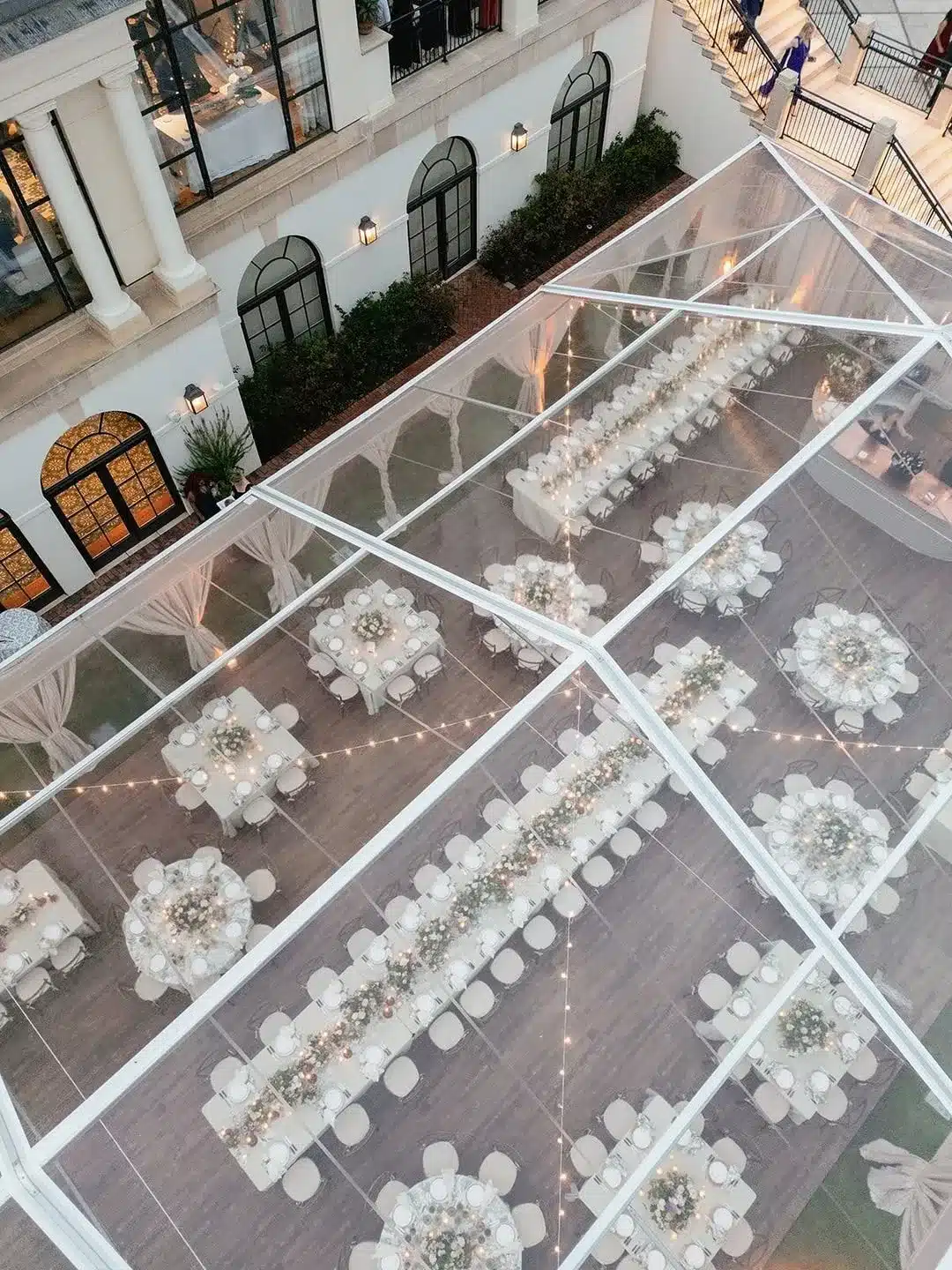
A tent capacity calculator makes the sizing process straightforward. It factors in guest count, layout, and extra elements so you get a practical recommendation quickly.
What Inputs Are Required for Accurate Tent Size Recommendations?
Provide these key inputs for reliable results:
- Guest Count: The total number of attendees you expect.
- Event Type: Tell the calculator if it’s a wedding, corporate event, cocktail party, etc., so it can tailor the layout assumptions.
- Layout Preferences: Indicate your seating style and any extras—dance floor, staging, buffet—to refine the recommendation.
With those details the calculator gives a helpful starting point for tent selection.
How Does the Calculator Help Simplify Backyard Event Planning?
Using a calculator speeds planning and reduces guesswork:
- Time-Saving Benefits: Get size recommendations in moments instead of doing manual math.
- Accuracy in Recommendations: The output helps avoid undersized or oversized tents.
- User-Friendly Features: Many tools are intuitive and guide you through common layout choices.
Pair a calculator’s output with an on-site review to finalize the best solution for your yard.
What Local Permits and Practical Considerations Affect Backyard Tent Rentals in Charlottesville, VA?
If you’re hosting in Charlottesville or Albemarle County, check local regulations early. Some tents—especially those over 400 sq ft—trigger permit and inspection requirements. Planning ahead avoids last-minute complications.
Do You Need Permits for Backyard Tents and How to Obtain Them?
Follow these steps when a permit is required:
- Check Local Regulations: Contact the City of Charlottesville or Albemarle County building department to confirm rules for tent permits and thresholds.
- Submit an Application: Complete any required forms and include supporting documents like site plans or event details.
- Schedule Inspections: Some jurisdictions require inspections before or after installation to verify safety compliance.
Starting the permit process early keeps your timeline on track.
How Do Power, Climate Control, and Site Inspections Impact Tent Setup?
Practical needs affect the tent layout and installation plan:
- Importance of Power Access: Plan where lighting, sound, and climate control will plug in—this affects generator placement and cable runs.
- Climate Control Considerations: Seasonal heating or cooling keeps guests comfortable and may require added equipment or clearances.
- Site Inspection Requirements: Authorities or your rental team may inspect the site to confirm suitability and safe anchoring options.
Address these items during planning to avoid surprises on event day.
Why Choose Skyline Tent Company for Customized Backyard Event Tent Solutions?
Skyline Tent Company combines experience, reliable equipment, and local knowledge to make backyard events run smoothly. We help you choose the right tent, handle permits and logistics, and install everything safely so you can focus on the event.
How Does Skyline Ensure Durable, Weather-Resistant Tent Rentals for Outdoor Events?
We specify materials and assemblies that perform in real outdoor conditions. Key features include:
- High-Quality Materials: Premium fabrics and structural components for protection and longevity.
- Rigorous Testing: Tents and fittings are tested to meet safety and durability standards.
- Customization Options: A variety of sizes and styles so your tent fits the yard and the event plan.
What Comprehensive Services Does Skyline Offer to Simplify Backyard Event Logistics?
Beyond tents, we support the full setup:
- Event Planning Support: Our team can help with layout options and logistics to optimize flow and comfort.
- Additional Rental Options: Tables, chairs, lighting, and other rentals to complete the setup.
- Expert Installation: Professional crews handle safe, efficient installation and takedown.
Working with a single trusted partner reduces coordination and gives you one point of contact from start to finish.
This table outlines common tent types, the guest ranges they suit, and the events they work best for to help you narrow choices quickly.
Frequently Asked Questions
What factors should I consider when choosing a tent type for my backyard event?
Think about guest count, event style, and site conditions. Sailcloth tents offer an elegant look and lots of natural light; frame tents fit tighter spaces and uneven ground; engineered structures handle large or technical setups. Also plan for walkways, service areas, and weather contingencies when picking a style.
How can I ensure my backyard is suitable for a tent setup?
Walk the site with a tape measure and note obstacles, slopes, and ground conditions. Confirm a clear path for delivery and crew access. If the ground is soft or uneven, discuss leveling or special anchoring with your rental team. A quick site check flags potential issues early.
What are the common mistakes to avoid when planning a backyard event?
Avoid underestimating tent size, skipping permit checks, and overlooking power or climate needs. Calculate space for seating, traffic flow, and extras like a dance floor or buffet. Start permits and equipment planning early so you don’t face last-minute changes.
How far in advance should I book a tent for my event?
Book at least 2–3 months ahead, especially during busy summer and fall months. Early reservations secure the tent style and size you want and give time for permit work and layout planning. For peak dates, consider booking even earlier.
What additional services should I consider when renting a tent?
Look for installation and takedown services, plus complementary rentals like tables, chairs, lighting, and flooring. Event planning support from your rental company can streamline layout decisions and logistics on the day.
How can I prepare for unexpected weather during my backyard event?
Plan for weather with a tent that offers good anchoring and ventilation, and have heaters or fans available depending on the season. Check forecasts leading up to the event and confirm that all equipment is rated for expected conditions. Simple contingencies—blankets, shaded areas, or additional covers—go a long way toward guest comfort.
Conclusion
Choosing the right tent starts with accurate measurements and a clear plan for seating, circulation, and activity space. Factor in terrain, access, permits, and climate control, then match those needs to a tent style that fits your vision. Skyline Tent Company can guide you from sizing to installation so your backyard event looks and runs exactly as planned. Ready to get started? Explore our tent options and let us help you design the layout that fits your yard and your guests.
