
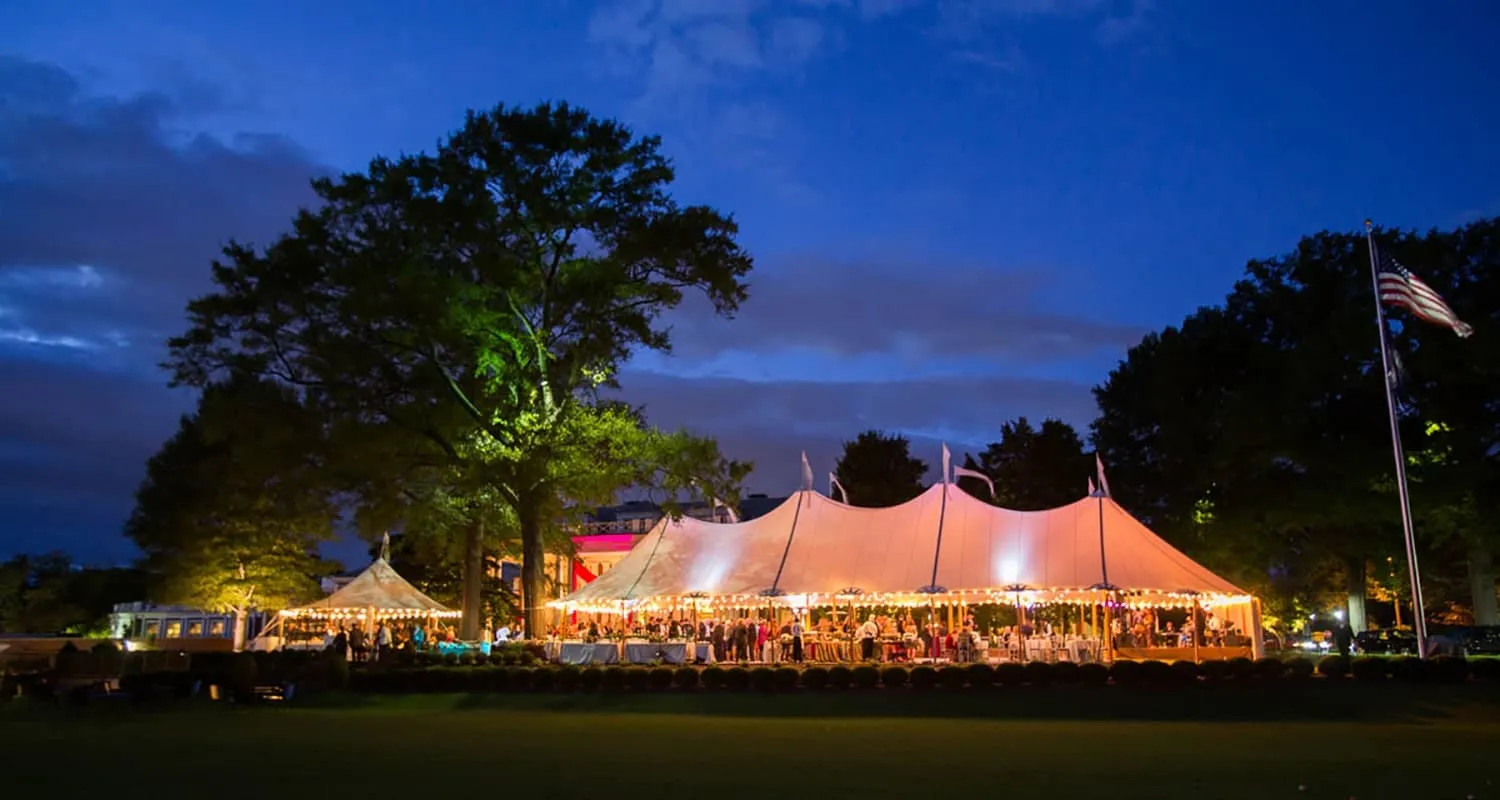
A wedding welcome party gives guests their first real impression of the celebration ahead. For couples planning an outdoor wedding weekend, a well-designed welcome party tent can turn an open lawn, estate, vineyard, or scenic property into a complete event space with its own personality. The tent does more than provide coverage. It helps define where guests gather, how they move through the evening, and how the setting feels once lighting, flooring, furniture, and décor are added. From intimate sailcloth structures to spacious clearspan tents, the right setup can create a relaxed opening event without making it feel like a smaller version of the wedding reception. Skyline Tent Company offers options including Sailcloth, Century Pole, Frame, and engineered clearspan structures, along with flooring, climate control, power, glass walls, and event planning support. You may also find The Complete Guide To Outdoor Wedding Tents For Summer helpful.
Choose a Tent Style That Matches the Welcome Party
The structure sets the foundation for everything else. Guest count, property conditions, design direction, and the type of experience you want to create should all influence the tent selection.
A casual cocktail gathering and a formal seated welcome dinner may need very different layouts.
Sailcloth Tents for a Warm, Relaxed Setting
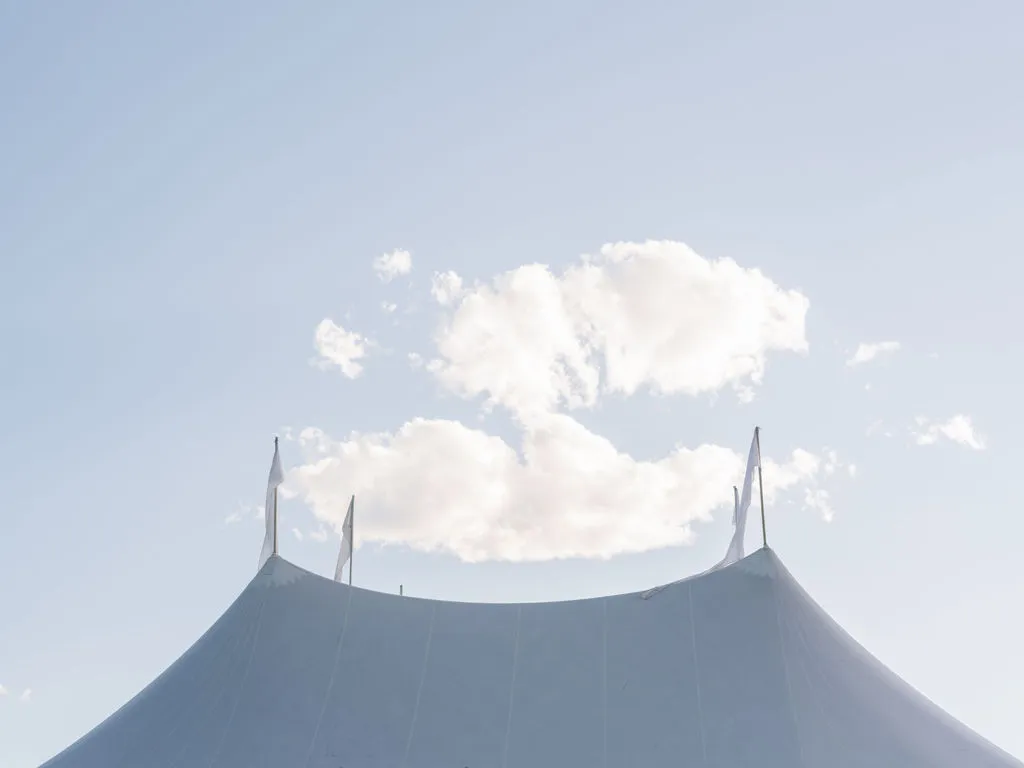
Sailcloth tents work well when the welcome party should feel polished without becoming overly formal.
Their curved peaks and translucent fabric create a softer atmosphere that works especially well for evening gatherings. Wooden poles and warm lighting can support a relaxed wedding weekend look without requiring heavy interior décor.
These tents are a strong fit for settings such as:
Estate lawns
Vineyard properties
Garden settings
Private farms
Open outdoor venues
Sailcloth structures also allow the surrounding property to remain part of the overall experience.
Century Pole Tents for a Classic Wedding Look
Century Pole tents create a traditional event silhouette with high peaks and elegant interior lines.
They can suit welcome dinners, cocktail receptions, and larger gatherings where the hosts want the tent itself to feel like a major design element.
The poles can also become part of the décor through floral treatments, greenery, or coordinated lighting.
Clearspan and Frame Tents for Open Layouts
Clearspan and Frame tents are useful when flexible interior space is a priority.
Because they do not require center poles, tables, bars, lounge areas, dance floors, and entertainment can be positioned with fewer layout restrictions.
Clearspan structures can also work well when the property has an important view that should remain visible throughout the event.
Create Separate Spaces for Different Parts of the Evening
A welcome party often includes several activities within a relatively short period of time.
Guests may arrive for drinks, move into dinner, gather for speeches, and later transition toward music or dancing.
Dividing the tent into purposeful zones can make those transitions feel natural.
Build a Defined Cocktail Area
The cocktail area should feel easy to enter and easy to understand.
A bar, standing tables, lounge furniture, and open circulation space can create a natural place for guests to gather as they arrive.
This area does not need to feel overly structured.
The goal is to encourage conversation while allowing guests to move comfortably through the space.
Separate Dining From Social Areas
If the welcome party includes a seated meal, the dining area should have a clear identity.
Flooring, table placement, lighting, or subtle changes in furniture can help separate dining from the more casual cocktail space.
A thoughtful dining layout should also consider service routes so staff can move efficiently without interrupting guest circulation.
Use Multiple Tents for Larger Celebrations
Larger welcome parties may benefit from more than one structure.
One tent can hold cocktails while another supports dinner or entertainment.
This approach can make a large event feel more intimate while still giving each activity enough space.
Connected structures can also help create a natural progression from one part of the evening to the next.
Use Flooring and Layout to Improve Guest Comfort
The surface beneath a tent has a major effect on how the space feels and functions.
Even a beautiful property can become difficult to navigate if the ground is uneven or soft.
Professional flooring can create a more stable foundation for guests, furniture, catering equipment, and entertainment.
Create a Level Surface for Guests
Outdoor settings are rarely perfectly flat.
Engineered flooring can create a more consistent surface under the tent, helping guests move comfortably in formal shoes and making furniture placement more predictable.
This becomes especially important for large gatherings or properties with uneven ground.
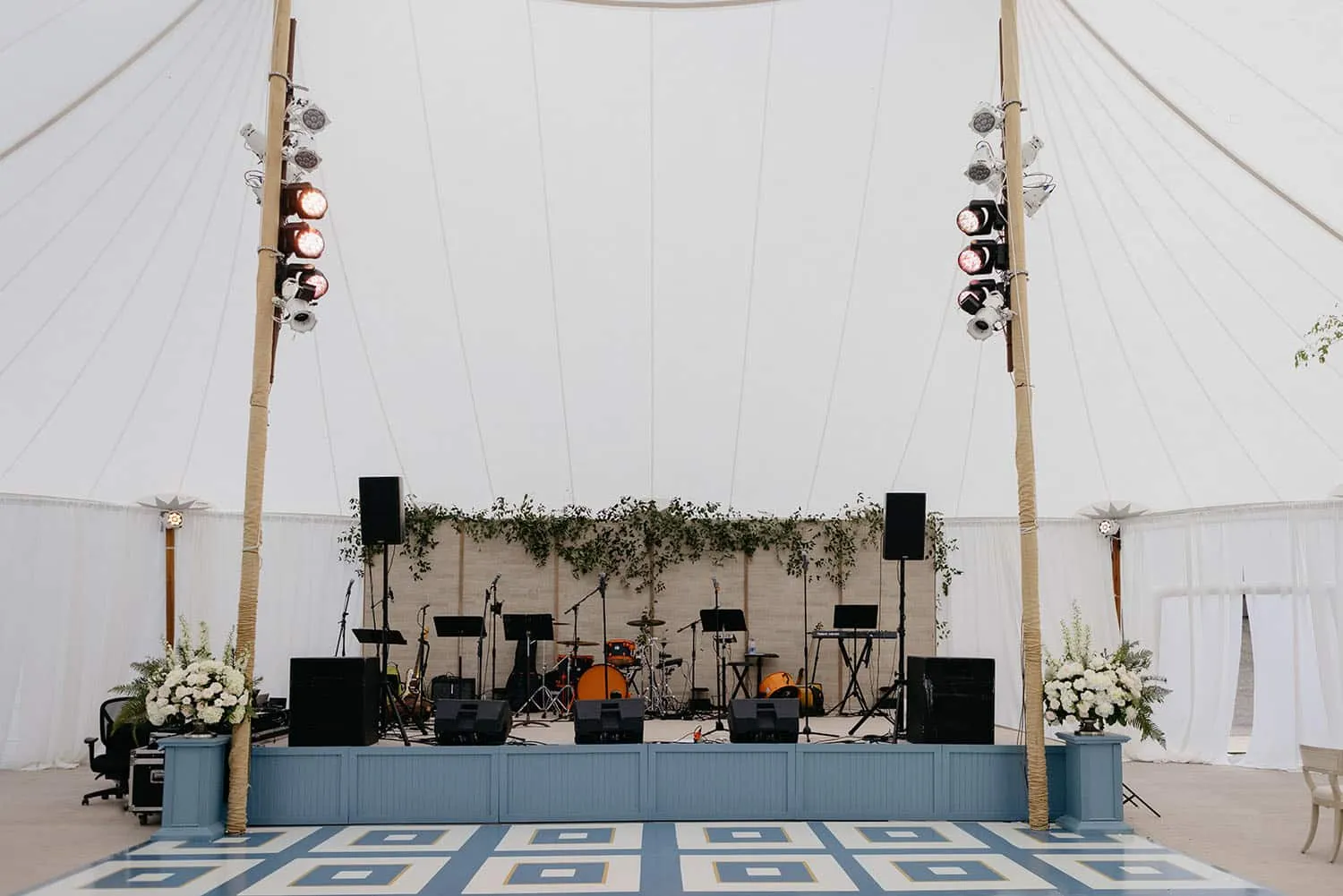
Use Flooring to Define Event Zones
Flooring can also help visually organize the space.
A dining area may have one finish, while a dance floor or lounge area uses another. We cover this further in Multi-Room Tent Layouts for Weddings: Dining, Dancing, and Lounge Spaces.
Even subtle differences can make each section feel intentional without creating physical barriers between guests.
Plan Around Furniture and Service Flow
A beautiful floor plan still needs to function.
Tables should leave enough room for guests to move comfortably.
Bars should not block entrances.
Catering routes should stay clear.
Furniture placement should also support conversation instead of forcing everyone into the same traffic path.
Planning these details early can make the event feel effortless once guests arrive. We cover this further in Luxury Coastal Tent Event Planning Guide.
Build the Atmosphere With Lighting, Furniture, and Décor
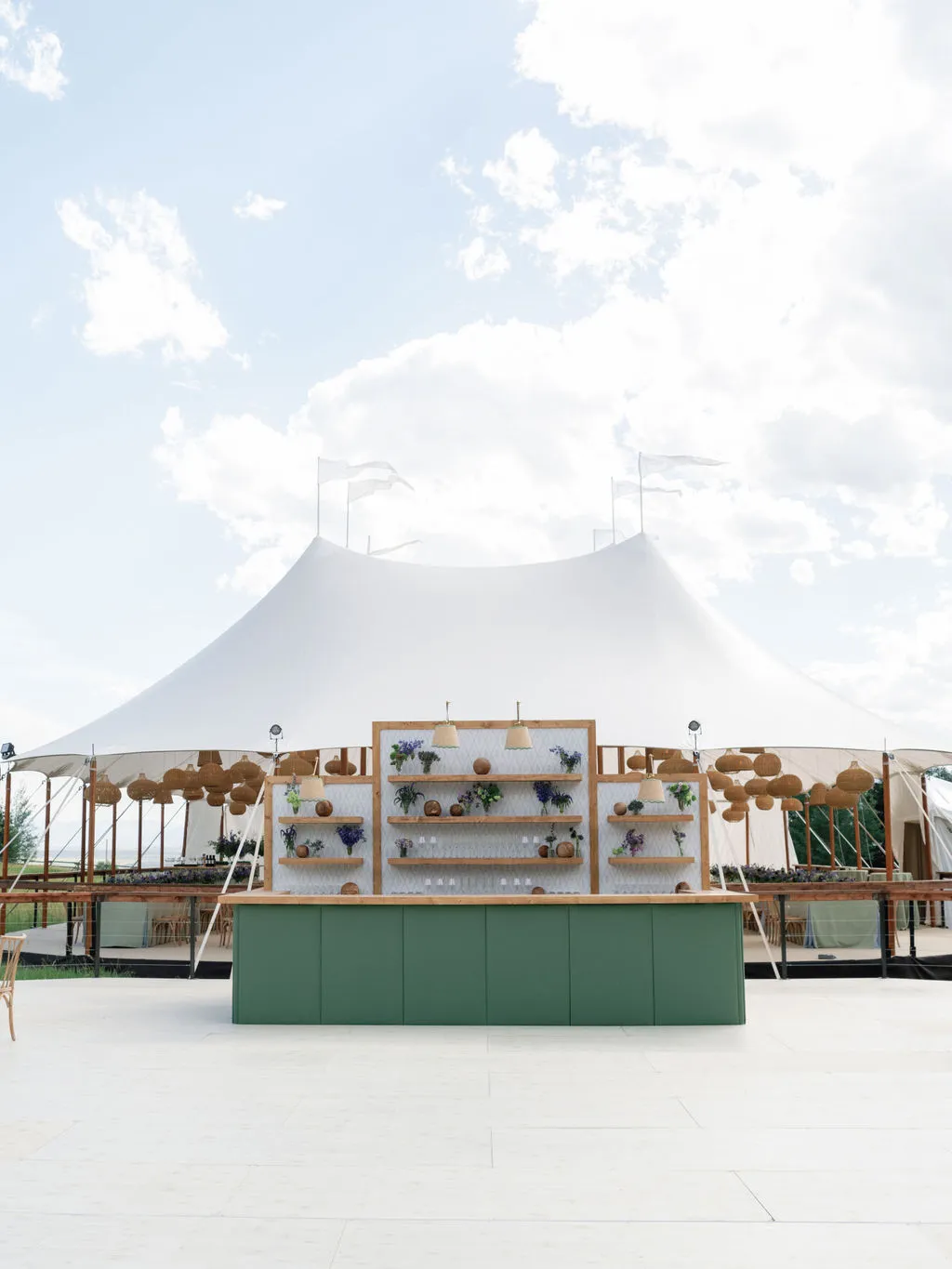
The tent provides the structure, but interior design determines how the welcome party actually feels. We cover this further in Creative Elegant Tent Design Concepts for Unique Weddings.
Lighting, seating, florals, and decorative elements should work together instead of competing for attention.
Use Lighting to Change the Mood
Lighting is especially important for evening welcome parties.
String lighting can create warmth.
Chandeliers can add a more formal feel.
Focused lighting can highlight bars, floral displays, lounge areas, or architectural details within the structure.
Different lighting levels can also help separate spaces.
A lounge can feel softer and more intimate while the bar or dance area feels brighter and more energetic.
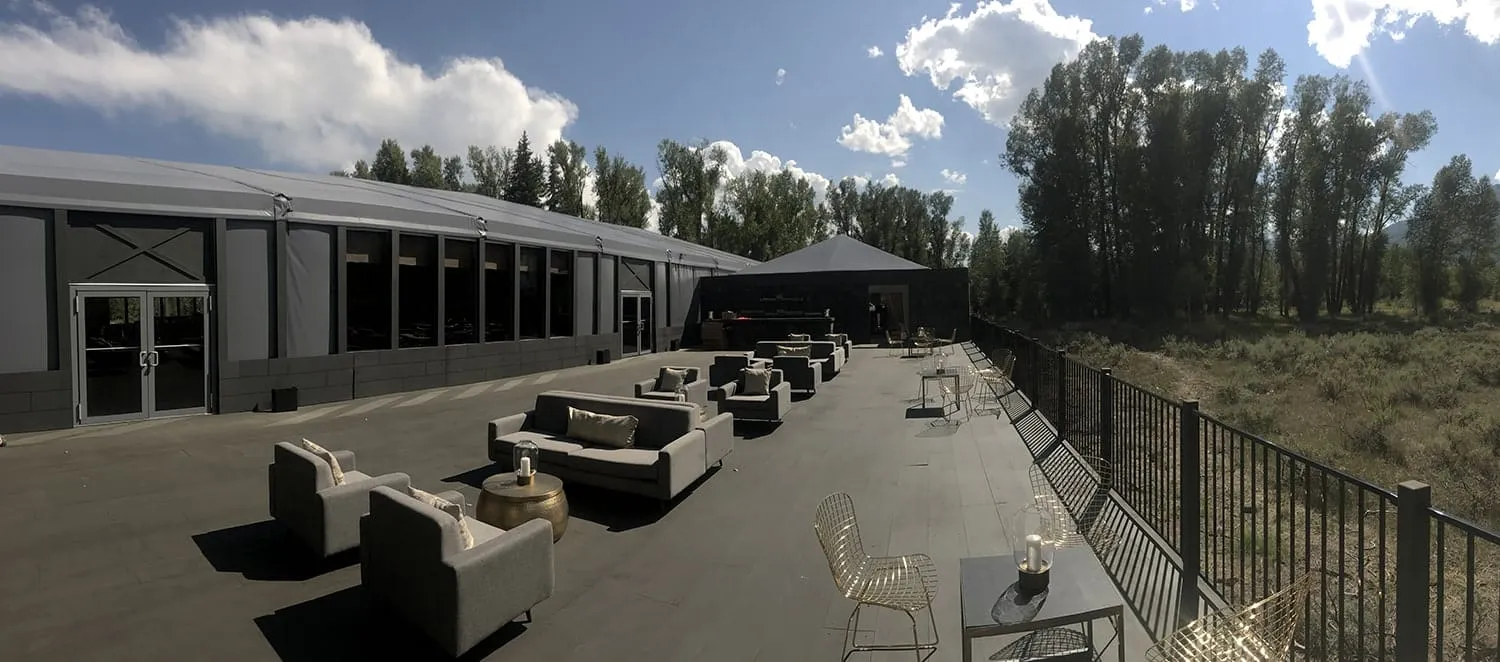
Create Comfortable Lounge Areas
Not every guest wants to stand throughout the evening.
Lounge seating gives people a place to relax, talk, and enjoy the setting.
Upholstered furniture, small tables, and grouped seating can also make a large tent feel more welcoming.
These areas work particularly well around the edges of the main event space where they do not interfere with circulation.
Let Florals Support the Structure
Florals can help connect the tent to the rest of the wedding design.
Entry arrangements, suspended installations, table florals, and greenery around poles or structural elements can all reinforce the event style.
The strongest designs usually work with the tent instead of hiding it completely.
A few well-placed installations can have more impact than filling every available surface.
Plan Climate Control, Power, and Event Infrastructure Early
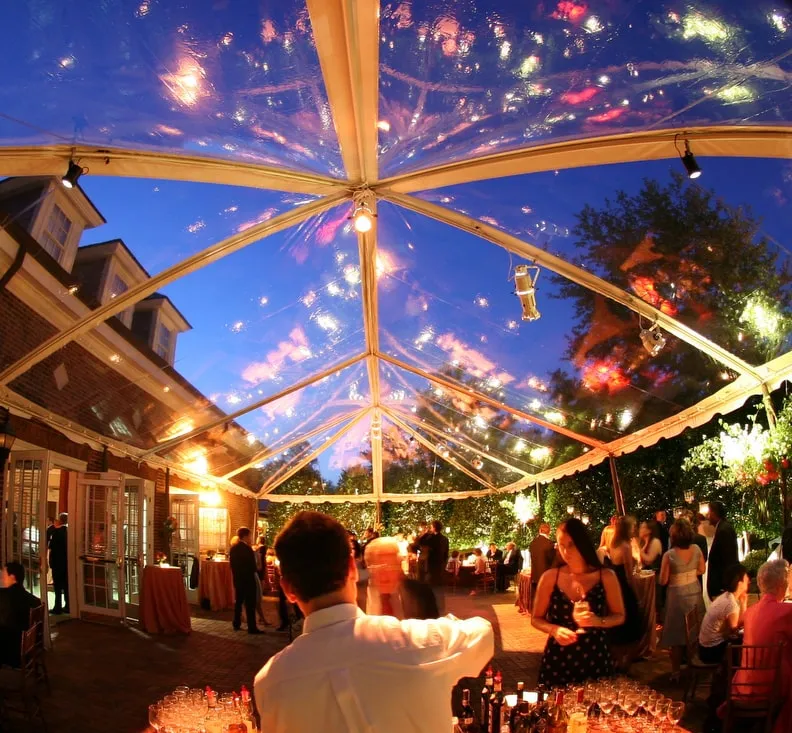
The most attractive tent design still depends on reliable infrastructure.
Outdoor event spaces need more than tables and décor.
Power, temperature management, flooring, lighting, catering equipment, and entertainment all need to work together behind the scenes.
Keep Guests Comfortable Throughout the Event
Outdoor temperatures can change quickly between afternoon and evening.
Climate control can help maintain a more consistent environment inside the tent.
This becomes particularly important for events during very warm, cool, or unpredictable weather periods.
The system should be planned around the tent size, guest count, entrances, and overall site layout.
Plan Power for the Entire Event
Lighting, music, catering equipment, climate control, and production systems all require power.
The power plan should consider every part of the event instead of treating each vendor separately.
Coordinating these needs early reduces the chance of overcrowded equipment areas or last-minute adjustments.
Skyline Tent Company supports tented events with climate control and power generation as part of broader event infrastructure planning. Read more in Quiet Generators for Luxury Weddings: Discreet Power Planning Guide.
Consider Glass Walls and Weather Protection
Glass walls can help preserve views while giving the event additional enclosure.
They can be especially effective for scenic properties where the landscape is part of the design.
Guests can remain visually connected to the surroundings while the tent feels more finished and protected.
The right combination of walls, flooring, and climate planning can help the welcome party remain comfortable without losing its connection to the outdoor setting.
Frequently Asked Questions
What type of tent works best for a wedding welcome party?
The best tent depends on the property, guest count, event style, and planned activities. Sailcloth and Century Pole tents create a more traditional wedding atmosphere, while Frame and clearspan tents offer greater flexibility for open layouts.
Can a welcome party use more than one tent?
Yes. Larger events can use separate tents for cocktails, dining, bars, lounges, or entertainment. Multiple structures can also help organize the event into smaller, more comfortable spaces.
Should a welcome party tent have flooring?
Flooring is especially useful on uneven, soft, or grassy surfaces. It can improve guest comfort, create a more finished appearance, and help define separate areas within the tent.
How can a tented welcome party feel different from the wedding reception?
Use a different structure, furniture style, lighting approach, menu format, or layout. A welcome party can feel more relaxed and conversational while the wedding reception remains more formal.
What infrastructure should be planned for a tented welcome party?
Important considerations include flooring, lighting, climate control, power generation, catering needs, entertainment, guest circulation, and weather protection.
Create a Welcome Party That Sets the Tone for the Wedding Weekend
A thoughtfully planned welcome party tent can turn the first gathering of the wedding weekend into an experience that feels intentional from the moment guests arrive. The right tent style establishes the setting, while flooring, defined event zones, lighting, furniture, climate control, and infrastructure help the evening move comfortably from cocktails to dinner and conversation. To talk through a tent for your date and site, contact our team.
Skyline Tent Company can support complex tented welcome parties with premium structures, engineered flooring, climate control, power, glass walls, and event planning expertise. By coordinating the structure and infrastructure as part of one complete plan, hosts can create a welcome party that feels polished, comfortable, and connected to the larger wedding celebration. For inspiration from tented receptions we have installed, browse our wedding galleries.