
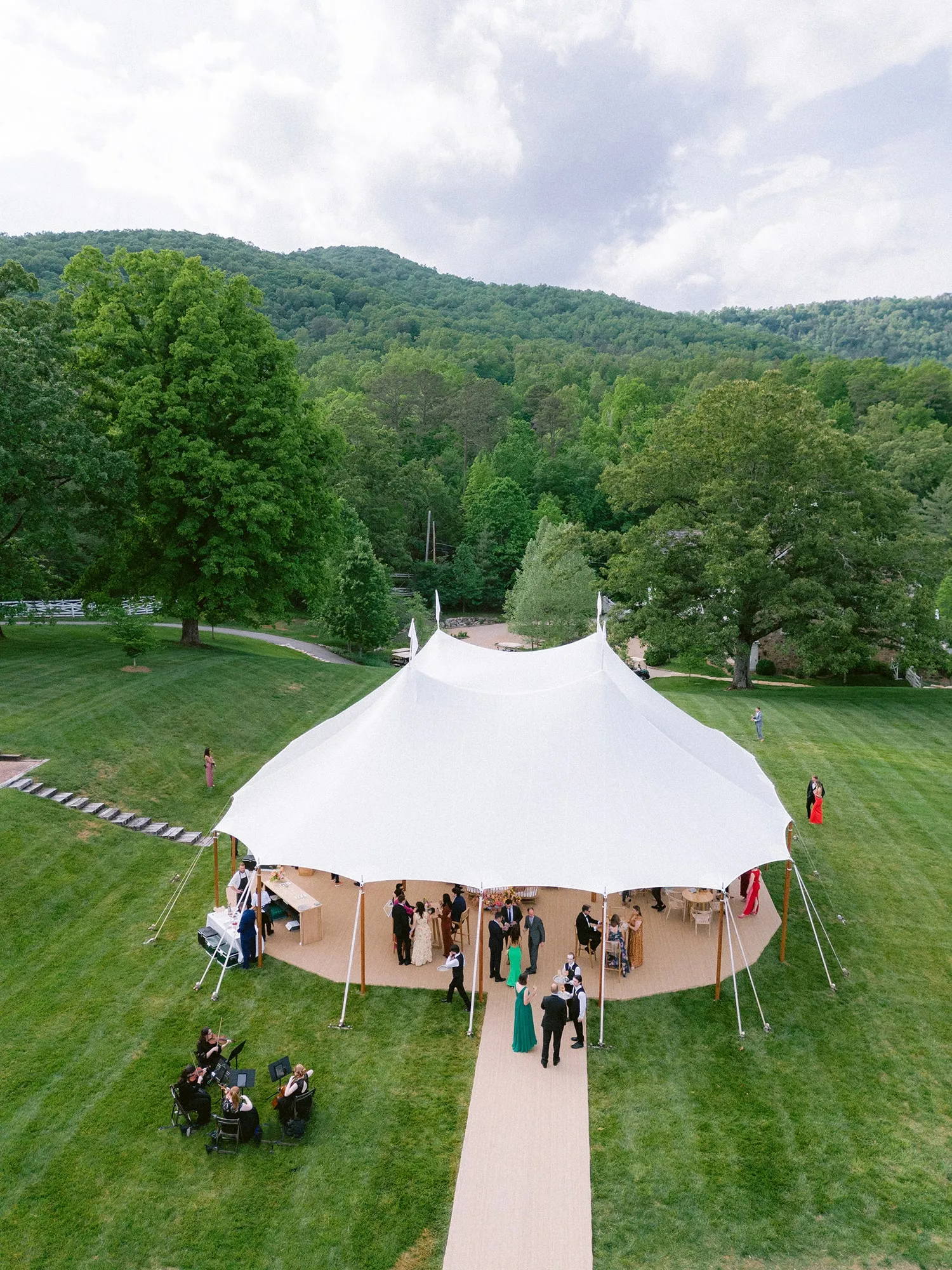
The best tent for a summer beach wedding is typically a sailcloth, frame, or clear-span tent because these structures provide strong wind stability, flexible layouts, and protection from sun and coastal weather. The right choice depends on the beach terrain, guest count, and the visual style of the event, which is why many couples begin planning with a detailed summer tent wedding guide. A well-chosen tent protects guests from the elements while maintaining the elegant atmosphere expected at a beachfront wedding celebration.
Planning a beach wedding requires balancing aesthetics with practicality. Coastal environments introduce unique challenges such as shifting sand, ocean winds, and strong sunlight. The tent selected for the event must handle these conditions while still creating a comfortable and visually appealing reception space.
Best Tent Types for Summer Beach Weddings
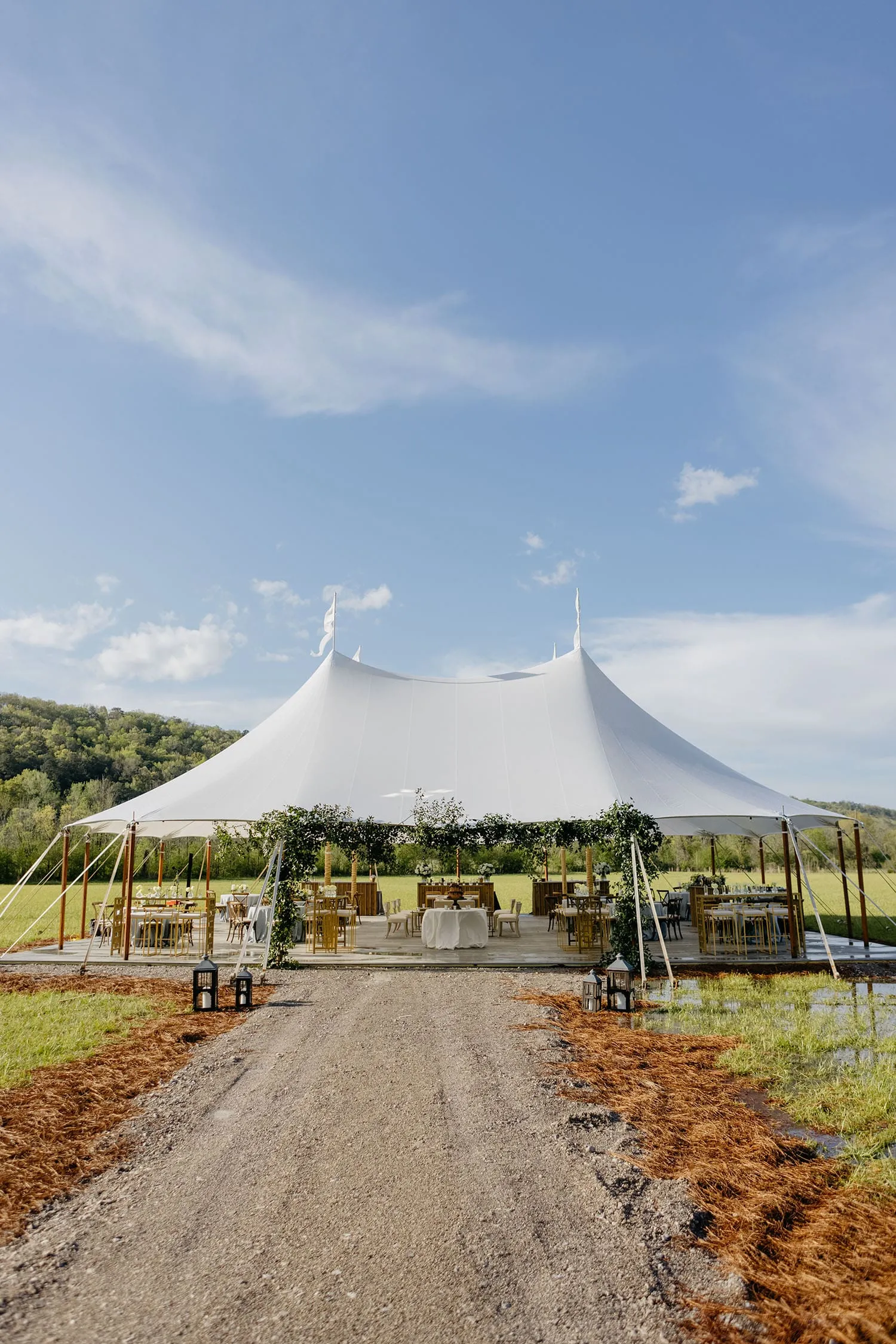
Selecting the right tent style is one of the most important decisions when planning a beach wedding, especially when comparing different luxury tent styles for coastal events. The tent will serve as both shelter and the main architectural feature of the event space. Its structure influences seating layouts, décor possibilities, lighting installations, and the overall guest experience.
Beach venues often require tents that can withstand changing weather conditions while remaining visually harmonious with the surrounding scenery. A tent that complements the natural landscape helps maintain the relaxed and elegant atmosphere couples often want for a coastal wedding celebration.
Sailcloth Tents for Elegant Beach Weddings
Sailcloth tents are among the most popular choices for beach weddings because their design complements oceanfront settings. The fabric is typically translucent, allowing natural sunlight to filter through during the day and creating a soft glow once the sun begins to set.
The sweeping peaks and graceful structure of sailcloth tents add visual drama to the event space, instantly elevating the atmosphere of a coastal celebration. Their architectural silhouette looks especially striking against ocean horizons and wide-open shorelines. The open design also allows air to circulate more freely, which helps keep guests comfortable in warm coastal temperatures where ventilation is essential.
Why sailcloth tents work well for beach weddings:
- Translucent fabric canopy allows natural daylight to filter through while creating a warm glow during sunset and evening receptions.
- High, sweeping peaks create an elegant silhouette that enhances coastal landscapes and photographs beautifully.
- Open-air design promotes airflow, helping keep guests cool in warm summer beach conditions.
- Natural wood poles and soft fabric textures complement relaxed seaside aesthetics while maintaining a luxury feel.
- Versatile layout options allow planners to incorporate dance floors, dining areas, lounges, and cocktail spaces within the tent.
- Stunning evening ambiance when paired with string lights, chandeliers, or uplighting that highlights the tent’s peaks.
Frame and Clear-Span Tents for Coastal Conditions
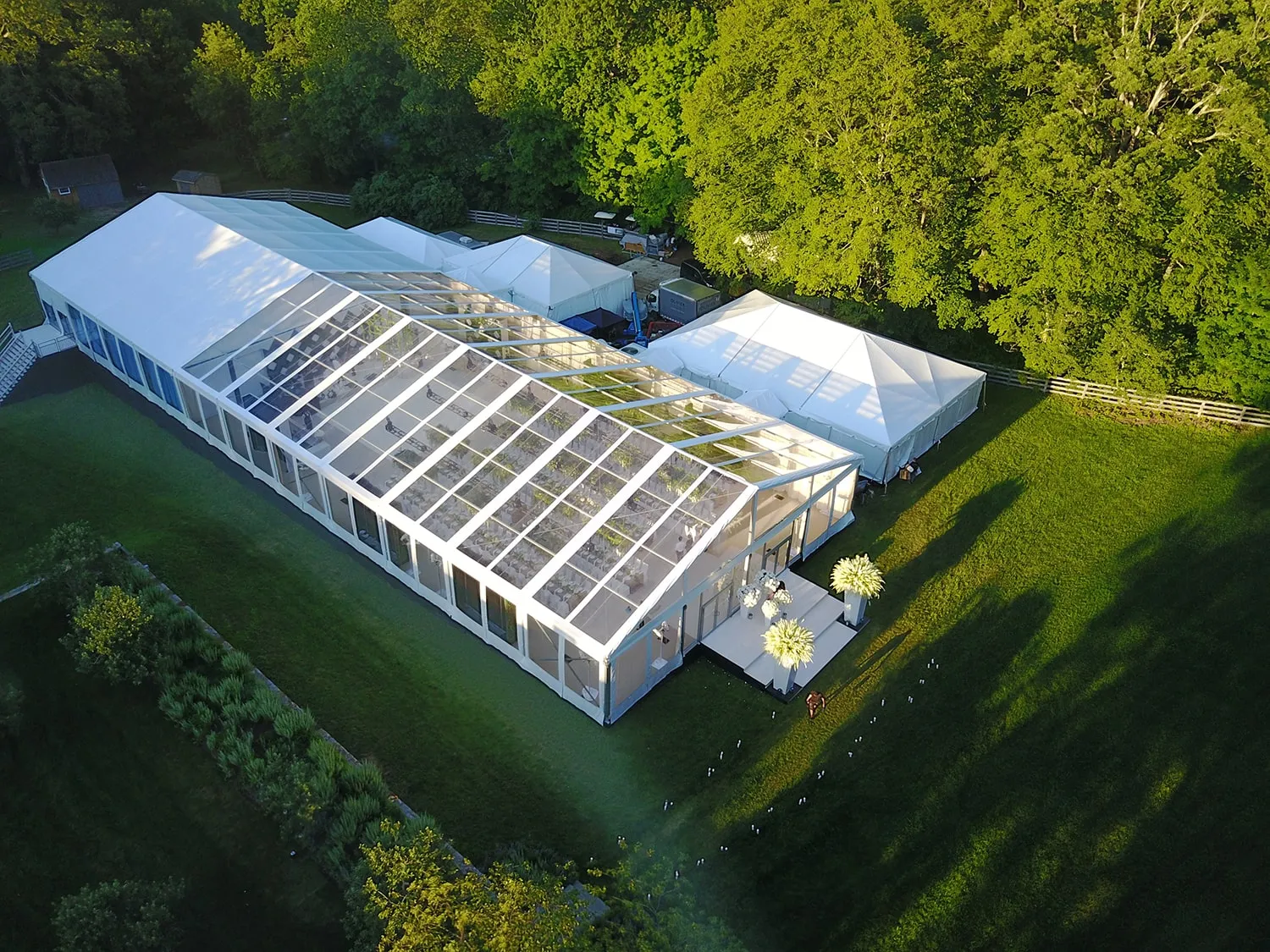
Frame tents and clear-span tents are widely used for beach weddings because of their structural versatility. These tents do not rely on center poles, which means the interior space remains completely open for flexible layouts.
An unobstructed interior allows planners to arrange tables, dance floors, and lounge areas without structural limitations. This flexibility is particularly useful for larger weddings where the reception layout must accommodate multiple activity zones.
These tent types are also easier to secure using ballast systems or specialized anchors designed for sandy terrain, making them a practical choice for coastal events.
How Beach Terrain and Weather Affect Tent Selection
Beach environments introduce several logistical challenges that influence tent selection, particularly when evaluating ideal beach tent locations for installation and guest access. Sand surfaces are softer than traditional event sites such as grass or pavement, which affects how tents are anchored and stabilized.
Wind conditions are another key factor. Coastal breezes can increase significantly throughout the day, especially in the late afternoon. Tents used for beach weddings must be designed to withstand these environmental forces while still providing comfort and protection for guests. For more detail, see our article Beach & Coastal Tent Rentals: Tents for Sandfront Weddings.
Anchoring Tents Safely in Sand
Proper anchoring ensures the tent remains secure throughout the event. Standard stakes may not provide sufficient support in loose sand, so specialized anchoring systems are often required.
These systems may include auger anchors that screw deep into the sand or ballast weights that counteract wind pressure. Professional installation teams assess wind conditions and ground stability before determining the best anchoring method for the site.
Correct anchoring not only improves safety but also ensures the tent structure remains stable during strong coastal gusts.
Preparing Uneven Beach Surfaces
Beach surfaces can vary greatly depending on tides, dunes, and natural slopes. Uneven ground can affect the placement of tables, chairs, and entertainment areas inside the tent.
Temporary flooring systems are often used to create a level surface for guests. Flooring improves stability, protects footwear from sand, and makes it easier for staff to move equipment such as catering carts or sound systems.
A well-prepared surface contributes significantly to guest comfort and the overall success of the event.
Choosing the Right Tent Size for a Beach Wedding
Tent size should be determined by guest count as well as the activities planned during the reception. Dining tables, dance floors, buffet stations, and lounge areas all require space within the structure.
An effective layout balances seating capacity with open areas for circulation and entertainment. Oversized tents may feel empty, while undersized tents can quickly become crowded once furniture and décor are installed.
Space Guidelines Based on Guest Count
Event planners commonly follow general space guidelines when estimating tent size:
- Seated dinners: about 10–12 square feet per guest
- Cocktail receptions: about 6–8 square feet per guest
These guidelines ensure guests have enough space to sit comfortably and move throughout the reception area.
Allowing Space for Layout and Event Features
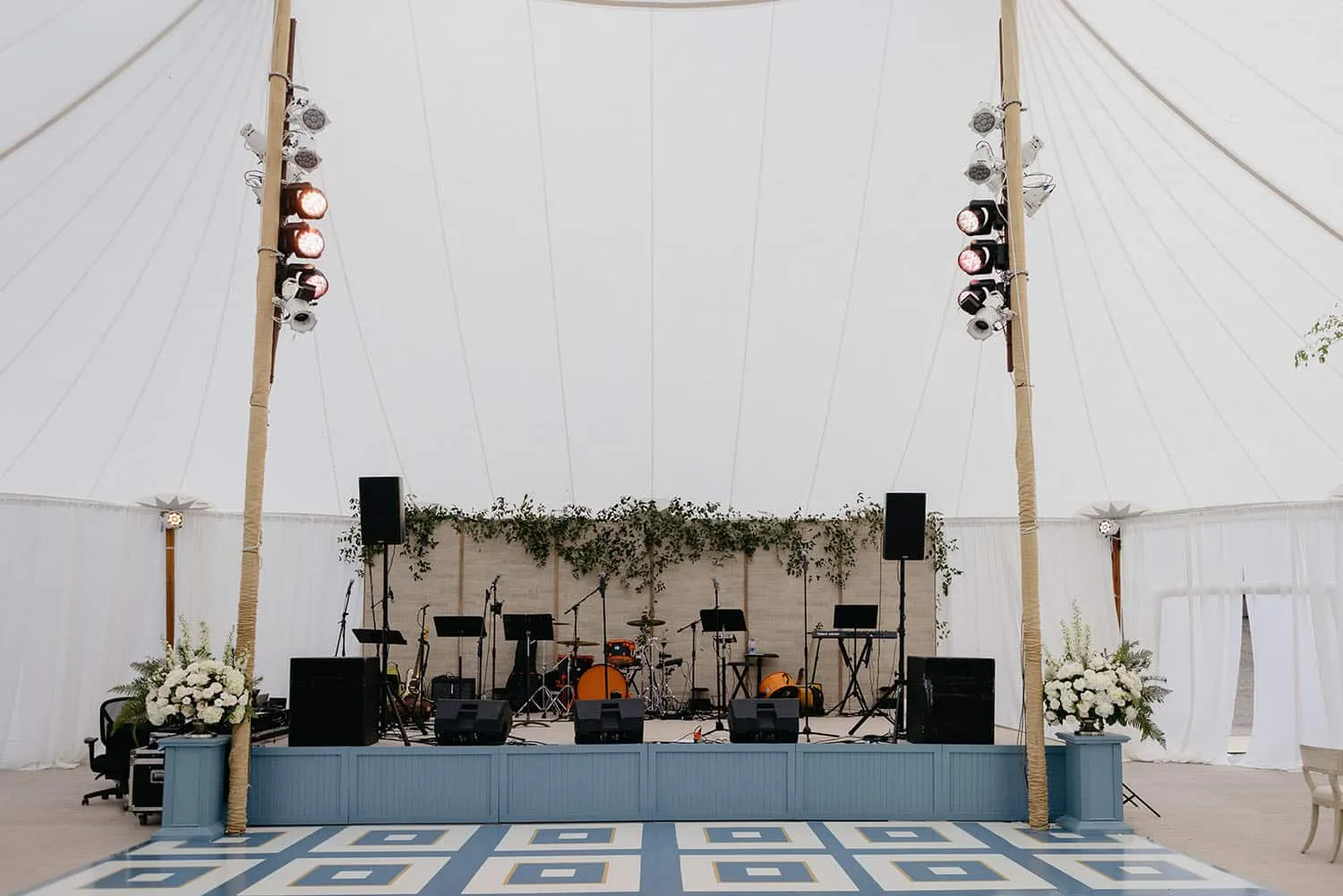
Reception layouts often include multiple zones such as dining areas, dance floors, bars, and social lounges. Each feature must be integrated into the tent design without interrupting circulation paths.
Dance floors often serve as the focal point of the reception. Positioning them centrally allows guests to gather naturally around the entertainment while maintaining visibility across the space.
Careful layout planning ensures every element of the celebration fits comfortably within the tent.
Materials That Provide Weather Protection for Beach Wedding Tents
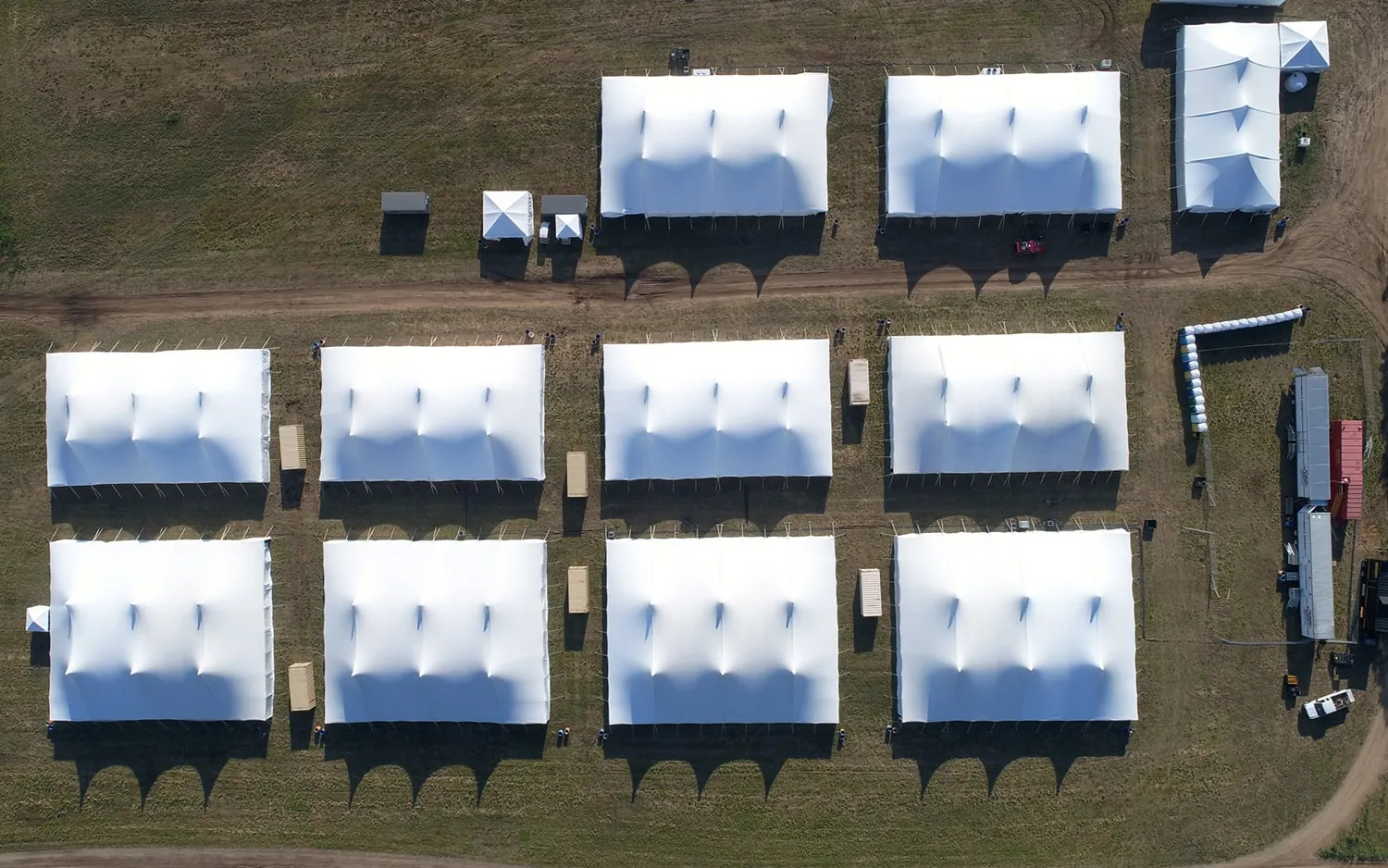
Tent materials must perform well in coastal environments where sun exposure, humidity, and occasional rain are common. The fabric used in the tent roof and sidewalls directly affects guest comfort and the durability of the structure.
High-quality materials protect guests from harsh sunlight while preventing excessive heat buildup inside the tent.
PVC Fabrics for Weather Resistance
PVC-coated fabrics are widely used for event tents because they offer excellent weather resistance. The material is waterproof and highly durable, making it suitable for outdoor events exposed to unpredictable weather.
This fabric also resists ultraviolet radiation, preventing fading or deterioration when exposed to strong sunlight throughout the day.
PVC tents provide reliable protection against both rain and intense summer heat. For more detail, see our article Luxury Wedding Tents: Creating Your Perfect Summer Venue.
Canvas and Mesh Fabrics for Ventilation
Canvas tents offer a more traditional appearance and natural breathability. Their fabric allows airflow to circulate more easily, which can help maintain a comfortable temperature during warm summer weddings.
Mesh sidewalls are often added to improve ventilation while keeping insects away from the event space. These panels allow ocean breezes to move through the tent without exposing guests to strong winds.
Combining breathable fabrics with protective materials creates a balanced environment that enhances guest comfort.
Design and Comfort Features for Beach Wedding Tents
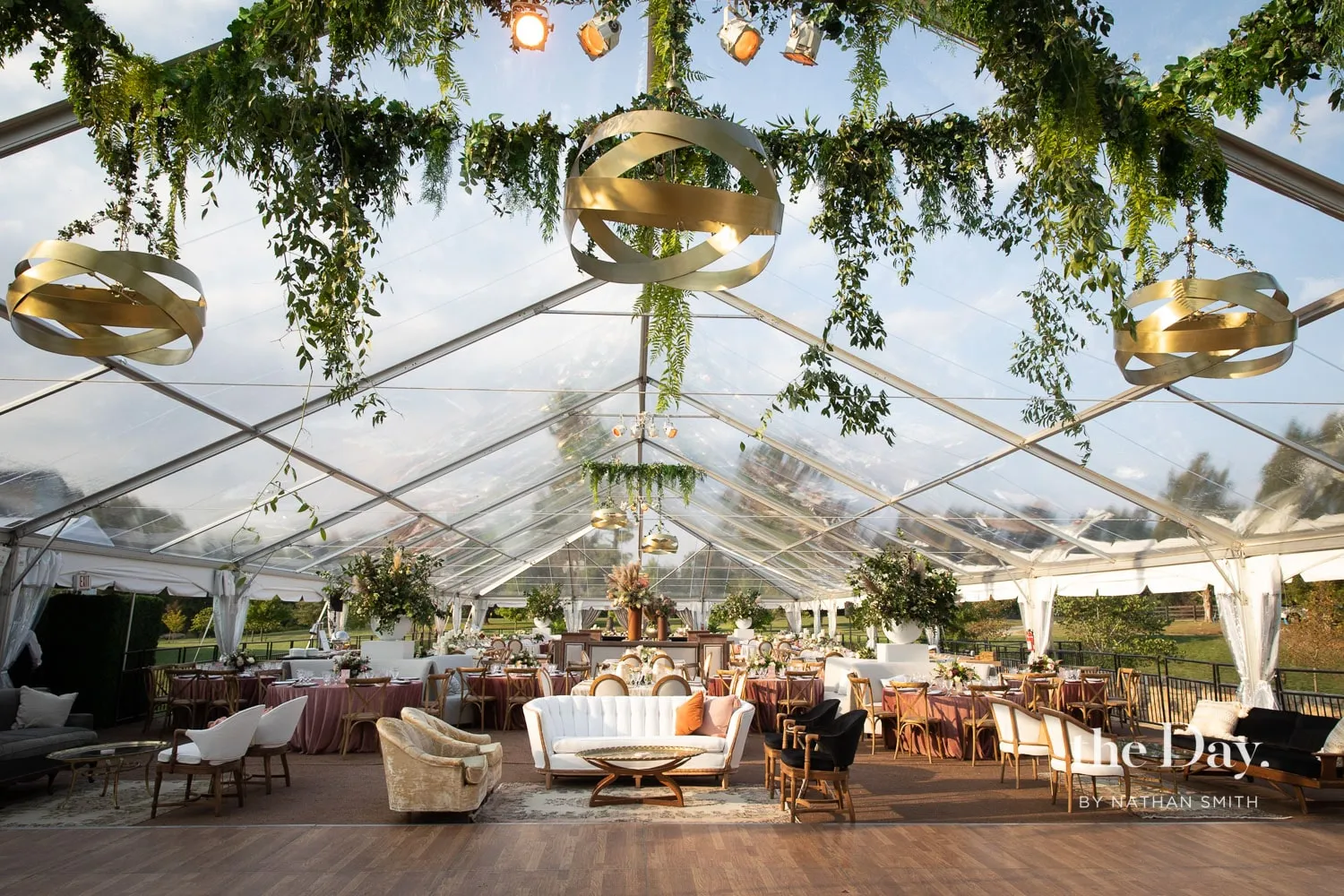
Beyond structural considerations, the design of the tent interior plays a major role in the overall atmosphere of the event. Décor, lighting, and seating arrangements help transform the tent into a visually stunning reception space.
Thoughtful design also improves guest comfort and encourages interaction throughout the celebration.
Lighting Ideas for Beach Wedding Tents
Lighting helps define the mood of the reception once daylight begins to fade. Soft lighting can highlight the structure of the tent while creating a romantic ambiance.
- String lights and lanterns provide warm ambient lighting throughout the tent
- Chandeliers or pendant fixtures create elegant focal points above dining tables
Layered lighting designs allow the space to transition smoothly from daytime ceremony to evening celebration.
Climate Control for Summer Comfort
Beach temperatures can shift quickly from hot daytime conditions to cooler evening breezes. Climate control features help maintain comfort throughout the event.
Portable fans improve airflow inside the tent, while open sidewalls allow ocean breezes to circulate naturally. Providing blankets or wraps for evening receptions ensures guests remain comfortable even after sunset.
These small details can significantly enhance the overall experience for attendees.
Frequently Asked Questions
What are the key factors to consider when selecting a tent for a beach wedding?
Key factors include accurate guest counts, site terrain and access, expected weather loads, and the desired aesthetic. Verify local permitting and anchoring constraints prior to final selection.
How can I prepare for unexpected weather during my beach wedding?
Prepare by specifying weatherproof features, sidewalls, reinforced anchoring, and appropriate fabric ratings, and agreeing contingency procedures with your rental provider.
What are the best decoration ideas for a beach wedding tent?
Select a palette that complements the coastal setting, integrate layered lighting, and allocate distinct zones for dining, dancing, and lounges to preserve circulation and sightlines.
How do I ensure my tent is stable in windy beach conditions?
Ensure stability by choosing wind-rated tent systems, using appropriate anchoring (stakes, deadweights, or augers), and consulting the rental provider on site-specific anchoring strategies for sand. See real Skyline weddings in our wedding galleries.
Conclusion
Choosing the right tent for a summer beach wedding ensures guests remain comfortable while preserving the beauty of the coastal setting. The ideal tent combines structural stability, weather-resistant materials, and a layout that accommodates dining, dancing, and socializing without overcrowding. Skyline Tent Company specializes in creating luxury tented environments for unforgettable beach weddings and events. Schedule your private consultation with our team to design the perfect tented space for your coastal celebration. For more detail, see our article How Do You Plan An Outdoor Summer Wedding With A Tent.