
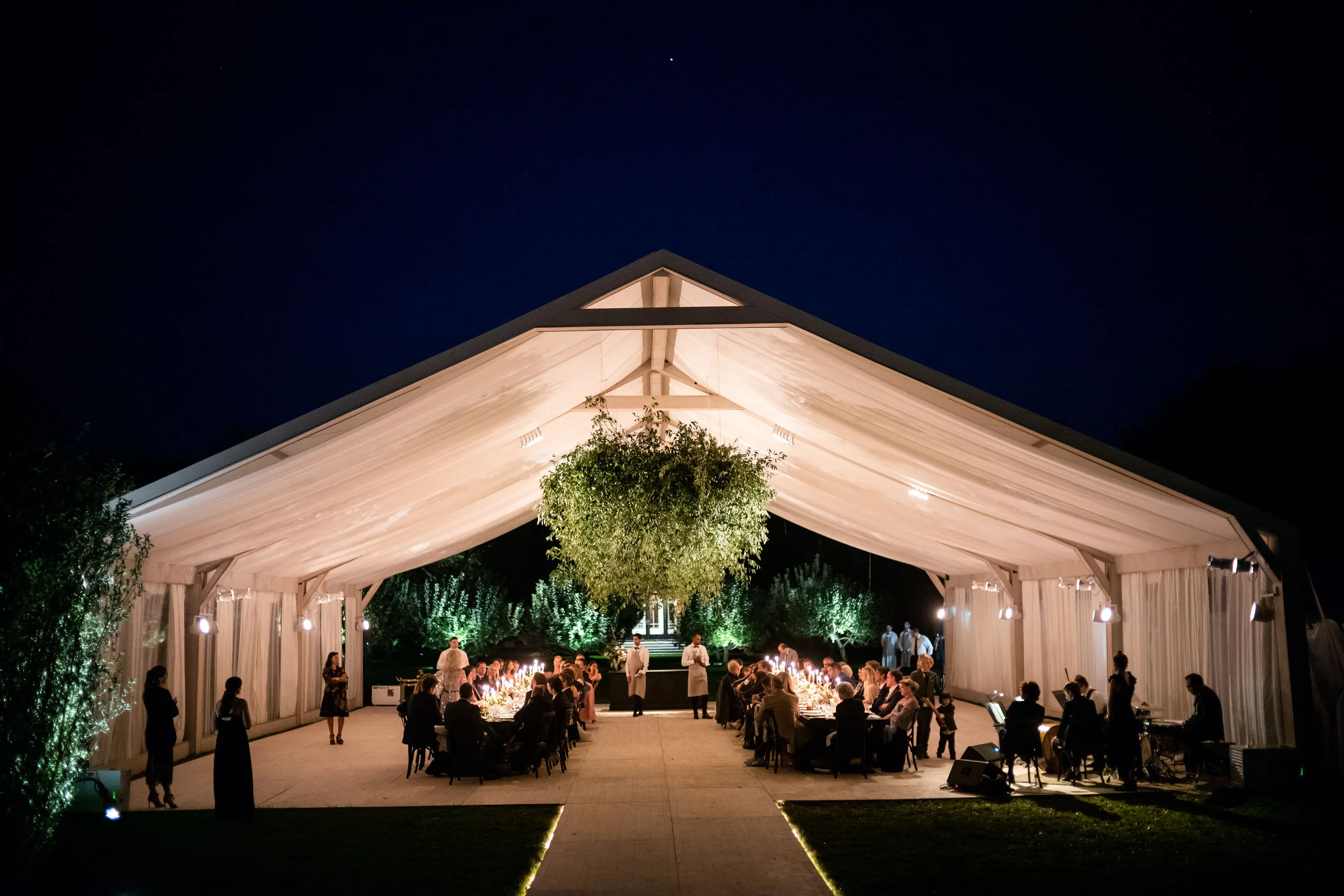
Large destination events require more than a visually appealing temporary structure. High guest counts, complex AV systems, multi-day programming, changing weather, difficult terrain, and remote locations can all influence how the venue needs to function. A clearspan tent rental can address many of these demands by providing a completely open interior without center poles, giving planners maximum usable floor space for dining, staging, dance floors, lounges, screens, and production equipment. Skyline Tent Company, based in Charlottesville, Virginia, provides clearspan structures for destination weddings, corporate galas, exhibitions, seasonal installations, and other large-scale events nationwide, while also offering international consulting. These structures can be adapted to private estates, vineyards, waterfront properties, concrete plazas, and other unconventional event locations. When clearspan tents are paired with engineered flooring, climate control, power infrastructure, glass walls, lighting, and professional installation, they can create a complete temporary venue designed around the requirements of the property and the event itself.
Why Clearspan Tents Work for Large Destination Events
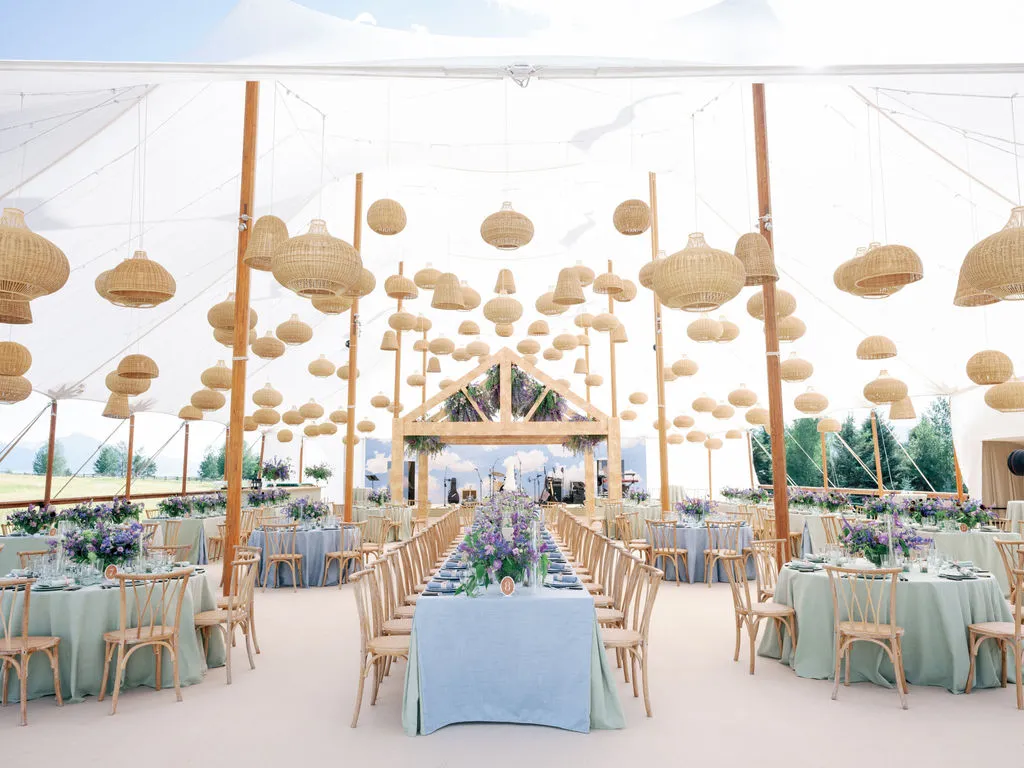
Destination venues are often selected because of their scenery, character, and unique surroundings rather than installation convenience. A coastal bluff, vineyard, private estate, or mountain property may offer an impressive setting while also creating challenges such as uneven terrain, limited access, hardscape, protected landscaping, or changing weather.
Clearspan structures provide planners with more flexibility because they use engineered perimeter framing rather than interior center poles. This allows the structure and event layout to respond more effectively to the specific conditions of a destination property.
Adapting to Remote and Unconventional Event Venues
Remote properties may not have the level ground, nearby anchor points, or open installation areas commonly available at traditional event venues. Clearspan systems can be configured for lawns, decks, courtyards, paved areas, and other environments where a conventional pole tent may be more restrictive.
Their structural design also helps planners work around existing trees, gardens, terraces, and architectural features. Instead of removing the qualities that make the venue distinctive, the temporary structure can be planned around them.
This flexibility is particularly valuable for destination celebrations where preserving views and the character of the property is an important part of the guest experience.
Supporting High Guest Counts and Complex Event Programs
Large destination events often require several functions within one temporary venue. Dining, entertainment, stages, bars, lounges, dance floors, guest circulation, and AV production can quickly consume interior space.
Because clearspan tents eliminate center poles, planners can use the entire interior more efficiently. Seating arrangements, screens, stages, and other elements can be positioned according to the event program rather than around structural obstructions.
Several factors should be reviewed when planning a large destination tent. Each one can affect structure selection, installation planning, and interior design. Considering them early can help the tent support the full event rather than simply provide shelter.
Site variability: Slopes, protected landscaping, hardscape, and restricted vehicle access can affect installation.
Guest capacity: Large weddings, galas, and exhibitions need enough room for seating and circulation.
Weather exposure: Coastal, mountain, and remote locations can experience changing conditions.
Production requirements: AV systems, stages, screens, and lighting need clear working space.
Layout flexibility: Dining, entertainment, lounges, and service areas must function together.
How Clearspan Tents Improve Event Layout and Production
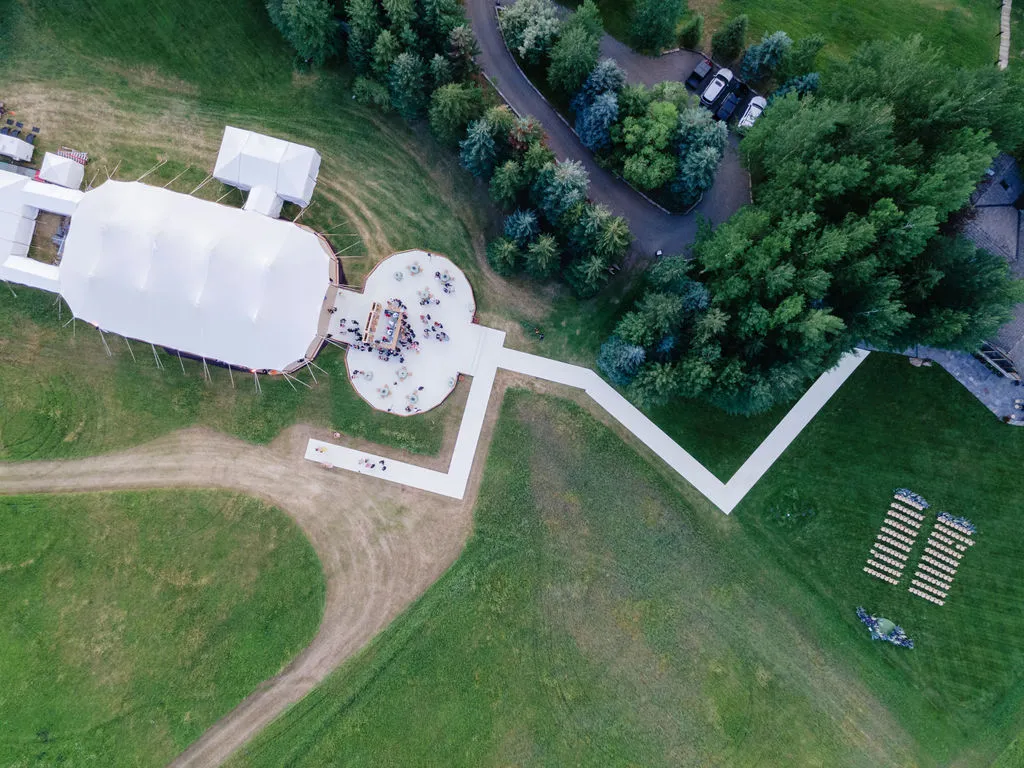
The way a clearspan structure is engineered directly affects what can be created inside it. Traditional pole tents rely on center supports and exterior guy lines, while clearspan structures carry loads through engineered framing around the perimeter.
This creates a wide, open interior that can accommodate more ambitious event layouts and production requirements.
Creating 100% Usable Interior Floor Space
Interior poles can become challenging when planners are working with large guest counts or detailed seating plans. A support pole positioned near a stage, ceremony aisle, dance floor, or large screen can interfere with both layout and sightlines.
Clearspan construction removes those interior obstructions. Planners gain a continuous open floor where dining tables, bars, lounges, stages, and entertainment areas can be positioned more freely.
This flexibility can be especially useful for multi-day events where portions of the venue need to change between ceremonies, dinners, presentations, or other scheduled activities.
Accommodating AV, Staging, and Large Productions
Corporate galas, exhibitions, destination weddings, and conferences can require extensive technical infrastructure. Large-format screens, lighting equipment, speakers, keynote stages, live bands, and production control areas all need sufficient space.
Clearspan tents make it easier to coordinate these elements because the interior is not divided by center poles. Production teams have more freedom to create clear sightlines and organize equipment around the event design.
The open structure can also support layered staging and complex entertainment configurations without forcing planners to compromise major parts of the guest experience.
Comparing Clearspan, Pole, and Sailcloth Tents
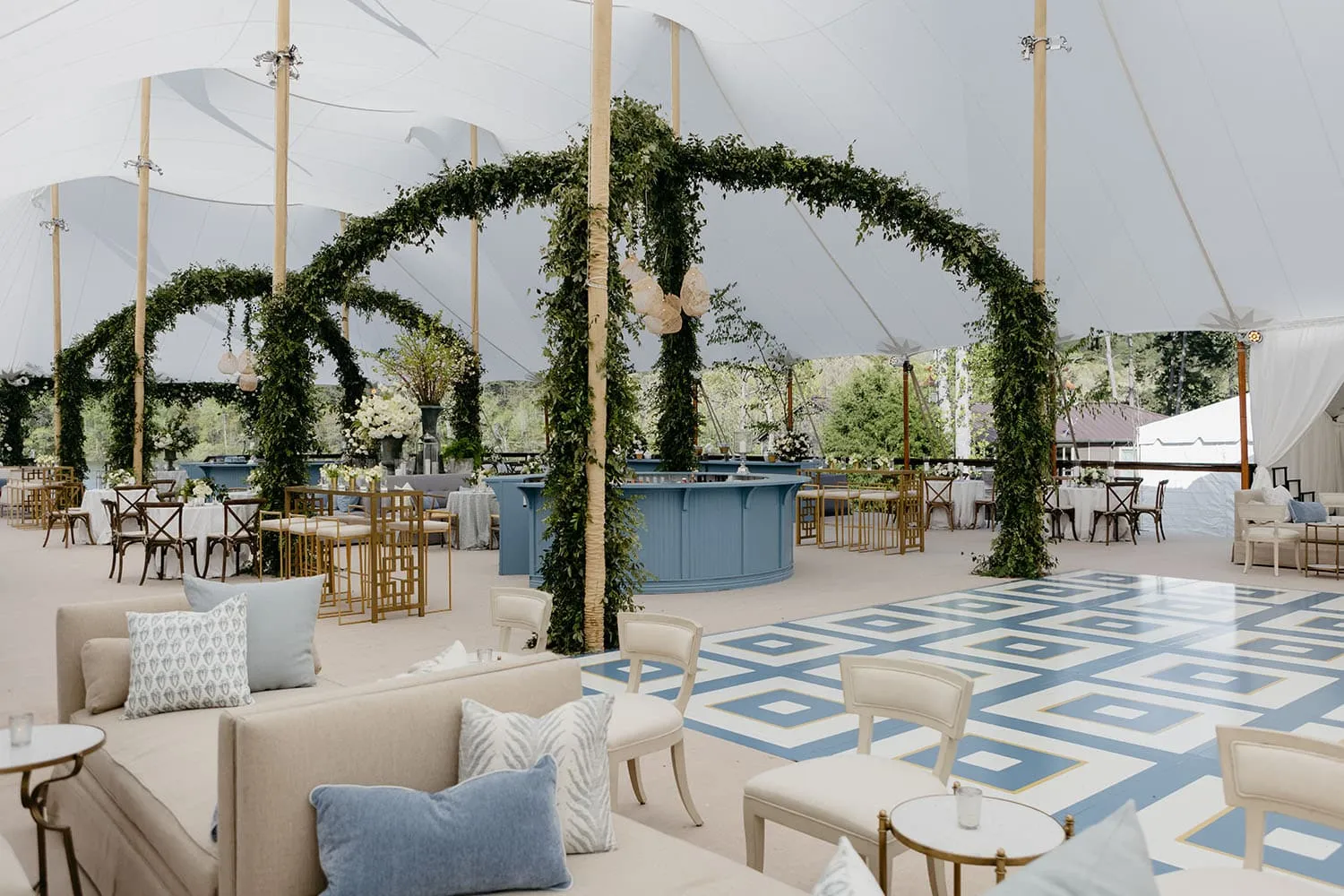
Different tent styles serve different event priorities. Terrain, weather exposure, installation duration, production requirements, guest count, and the desired visual style should all be considered before selecting a structure.
Skyline Tent Company offers multiple tent styles, including Navitrac, Frame, Century Pole, Losberger Structure, and Sailcloth tents, allowing planners to select a structure suited to the conditions of the destination property.
Clearspan Tents Compared with Pole Tents
Pole tents rely on center poles and staking to create their distinctive peaks and tension. They can work well on open lawns and fields where there is adequate space for staking and where interior poles can be incorporated into the event design.
Clearspan structures use a rigid perimeter frame instead. The absence of center poles provides more usable floor space, while their installation options can make them suitable for concrete, decking, sidewalks, and other settings where traditional staking may be difficult.
For events with substantial staging, AV needs, or large guest counts, the difference in interior flexibility can become particularly important.
Clearspan Tents Compared with Sailcloth Tents
Sailcloth tents provide a softer and more translucent appearance. They can complement vineyards, estates, coastal settings, and romantic outdoor weddings where the relationship between the tent and the surrounding scenery is central to the design.
Clearspan structures have a more architectural appearance and are particularly well suited to staging-heavy or longer-duration installations. Their engineered frames can support flooring, climate control, and complex production layouts while maintaining an open interior.
Choosing between these structures should involve more than visual preference. The property, event duration, terrain, guest flow, weather exposure, and production requirements should all influence the final decision.
Both styles can work well for destination events, but they solve different planning challenges. Reviewing their practical differences can help planners narrow the decision before a site-specific consultation. The structure should ultimately support both the location and the event program.
Clearspan tents: Well suited to complex production, open layouts, hardscape, and extended installations.
Sailcloth tents: Offer a softer visual character for scenic and romantic destination settings.
Pole tents: Work effectively where open ground provides sufficient staking space.
Frame and Navitrac tents: Provide flexibility for tighter footprints and varied surfaces.
Losberger structures: Support large-scale and longer-duration temporary venue requirements.
Planning Clearspan Tents Around Destination Site Conditions
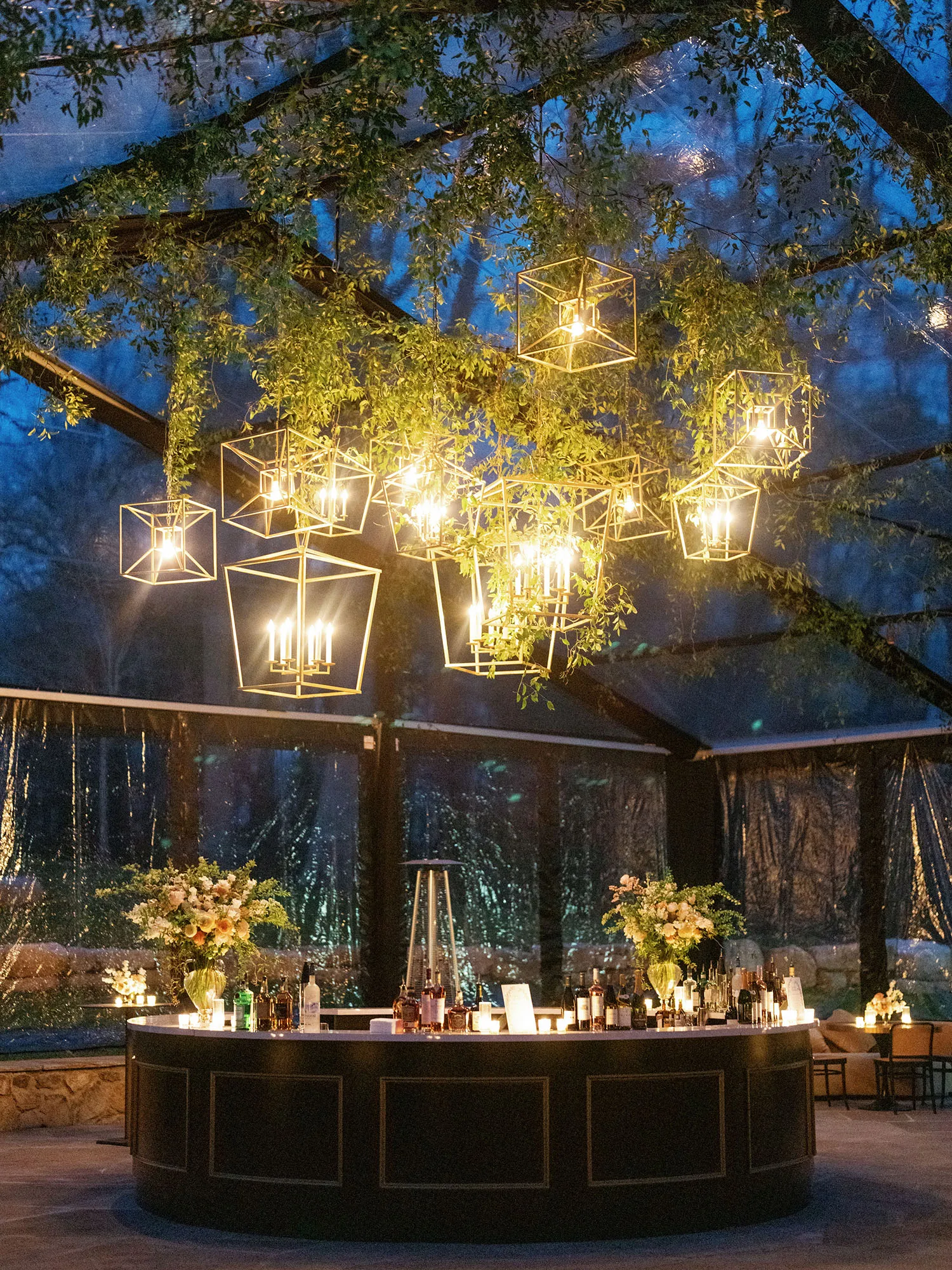
The performance of a clearspan tent depends heavily on the property where it is installed. Terrain, drainage, ground composition, wind exposure, equipment access, buried utilities, and surrounding scenery all affect installation planning.
A thorough site assessment should therefore take place before the final structure, flooring system, and layout are confirmed.
Managing Slopes, Flooring, and Ground Conditions
Destination properties rarely provide perfectly level ground. Vineyard lawns may slope, estate properties may contain drainage dips, and coastal sites may include sand or softer ground that behaves differently after rainfall.
Custom flooring and elevated platform systems can help create a more level and usable event surface. Skyline Tent Company uses engineered flooring systems for large special events, allowing temporary structures to adapt to challenging terrain while creating a more consistent surface for guests and equipment.
Glass walls can also be incorporated into selected structures where planners want to maintain views while creating a more enclosed environment.
Accounting for Installation Access and Setup Timing
Installation time can vary depending on tent size, structural complexity, terrain, site accessibility, flooring requirements, lighting, and other added features. A remote vineyard reached through a narrow road may require more staging time than a large estate with direct equipment access.
Buried utilities, narrow gates, bridges, sloped grades, and protected landscaping should be identified before crews arrive. Early communication allows the installation team to prepare the equipment and structural approach required for the property.
A large destination build depends on many conditions beyond tent dimensions. Reviewing these details before the design is finalized can reduce last-minute changes and improve coordination. It also gives planners a clearer understanding of how the structure will interact with the property.
Ground composition: Grass, sand, gravel, and pavement can require different installation methods.
Slope and grading: Uneven terrain may require elevated or leveled flooring.
Access routes: Narrow roads, gates, or bridges can affect equipment delivery.
Weather exposure: Coastal and elevated properties may experience stronger winds.
Utilities: Buried lines and available power should be identified during planning.
Aesthetic goals: Glass walls and tent orientation can help preserve important destination views.
Building Complete Infrastructure Around a Clearspan Tent
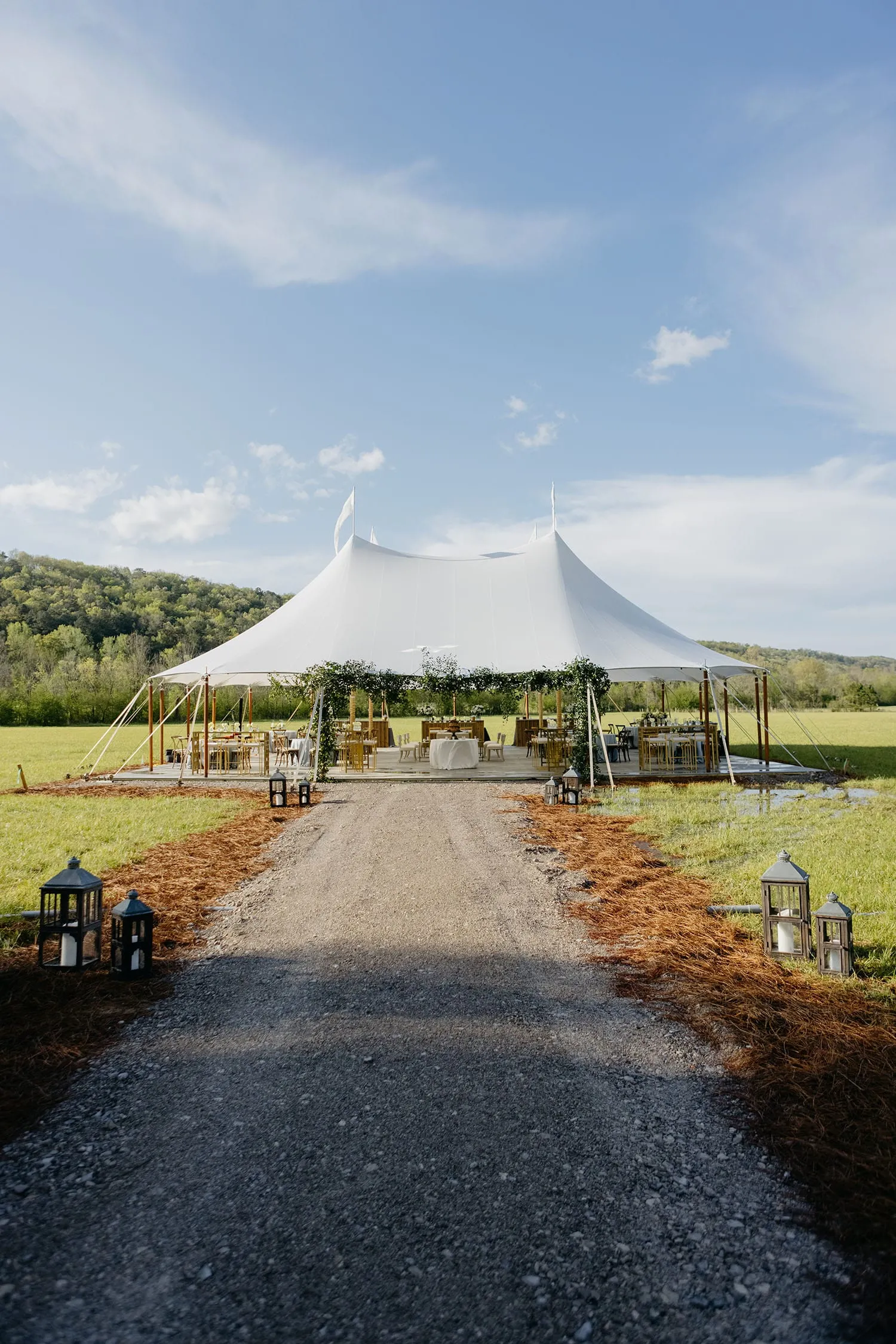
A large destination venue usually requires more than the main tent structure. Power, climate control, flooring, furnishings, professional installation, and event coordination can all be necessary to make a remote property function like a complete event environment.
Skyline Tent Company supports destination installations with infrastructure and planning services designed for complex event sites.
Coordinating Power, Climate Control, and Furnishings
Remote or unconventional properties may not have sufficient existing infrastructure for a large guest count or advanced event production. Temporary power systems can support lighting, catering, entertainment, AV equipment, and other event functions.
Climate control can also be incorporated when temperatures need to be managed inside the tent. Heating or cooling requirements should be planned according to tent size, enclosure, season, guest count, and event duration.
Skyline Tent Company also provides tables, chairs, and linens for destination events. Coordinating these elements with the structure can simplify vendor management and help planners organize a more unified event setup.
Planning Setup, Takedown, and Multi-Day Rentals
Destination events typically require more logistical planning than single-day local installations. Crews must coordinate equipment delivery, staging, installation access, terrain conditions, event schedules, and eventual teardown.
Skyline Tent Company’s crews handle setup and takedown for rentals across different locations. Project management and event consulting are also available for large-scale destination projects that require additional coordination.
Long-term and seasonal rental packages can support events or properties requiring temporary structures for extended periods. Skyline Tent Company serves clients nationwide and also provides international consulting for destination projects.
Frequently Asked Questions
What is the main advantage of a clearspan tent?
Clearspan tents have an open interior without center poles, giving planners greater flexibility for seating, stages, dance floors, lounges, AV systems, and other event components.
Can clearspan tents be installed on uneven ground?
Clearspan structures may be combined with engineered flooring or elevated platform systems for sloped or uneven terrain. The appropriate approach depends on the site conditions and structural requirements.
Are clearspan tents suitable for multi-day events?
Yes. Clearspan tents can be planned for extended installations with flooring, climate control, staging, lighting, and other infrastructure needed for multi-day destination events.
Does Skyline Tent Company provide tents outside Virginia?
Yes. Skyline Tent Company serves clients nationwide and provides international consulting for destination event projects.
What should planners confirm before booking a clearspan tent?
Planners should review site dimensions, ground conditions, guest count, event layout, rental duration, access routes, climate control, power, flooring needs, and structural requirements before confirming a clearspan rental.
Plan Your Destination Event with Skyline Tent Company
Large destination events need temporary structures that can respond to challenging terrain, demanding production schedules, high guest counts, and extended installations. Clearspan tents provide an open and adaptable environment for dining, staging, entertainment, AV production, climate control, flooring, and other event infrastructure.
The planning process should begin with the destination property itself. Ground conditions, slope, access, weather exposure, guest capacity, event duration, and production requirements all influence the structure and supporting systems needed for the event.
Skyline Tent Company provides clearspan structures, engineered flooring, climate-control options, power infrastructure, furnishings, project management, setup, and takedown for destination events nationwide. With tent options including Navitrac, Frame, Century Pole, Losberger Structure, and Sailcloth systems, planners can select an installation that responds to the property and the event rather than relying on a one-size-fits-all approach.
Contact Skyline Tent Company to discuss your destination venue, guest count, terrain, event schedule, production requirements, and clearspan tent rental needs. Their team can help develop a site-specific temporary venue plan designed around the scale, location, and experience of your event.