
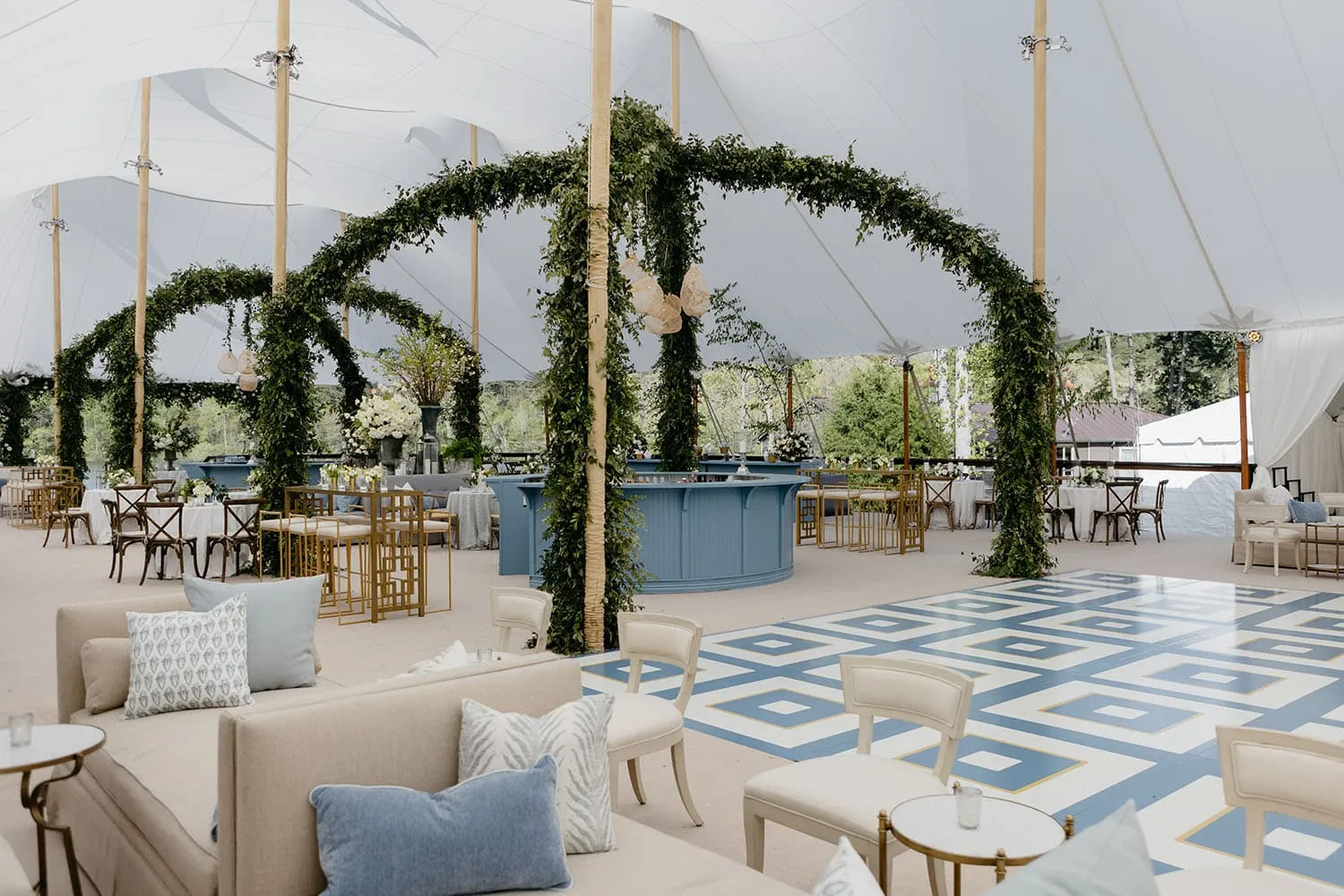
Designing the layout of a wedding reception tent involves organizing seating, dining, dancing, and service areas so guests can move comfortably while enjoying the celebration inside a well-planned summer wedding tent. A successful layout balances guest count, table placement, dance floor location, and clear walkways to maintain smooth event flow. Careful planning ensures the tent feels spacious, functional, and visually elegant throughout the reception.
Reception tents serve as temporary venues, which means every detail, from seating placement to lighting, must be intentionally planned. The goal is to create a space that feels natural and elegant while supporting the practical needs of service teams and entertainers. When each element is positioned strategically, guests can move comfortably through the celebration while enjoying the atmosphere created by the design.
Best Practices for Designing a Wedding Reception Tent Layout
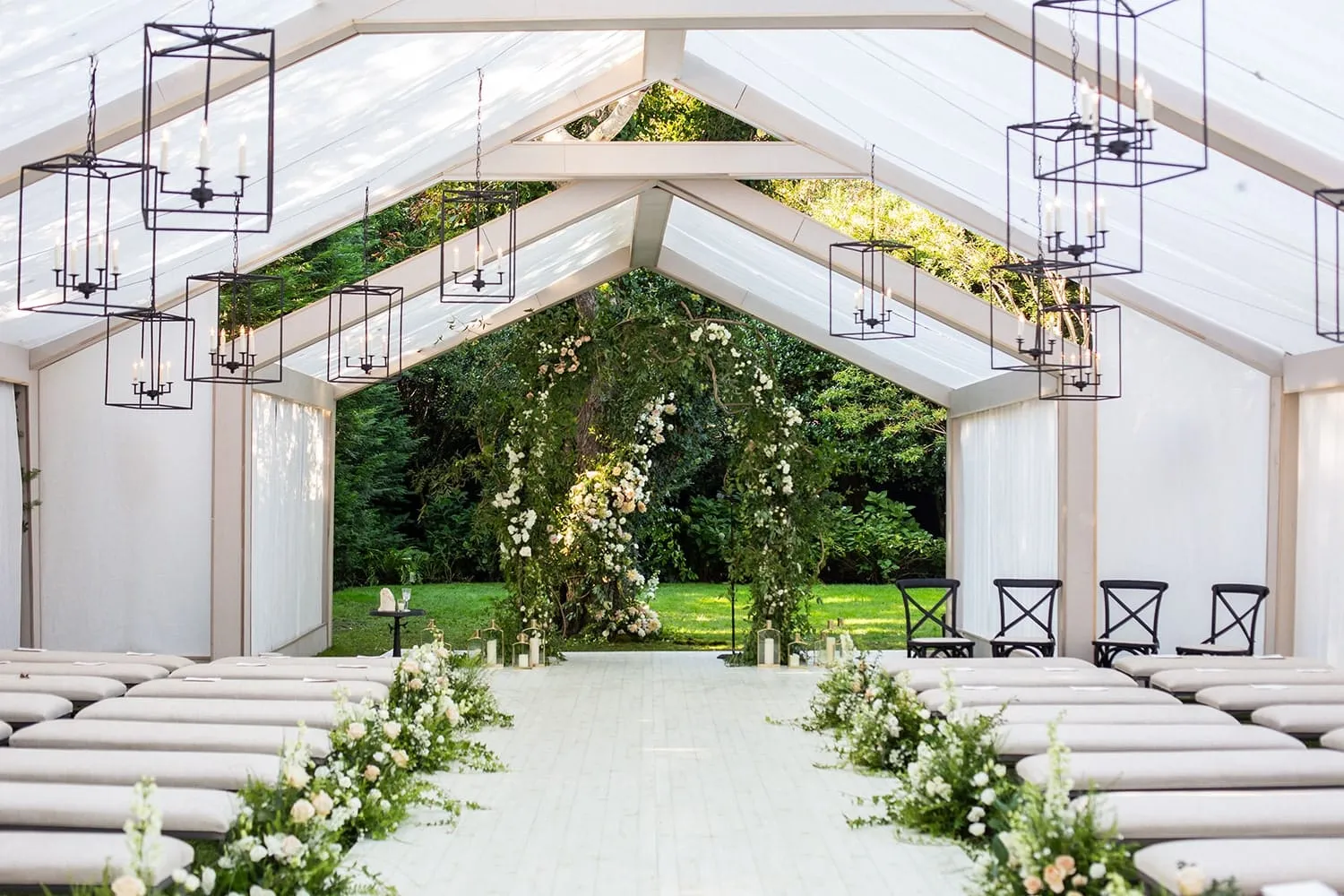
A successful wedding tent layout begins with understanding how guests will interact with the space. Every section within the tent should support a specific activity while remaining visually cohesive with the overall event design. Event planners often begin by identifying key focal areas such as the head table, dance floor, and dining zones before organizing surrounding elements.
Careful planning helps prevent common layout issues such as overcrowded dining areas or bottlenecks near bars and buffet stations. The layout should also support the natural progression of the reception, guiding guests smoothly from cocktail hour to dinner service and then to dancing or entertainment.
Start With Guest Count and Event Requirements
Guest count determines nearly every layout decision, including tent size, seating configuration, and table spacing through accurate wedding tent sizing. Establishing this number early allows planners to determine how much floor space will be required for dining tables, service stations, and open areas.
Understanding the structure of the event also influences layout planning. Weddings that include formal dinner service, speeches, and live entertainment often require a central focal point for guests to gather around. Events that emphasize mingling or cocktail service may benefit from lounge seating areas and open social spaces.
Plan Clear Movement Paths Throughout the Tent
Circulation pathways allow guests to move comfortably throughout the tent. Wide aisles between tables create natural routes that guide guests toward important areas such as bars, dance floors, or restrooms.
Effective pathways also help vendors perform their duties without interrupting the guest experience. Catering staff, photographers, and event coordinators need unobstructed access to different sections of the tent. When pathways are thoughtfully designed, service teams can operate efficiently while maintaining the elegant atmosphere of the celebration.
How to Choose the Right Wedding Tent Size and Shape
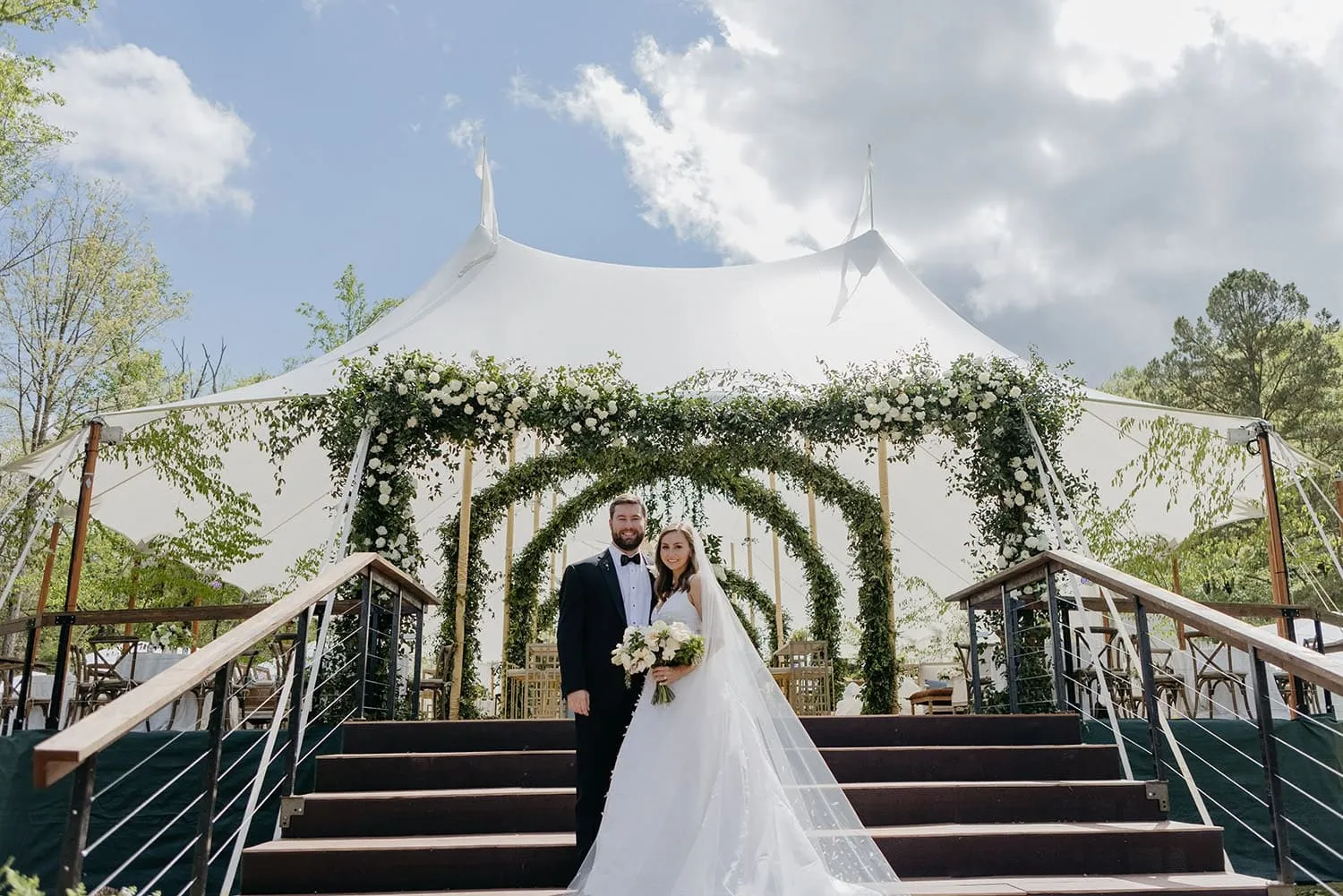
Selecting the correct tent size and structure plays a critical role in the success of the reception layout. The tent must provide enough room for seating, activity areas, and guest circulation while complementing the venue’s natural surroundings. A tent that is too small can feel crowded, while an oversized tent may make the event feel less intimate.
The structure of the tent also affects how the interior space can be arranged. Different tent styles create different spatial possibilities, influencing where tables, stages, and lighting installations can be placed.
Determine Tent Size Based on Guest Count
Wedding planners commonly estimate around 10–12 square feet per guest for seated receptions, though this figure may increase depending on the event design. Couples planning large dance floors, elaborate décor installations, or lounge seating should allocate extra space to maintain comfort.
This calculation provides a baseline for determining the total footprint required for the event. When planners account for all elements early in the design process, they can avoid last-minute layout adjustments that disrupt the visual balance of the tent.
Consider Weather and Site Conditions
Outdoor wedding venues introduce environmental factors that influence tent selection. Wind exposure, terrain, and surrounding structures can all affect which tent style is most suitable for the event.
Frame tents offer flexibility for installation on various surfaces, including patios or uneven ground. Pole tents create a dramatic visual profile with high peaks that enhance the atmosphere of outdoor celebrations. Clear span structures provide unobstructed interiors, making them a popular choice for large receptions where expansive layouts are required.
How to Calculate Wedding Tent Layout Space for Seating and Activities
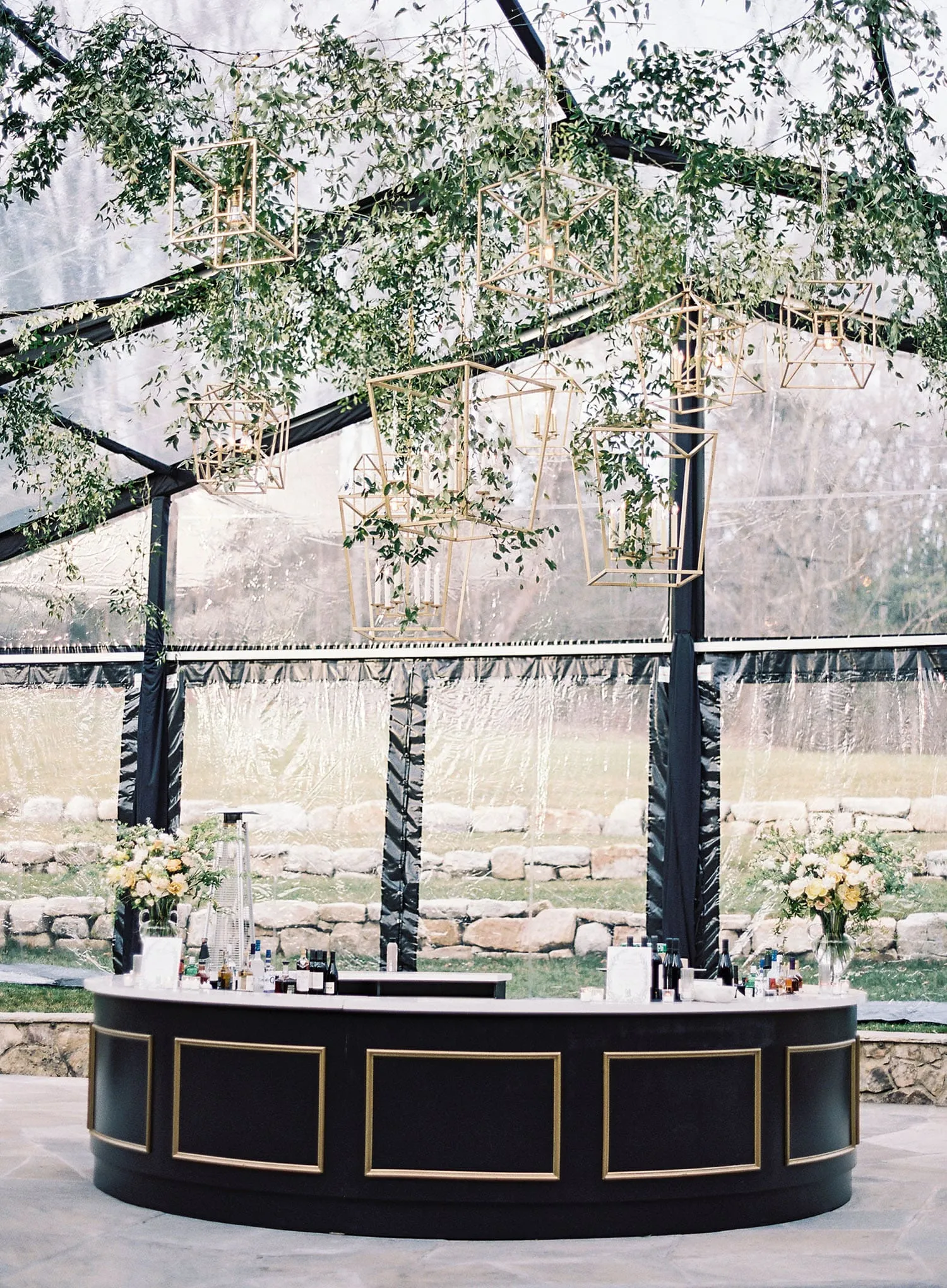
Accurate calculations ensure the tent can comfortably accommodate guests and all planned activities. Event planners typically divide the tent into functional zones, each serving a specific purpose within the reception. Dining areas, entertainment spaces, and service stations should all be considered when determining the overall layout.
Careful measurement helps maintain a comfortable balance between open areas and seating capacity. The layout should never feel overcrowded, even during peak moments such as dinner service or dancing.
Calculate Space for Dining Areas
Dining space usually occupies the largest portion of the reception tent. Tables must be spaced far enough apart to allow guests to sit comfortably and servers to move between them.
Round tables often create a classic reception look and encourage conversation among guests. Banquet tables provide a more efficient use of space and may allow planners to seat more guests within a smaller area. The choice of table style influences both the visual aesthetic and the practical functionality of the layout.
Allocate Space for Dance Floors and Service Areas
Reception tents commonly include dedicated areas for dancing, entertainment, and catering services. Dance floors often serve as the focal point of the celebration and are typically positioned near the center of the tent.
Service areas such as buffets and bars should be placed where guests can access them easily without interfering with dining tables or walkways. Proper spacing ensures that guests can gather, socialize, and enjoy the entertainment without feeling restricted by the layout.
Wedding Tent Seating Layout Ideas for Guest Comfort and Flow
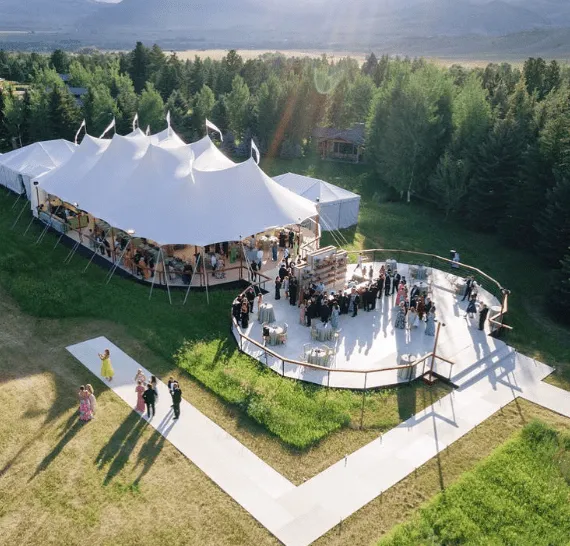
Seating arrangements influence both the visual design and the functionality of the reception space. The goal is to create an environment that encourages conversation while maintaining clear movement paths between tables and activity areas.
Well-planned seating layouts also contribute to the overall aesthetic of the event. When tables are arranged thoughtfully, the tent interior appears balanced and inviting while still allowing room for entertainment features and décor.
Best Seating Styles for Wedding Tent Receptions
Different seating styles can be used to shape the atmosphere of the reception:
- Banquet tables encourage long conversations and maximize seating capacity
- Round tables create a balanced and traditional reception layout
- Mixed seating arrangements combine formal dining with lounge areas for relaxed socializing
Selecting the right seating style helps establish the tone of the event while supporting guest comfort.
Optimize Table Placement Around the Dance Floor
The dance floor typically becomes the center of activity once the reception transitions into the evening celebration. Placing tables around this area allows guests to remain connected to the entertainment while still enjoying their seats.
Tables positioned near the dance floor often create an energetic atmosphere, while those placed further away offer quieter areas for conversation. Balancing these zones ensures that all guests can enjoy the celebration in a way that suits their preferences.
Wedding Tent Layout Tips for Smooth Event Flow
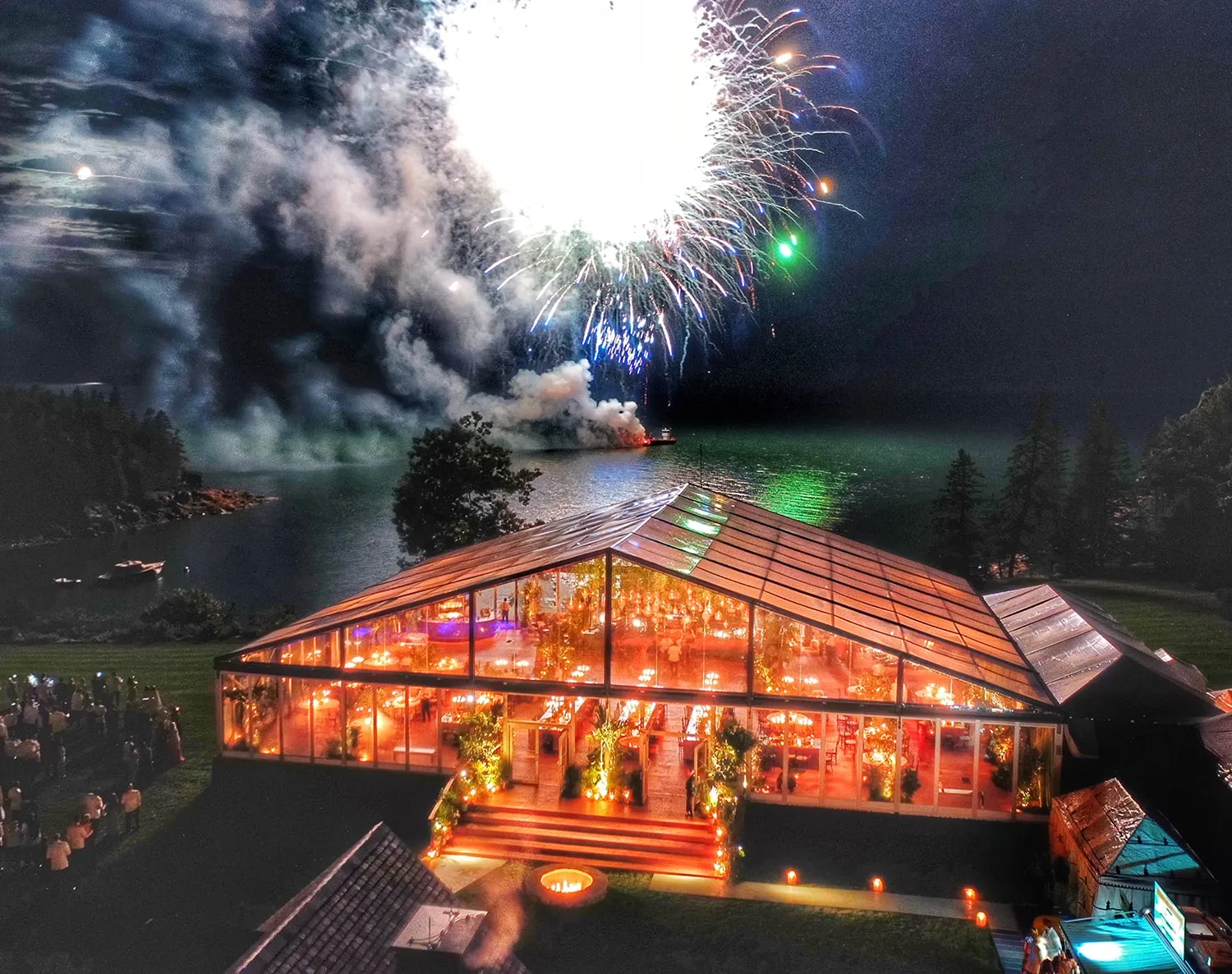
Event flow determines how comfortable and enjoyable the reception feels for guests. A well-organized layout allows the celebration to transition naturally from one activity to the next without confusion or congestion.
The arrangement of major elements such as bars, dance floors, and buffet stations plays a significant role in maintaining smooth movement throughout the tent.
Create Clear Circulation Zones
Circulation zones guide guests through the tent without disrupting seated areas. Planners often design wide pathways that connect the entrance with key areas of the reception.
These routes allow guests to move comfortably between tables and activity areas while keeping the layout organized and visually appealing.
Integrate Buffet Stations and Activity Areas
Buffet stations should be positioned where guests can access them easily without creating congestion near dining tables. Spacing food stations strategically across the tent helps distribute guest movement and reduces long lines.
Entertainment areas such as dance floors, lounges, or photo booths can be integrated into the layout to encourage guests to explore different parts of the reception space.
Frequently Asked Questions
What are the key considerations for tent layout in different weather conditions?
Assess expected weather and select tent types and anchoring systems that provide stability and protection. Temporary sidewalls, climate control systems, and covered walkways may also improve comfort.
How can I make a wedding tent layout eco-friendly?
Using sustainable materials, energy-efficient lighting, reusable décor, and waste management stations helps reduce environmental impact during the event.
What are creative ways to personalize a wedding tent layout?
Personal touches such as themed décor, lounge areas, custom signage, and interactive stations help reflect the couple’s style while enhancing guest experience.
How can vendors be coordinated within a tent layout?
Providing vendors with layout diagrams and designated setup areas ensures that catering, entertainment, and service teams operate efficiently without blocking guest pathways.
Conclusion
A thoughtfully designed wedding reception tent layout ensures guests remain comfortable while every part of the celebration flows seamlessly. Strategic placement of seating, dance floors, service stations, and walkways helps create a beautiful and functional event environment that supports both the logistics and atmosphere of the wedding. Skyline Tent Company specializes in creating luxury tented environments for unforgettable weddings and large-scale events. Schedule your private consultation to design a custom tent layout that perfectly matches your vision.