
Planning a large tented event involves more than selecting the right structure, flooring, and layout. Municipal permits, flame-resistance documentation, structural engineering, egress planning, and fire marshal approvals can all become part of the installation process depending on the event location and local requirements. Tent rental permits and structural stamp requirements are determined by the authority having jurisdiction, commonly referred to as the AHJ, which means there is no single permitting threshold that applies everywhere. Some jurisdictions may base reviews on tent size, while others consider occupancy or additional site conditions. A licensed Professional Engineer may also need to review and stamp structural drawings or calculations when engineered documentation is required. Skyline Tent Company supports clients through project management, event consulting, professional installation, and coordination of the documentation needed for individual projects. Addressing these requirements early gives planners more time for municipal review, engineering, inspections, and corrections before installation begins, helping keep the event timeline aligned with local requirements.
Understand Why Tent Permits Matter Before Installation

Tent permits allow local authorities to review temporary structures for structural and fire-safety requirements before they are occupied. The requirements vary from one municipality to another, which makes early research particularly important for destination events and large installations.
Some AHJs may require documentation once a tent exceeds a particular size or occupancy threshold, while others may apply different criteria.
Know What Can Trigger Municipal Review
The size of the tent is only one potential trigger.
Occupancy, structure type, local building rules, site conditions, and the systems being installed around the tent may all influence the permitting process.
Because the AHJ sets the requirements, planners should avoid assuming that a permit process used for one venue will automatically apply to another property.
Start the Approval Process Early
Permit review timelines also vary by jurisdiction.
Some applications may move quickly, while others require additional time for structural review, fire marshal coordination, or engineering documentation. Waiting until shortly before installation can leave little room to address requested revisions.
Skyline Tent Company incorporates permitting considerations into the project timeline so structural and operational requirements can be discussed before equipment arrives.
A strong permitting plan begins with understanding the local authority and the specific structure being installed. The engineering, site layout, and event capacity should be reviewed together. Supporting documentation can then be prepared around the jurisdiction’s requirements.
- Confirm whether the local AHJ requires a tent permit
- Determine whether size or occupancy thresholds apply
- Identify whether engineered drawings or calculations are required
- Allow time for review before the scheduled installation
Prepare Flame Certificates and Fire-Safety Documentation

Tent fabric can require documentation showing that it meets the fire-resistance standards expected by local authorities.
A flame certificate generally identifies the material and demonstrates that it has been tested to an applicable standard. Fire marshals may review this documentation as part of the broader permit and inspection process.
Understand the Purpose of a Flame Certificate
The flame certificate relates specifically to the tent fabric.
Its purpose is to provide documentation that the material has been tested for resistance to ignition and flame spread.
This paperwork is separate from the structural engineering documentation that may be required for the frame, anchoring, wind loads, or other structural components.
Keep Fire-Safety Documents Ready for Inspection
Documentation should be organized before the inspection stage.
A missing certificate can delay approval or occupancy when the fire marshal requires proof of material compliance.
Skyline Tent Company’s inventory includes Navitrac, Frame, Century Pole, Losberger Structure, and Sailcloth tents, and the company coordinates professional setup and supporting documentation as part of its planning process.The permit package should be treated as a coordinated set of documents rather than a collection assembled at the last minute. Structural and fire-safety information may be reviewed by different officials. Keeping those materials aligned with the final tent configuration can make the inspection process more straightforward.
Understand When a Structural PE Stamp May Be Required

A structural PE stamp is the signed and sealed certification of a licensed Professional Engineer who has reviewed the applicable engineering design or calculations.
For temporary tent installations, that review can involve structural components such as wind loads, anchoring methods, frame connections, and other conditions required by the applicable building rules.
What Can Trigger a Structural Stamp Requirement?
Structural stamp requirements depend heavily on local jurisdiction.
Some AHJs may require engineering documentation above specific square-footage or occupancy thresholds. Others may apply more stringent requirements in areas exposed to stronger environmental loads.
The source material specifically notes that coastal and high-wind regions can involve more extensive engineering review because local codes may require site-specific wind calculations. Read more in How to Optimize Tent Site Survey Engineering for Luxurious Events.
What Does the Engineer Review?
The engineer evaluates the design elements within the required scope of review.
That can include frame configuration, anchoring, wind resistance, snow loading where applicable, and the way loads move through the temporary structure.
The PE stamp communicates to reviewing officials that the relevant calculations or drawings have been reviewed by a licensed professional.
Why Should Engineering Be Addressed Early?
Engineering review can add time to the permitting process.
If the local authority requests additional calculations after an application has already been submitted, the schedule may need to accommodate revisions before approval can move forward.
Reviewing the tent type, site conditions, and engineering needs during the planning phase gives the project team more opportunity to prepare the required documents. You may also find Comprehensive Guide to Event Tent Rental Insurance helpful.
Before drawings are submitted, the tent configuration should match the intended installation. Anchoring, layout, and environmental conditions should also be documented accurately. The final engineering package should correspond with the structure that will actually be installed. We cover this further in 3D CAD Event Tent Layouts for Complex Sites.
- Tent dimensions and structural configuration
- Anchoring method and site conditions
- Required wind or environmental load calculations
- PE-stamped drawings or calculations when required
Plan Egress and Fire Marshal Requirements with the Layout

Permit approval is not limited to the structure itself. Fire marshals may also review how occupants move through and exit the temporary venue. We cover this further in How to Connect Multiple Event Tents for One Seamless Event.
Exit locations, clear pathways, occupant capacity, emergency signage, and surrounding equipment can all influence the final approval process.
Keep Exit Routes Clear and Consistent with the Plan
Egress should be considered during floor-plan development rather than after furniture arrives.
Doors, aisles, tables, flooring transitions, and other event elements should not interfere with approved exit paths.
The fire marshal may compare the actual installed layout with the submitted plan, particularly where occupant capacity and exit access are part of the review.
Include Generators, Heaters, and Temporary Electrical Systems
Additional event infrastructure can introduce separate compliance considerations.
Generators, climate-control equipment, heaters, and temporary electrical systems may need to be positioned with appropriate separation from guest areas, fuel storage, ventilation, and emergency routes.
Power requirements should be assessed as part of the overall event plan, since generators, heaters, and temporary electrical systems all factor into site layout and permitting. Skyline provides climate-control services that can be incorporated into the overall site and permit plan rather than treated as unrelated equipment.The final inspection should reflect the complete event environment, not just an empty tent. Electrical equipment, climate systems, flooring, furnishings, and exits all share the same temporary space. Coordinating them before inspection can reduce conflicts between the approved drawings and the finished installation.
- Keep required exits and aisles unobstructed
- Confirm the installed occupant layout matches approved plans
- Position generators and climate equipment with compliance in mind
- Include temporary electrical systems in the site planning process
Build a Complete Permit Package and Compliance Timeline
Successful permitting depends on preparing the correct documentation and submitting it early enough for review.
The core permit package may include site plans, structural calculations or drawings, flame certificates, and other information required by the individual AHJ.
Prepare Site Plans and Engineering Documents
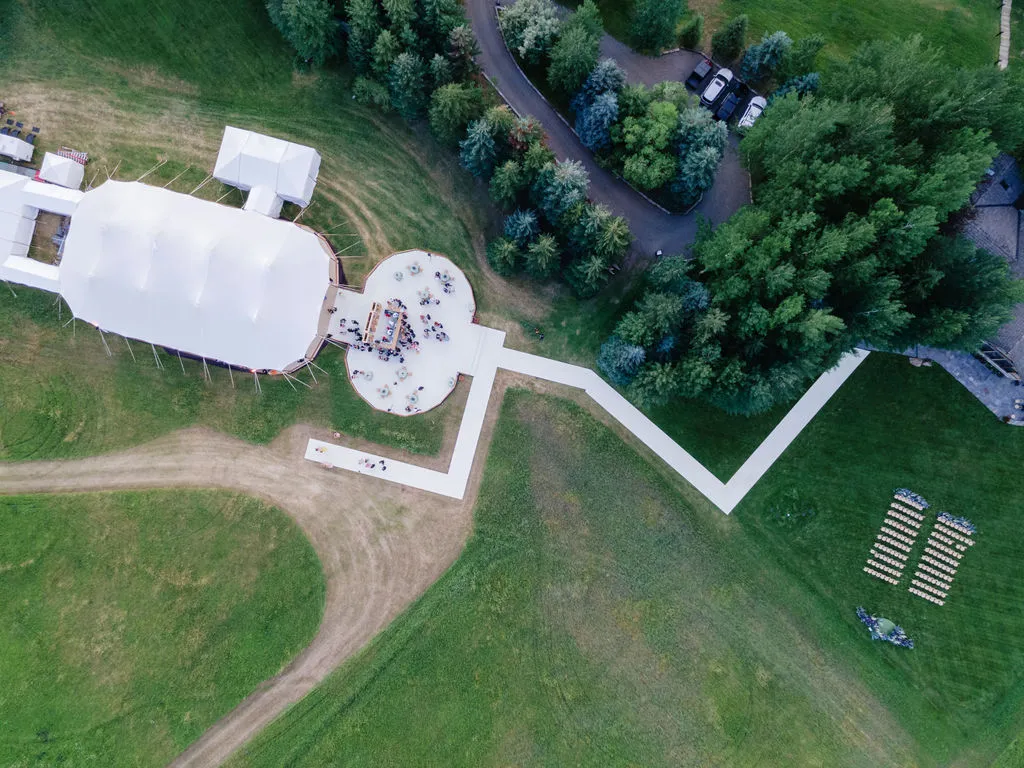
Site plans show how the tent fits within the property and how it relates to surrounding structures and site features.
Engineering documents address the structural requirements within the required scope, while flame certificates provide documentation for tent fabric.
These elements should describe the same final installation rather than conflicting versions of the project.
Coordinate with Local Authorities Early
Early contact with building departments and fire marshals can identify jurisdiction-specific requirements before they become schedule problems.
Skyline Tent Company’s project management and event consulting services support this coordination, including permit documentation and communication with local authorities where applicable.
This becomes especially important because PE stamp and permit requirements differ significantly across state and local jurisdictions.
Make Sure Installation Matches the Approved Plan
Approval is only part of the process.
The structure installed on site should remain consistent with the documentation reviewed by the relevant authorities. Significant changes to tent placement, anchoring, exits, or supporting systems can create discrepancies during inspection.
Professional setup can help maintain alignment between engineering plans and the physical installation.
Before installation begins, planners should confirm that all major compliance elements have been addressed. The documentation should correspond with the final structure and layout. Inspection timing should also be incorporated into the event schedule rather than treated as a last-minute task.
- Final site plan and tent placement
- Required PE-stamped engineering documents
- Flame-resistance documentation
- Egress and occupancy layout
- Scheduled municipal or fire marshal inspections
Frequently Asked Questions
Does every event tent require a municipal permit?
Not necessarily. Requirements vary by the authority having jurisdiction. Some municipalities use tent size or occupancy thresholds, while others may apply different criteria.
What is a structural PE stamp for a tent?
A structural PE stamp is a licensed engineer’s signed and sealed certification of the drawings or calculations within the required scope. It may address items such as wind loads, anchoring, frame design, and other applicable structural requirements.
Why is a flame certificate important?
A flame certificate documents that tent fabric has been tested for fire-resistance characteristics required by the reviewing authority. Fire marshals may request this documentation before granting approval or occupancy. When you are ready to plan your tent, request a quote from the Skyline team.
Do fire marshals review the interior tent layout?
They may review egress, exit locations, occupant capacity, emergency signage, and related safety conditions depending on the jurisdiction and event.
Can permitting requirements change from one event location to another?
Yes. Permit thresholds, engineering requirements, inspections, and PE stamp rules can differ significantly by state and local jurisdiction, which is why each project should be reviewed against the requirements of its specific AHJ.
Plan a Compliant Tent Installation with Skyline Tent Company
Permitting, structural engineering, fire-safety documentation, egress planning, and inspections are essential parts of many large tent installations. Addressing them early helps prevent the compliance process from becoming a last-minute obstacle to the event schedule. We cover this further in Event Tent Rental Regulations: Permits, Safety & Compliance.
Skyline Tent Company combines tent structures with professional installation, project management, event consulting, engineered flooring, elevated platforms, climate control, and supporting event infrastructure. This coordinated approach allows permitting considerations to be addressed alongside the physical design of the temporary venue.
Because municipal requirements vary, every project should begin with the rules established by the local authority having jurisdiction and the specific conditions of the event site.
Contact Skyline Tent Company to discuss your tent structure, site plan, engineering needs, local permitting requirements, flame documentation, egress layout, and installation schedule. Their team can help coordinate the planning and documentation needed for a properly organized tented event. Answers to common rental questions are in our tent rental FAQs.