
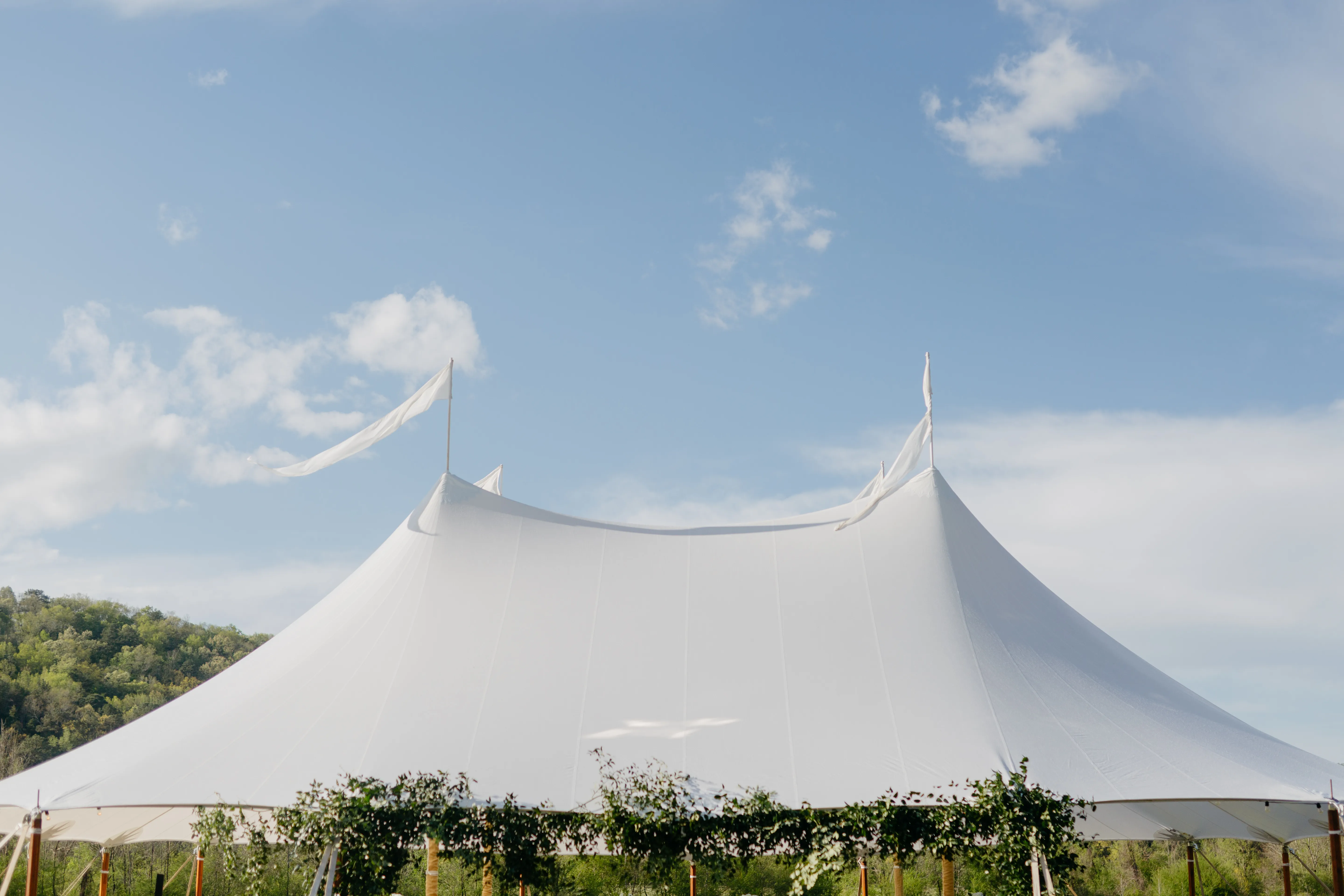
Designing a temporary outdoor venue requires more than creating shelter from changing weather. The most successful tented spaces preserve the atmosphere, views, natural light, and landscape that made the outdoor setting attractive in the first place. Clearspan tents, frame tents, sailcloth tents, and clear-top structures can provide the comfort and infrastructure of an indoor venue while maintaining a strong connection to the surrounding environment. Clearspan structures offer large, unobstructed interiors that can support flexible layouts, lighting, flooring, and climate-control systems. Sailcloth tents use translucent fabric and graceful architectural lines to complement natural landscapes, while clear-top installations allow guests to enjoy views of trees, skies, and surrounding scenery. Flooring, lighting, heating, cooling, ventilation, landscaping, and site planning also influence whether a temporary structure feels integrated with its setting or separated from it. By coordinating these elements from the beginning, planners can create a refined temporary venue that provides protection and comfort without losing the outdoor character of the event location. We cover this further in Venue + Tent Pairing: The Complete Guide to Matching Tents with Any Event Location.
Choosing Tent Structures That Preserve the Outdoor Experience
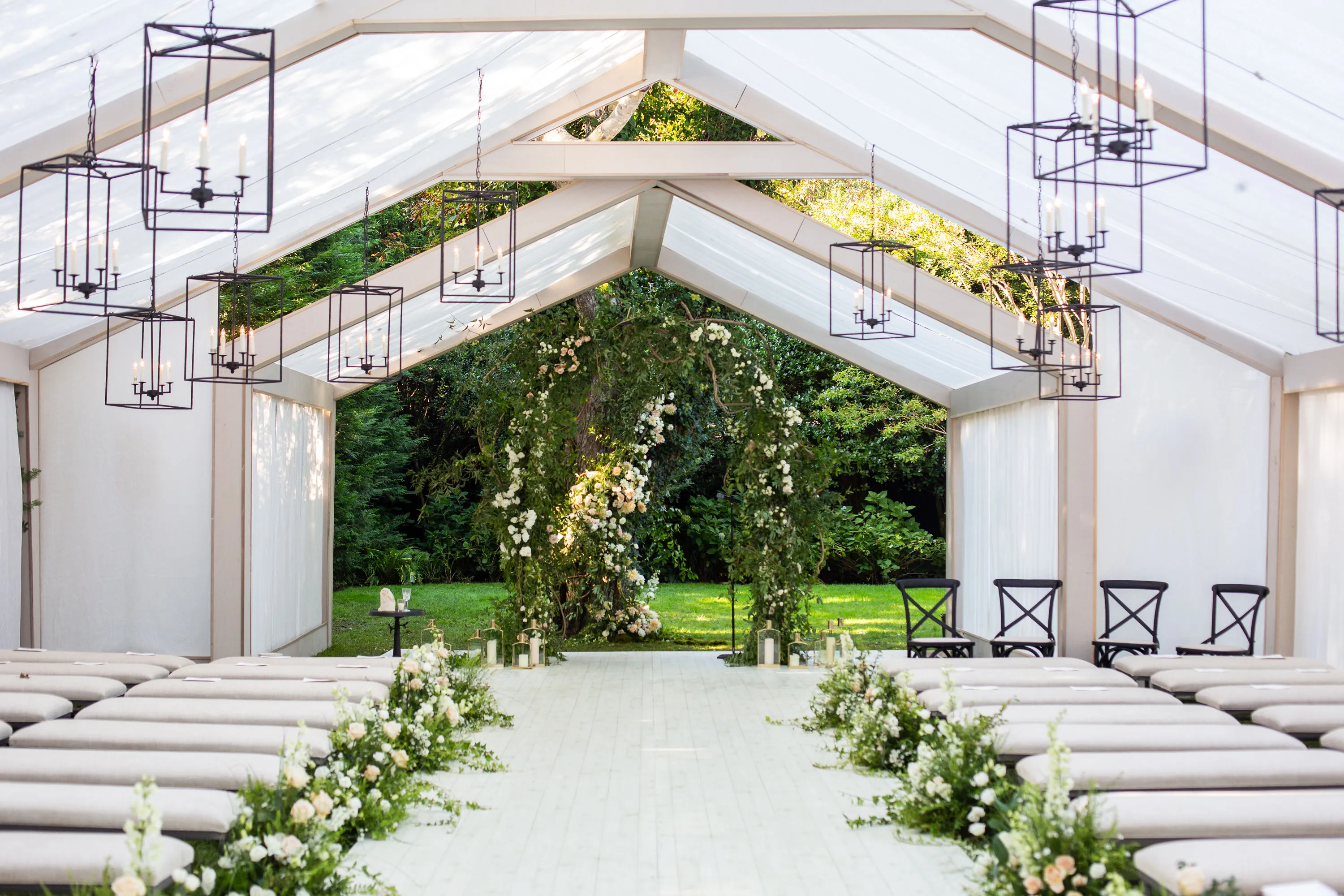
The tent itself determines how strongly guests remain connected to the setting. A structure that blocks surrounding views or introduces an overly enclosed atmosphere can make an outdoor event feel disconnected from the property.
Clearspan, clear-top, frame, and sailcloth tents provide different ways to balance protection with natural surroundings. The appropriate structure depends on guest capacity, site conditions, desired atmosphere, and the amount of environmental visibility planners want to maintain.
Clearspan Tents for Open and Flexible Event Spaces
Clearspan tents provide large interiors without center support poles. This maximizes usable space while allowing planners to arrange dining, lounge areas, stages, entertainment, bars, and other event elements without structural obstacles.
Their engineered construction also allows them to support event infrastructure such as lighting and climate-control equipment. This combination can create a comfortable temporary environment while maintaining flexible layouts that direct attention toward surrounding outdoor features.
The modular nature of clearspan tents can also support different event sizes, from more intimate gatherings to larger celebrations and festivals.
Sailcloth and Clear-Top Tents for Natural Views
Sailcloth tents use translucent fabric that allows natural light to filter into the event space. Their flowing lines and elegant peaks can complement landscaped settings rather than visually competing with them.
Clear-top installations create an even stronger visual relationship with the outdoors by allowing guests to see the sky and surrounding scenery through transparent tent sections. During daytime events, natural light can become an important part of the interior atmosphere, while evening events can maintain views above the temporary structure.
Several tent characteristics can help strengthen the connection between the temporary venue and its setting. These features should be considered alongside practical requirements such as capacity and weather protection. Choosing them intentionally helps the structure feel like part of the property.
Unobstructed interiors: Keep sightlines open and provide greater layout flexibility.
Transparent or translucent materials: Allow natural light and outdoor views into the venue.
Architectural lines: Select structures that complement the surrounding landscape.
Flexible openings: Maintain visual connections between interior and exterior areas where appropriate.
Weather protection: Provide shelter without unnecessarily enclosing the entire event experience.
Infrastructure support: Integrate lighting and climate control without overwhelming the natural design.
The strongest design usually balances outdoor visibility with enough protection and infrastructure to keep guests comfortable throughout the event.
Using Flooring and Lighting Without Losing the Natural Setting
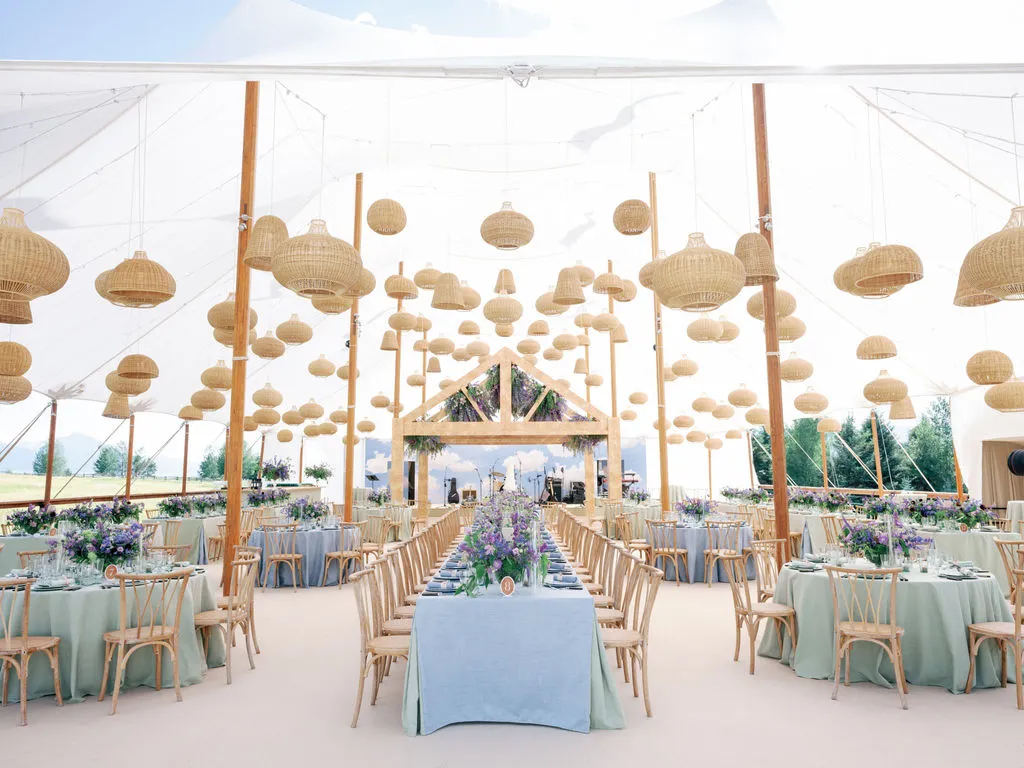
Flooring and lighting can dramatically change how a temporary venue feels. When chosen thoughtfully, they provide comfort and functionality while reinforcing the outdoor character of the event.
When they are poorly coordinated, however, they can make the tent feel like an unrelated indoor ballroom placed in the middle of a natural setting. The goal should be to support the landscape rather than visually replace it.
Choosing Flooring That Complements Outdoor Venues
Temporary flooring provides stability, improves guest movement, and creates a dependable base for furniture and event infrastructure. The source identifies durable hardwood panels and raised subflooring as options that can support different practical and aesthetic needs.
Hardwood-style flooring can work particularly well in natural environments because its appearance complements outdoor surroundings while still creating a polished event surface. Raised flooring can also help when the property contains uneven terrain.
Flooring affects more than appearance. Insulated surfaces may help reduce heat loss during cooler events, while certain finishes can interact with lighting to make the interior feel brighter and more inviting.
Using Lighting to Enhance Nature Rather Than Hide It
Lighting should help guests experience both the tent and its surroundings. Chandeliers and pendant fixtures can provide elegant focal points, while softer ambient lighting can maintain visibility without overpowering exterior scenery.
Lighting can also be used outside the structure to highlight trees, landscaping, pathways, or nearby architectural features. This helps visually connect the interior event space with the property after sunset.
Rather than treating the tent as the only illuminated area, planners can create layers of light that extend naturally into the landscape. The result can make the event footprint feel larger and more cohesive.
Integrating Climate Control While Maintaining an Outdoor Feel
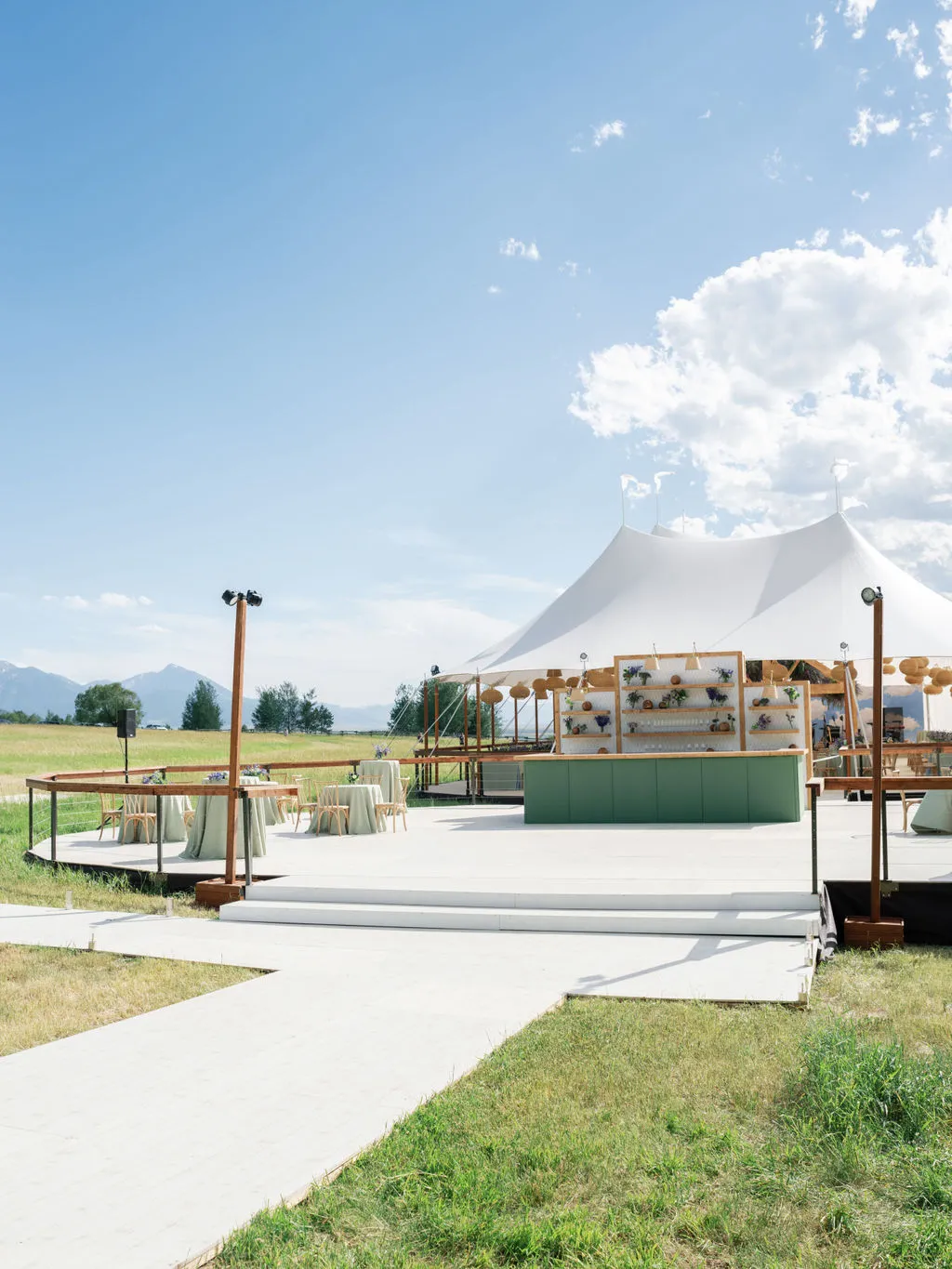
A connection to nature should not require guests to tolerate uncomfortable temperatures. Climate control makes it possible to enjoy outdoor surroundings while maintaining a more consistent interior environment.
Clearspan tents can support heating, air conditioning, ventilation, and other infrastructure designed to respond to changing conditions. Careful integration allows these systems to perform effectively without dominating the visual design.
Heating and Cooling Clearspan Event Tents
The source notes that clearspan tents can be equipped with air-conditioning units, heating systems, and ventilation solutions. These systems help regulate interior conditions even when temperatures outside fluctuate.
Heating becomes particularly valuable during cooler evenings, while cooling can support daytime events in warmer conditions. Climate control may also help protect sensitive equipment, catering setups, and other infrastructure used during the event.
The system should be selected according to the tent configuration, expected attendance, weather, and duration of the event rather than using a standard approach for every installation.
Managing Airflow Without Over-Enclosing the Tent
Ventilation helps maintain fresh air and consistent temperatures inside a temporary structure. Event planners can also evaluate where openings, walls, or transparent sections may allow the space to remain visually connected to the exterior environment.
Zoned cooling, dehumidification, and proper circulation can help maintain comfort without requiring every area of the tent to be treated identically. This flexibility can be particularly useful for large structures containing several activity zones.
Climate planning should preserve comfort without making mechanical systems the dominant feature of the venue. Equipment placement, airflow, enclosure choices, and interior design should therefore be coordinated together. You may also find Top Outdoor Event Venue Considerations for Luxury Tents helpful.
Blending Tent Design with Landscaping and Natural Features
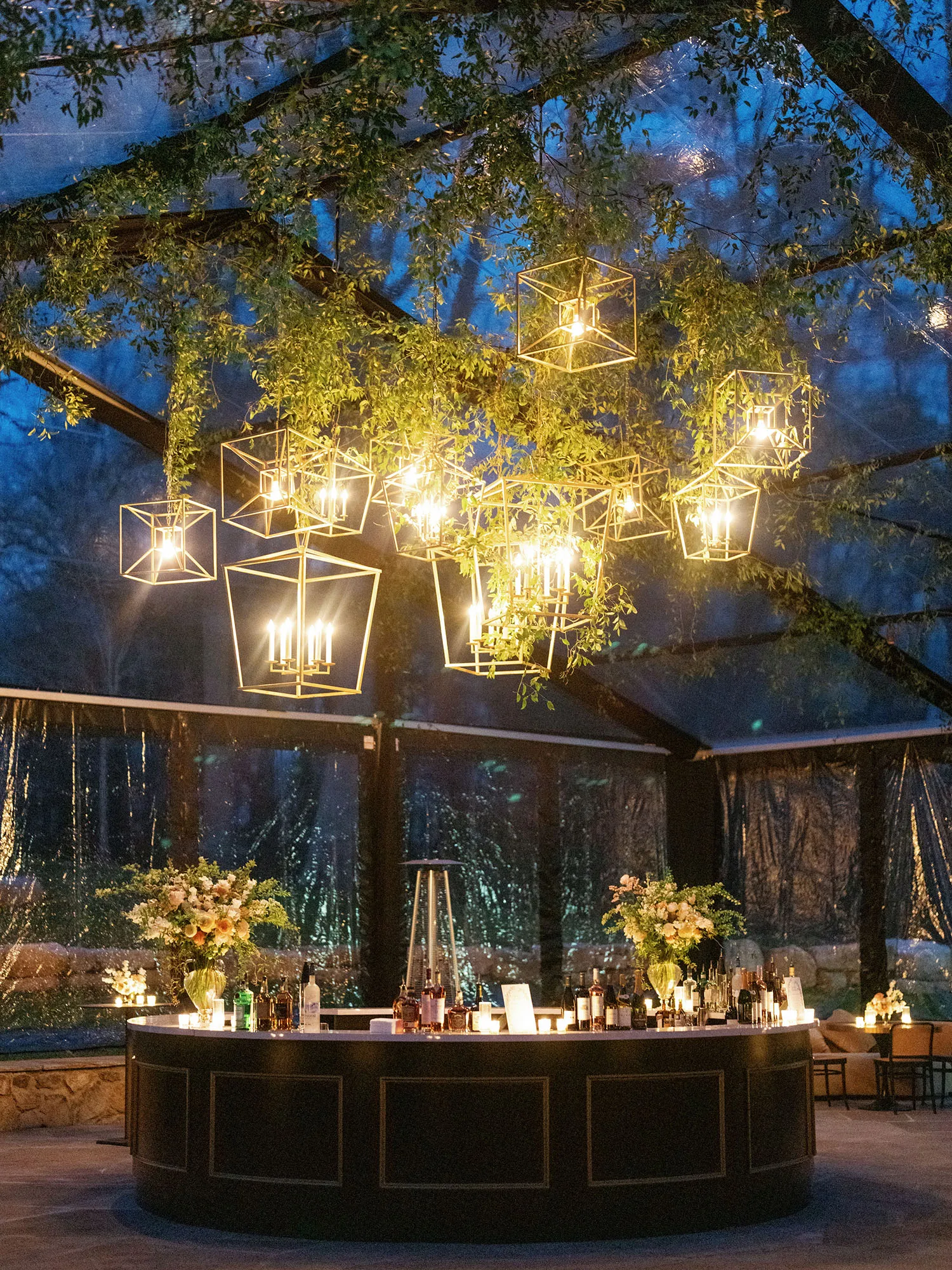
The landscape should influence the design of the temporary venue rather than simply surrounding it. Trees, gardens, water features, open fields, views, and other natural characteristics can become part of the guest experience. Read more in Key Event Venue Location Factors for Luxury Tents.
The source specifically recommends incorporating greenery, decorative features, and color palettes that reflect the natural environment to create a more cohesive temporary venue. We cover this further in Temporary Venue Expansion vs. Permanent Construction.
Using Natural Elements in the Event Design
Greenery and landscaping can visually soften transitions between the tent and surrounding property. Existing natural features may also be framed through tent openings or transparent sections rather than hidden behind décor.
Color palettes can draw from foliage, flowers, stone, wood, or other materials already present at the property. Decorative draping can then be used selectively to complement the environment rather than completely cover the tent architecture.
This approach allows the temporary space to feel specific to the location rather than like a standardized setup that could have been installed anywhere.
Aligning the Tent with the Broader Event Aesthetic
The tent, furniture, flooring, lighting, and surrounding landscape should support the same design direction. A sailcloth tent may complement a romantic garden event, while a clearspan structure with transparent sections could work well when long-distance views or surrounding scenery are important.
Planners should identify the strongest natural features before finalizing the event layout. The interior can then be organized to emphasize those elements through seating orientation, entrances, transparent walls, or open sightlines.
A few coordinated design choices can have a stronger effect than excessive decoration. The goal is to reinforce what is already distinctive about the setting.
Existing greenery: Incorporate nearby trees, gardens, and plantings into the visual plan.
Natural color palettes: Select tones that complement the property’s surroundings.
Clear sightlines: Position layouts to preserve attractive outdoor views.
Selective draping: Use fabric to enhance rather than completely conceal the structure.
Transparent sections: Maintain visual access to scenery where appropriate.
Landscape lighting: Extend evening illumination beyond the tent itself.
When the natural environment remains visible and intentionally incorporated, guests are more likely to experience the venue as part of the destination rather than as a temporary room placed on the property.
Planning Site Logistics Around the Outdoor Venue
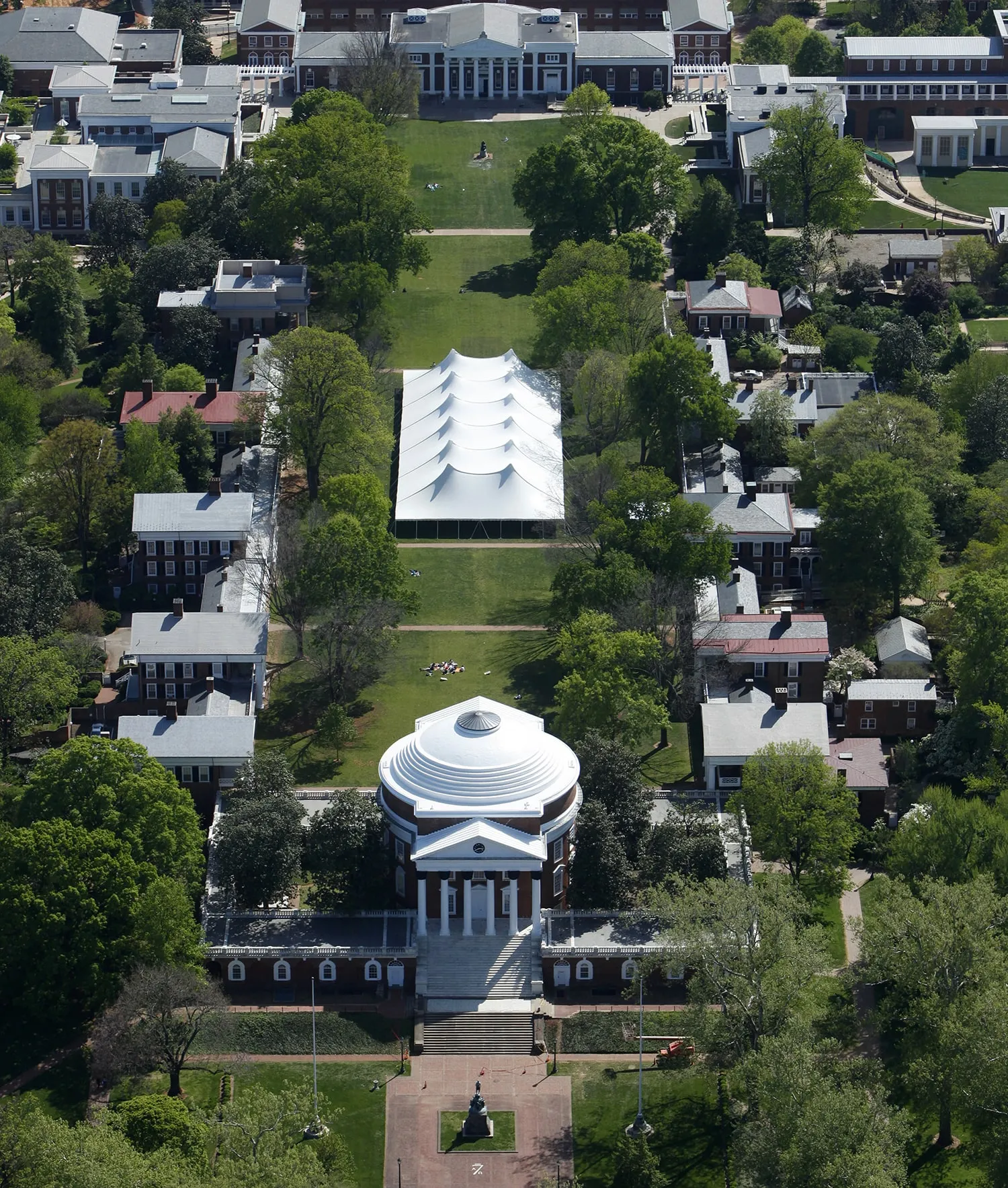
Beautiful design still depends on practical site planning. Guest capacity, tent dimensions, entrances, exits, installation access, terrain, anchoring, and infrastructure all affect how effectively a temporary structure can be integrated into the property.
Site logistics should be planned early so functional requirements do not force unnecessary changes to the design once installation begins.
Coordinating Guest Capacity and Event Flow
The expected guest count should guide tent dimensions and the amount of space required for dining, entertainment, lounges, and circulation. A layout that is too crowded can interrupt both comfort and sightlines to the surrounding environment.
Entrances and exits should also connect naturally with the property. Guests should be able to transition between outdoor areas and the tent without confusing routes or unnecessary congestion.
Accurate capacity planning allows organizers to preserve open areas within the tent instead of filling every available section with furniture.
Preparing the Site for Tent Installation
Different architectural structures have specific installation requirements. Sailcloth tents, for example, require appropriate anchor points and careful consideration of terrain and site conditions.
Installation schedules and site access should be coordinated with the rental company so equipment can reach the property and the structure can be installed correctly. Uneven terrain, natural features, and other site-specific conditions should be identified before installation begins.
Successful site planning requires planners to consider both operational needs and the natural character they want to preserve. Delivery routes, infrastructure, guest circulation, and installation areas should support the event without unnecessarily interfering with important landscape features.
A thoughtful site assessment also helps determine which tent style and flooring system can work most effectively on the property.
Guest capacity: Match tent dimensions to attendance and planned activities.
Entrance and exit locations: Create clear transitions between tented and outdoor spaces.
Terrain: Evaluate slopes, uneven areas, and installation conditions.
Anchor requirements: Consider the structural needs of the selected tent.
Vendor access: Establish routes for installation crews and event equipment.
Natural features: Protect and incorporate important landscaping wherever practical.
Coordinating these details allows the functional infrastructure to support the outdoor environment instead of competing with it.
Frequently Asked Questions
Which tent provides the strongest connection to outdoor scenery?
Clear-top tents provide direct views of the sky and surrounding landscape, while sailcloth tents use translucent material to maintain natural light. Clearspan tents can also support layouts and transparent sections that preserve exterior sightlines.
Are clearspan tents suitable for luxury outdoor events?
Yes. Their unobstructed interiors can accommodate sophisticated flooring, lighting, climate control, furniture, and customized layouts while maintaining substantial usable space.
How can flooring improve an outdoor temporary venue?
Temporary flooring provides stability and a more polished surface while helping planners manage uneven terrain. Flooring materials can also influence temperature regulation, lighting, and the overall visual character of the space.
Can a temporary tent be climate controlled without feeling enclosed?
Yes. Heating, cooling, ventilation, and zoned systems can be integrated with the structure while transparent surfaces, thoughtful openings, and exterior views help preserve the connection to the outdoor environment.
How can planners make a temporary venue blend with its surroundings?
Use tent styles, greenery, decorative elements, color palettes, lighting, and layouts that reference or highlight the natural setting. Preserving important sightlines also helps the event feel connected to the property.
Create a Temporary Venue That Belongs in the Landscape with Skyline Tent Company
A temporary event space does not need to feel disconnected from the property around it. With the right combination of clearspan or architectural tents, transparent or translucent materials, thoughtful flooring, integrated lighting, climate control, landscaping, and careful site planning, planners can provide indoor-level comfort while preserving the outdoor experience.
Clearspan tents provide flexible interiors that can accommodate complex layouts and event infrastructure, while sailcloth and clear-top structures help natural light and surrounding scenery remain part of the design. Flooring can provide stability without sacrificing visual cohesion, and lighting can extend the atmosphere beyond the tent into nearby landscapes. Climate-control systems can then help guests remain comfortable while still enjoying the character of the outdoor location.
The most successful temporary venue designs begin with the property itself. Existing views, terrain, landscaping, guest capacity, and access should guide decisions about the structure instead of being considered only after the tent has been selected.
Skyline Tent Company provides architectural tent and flooring solutions that can be tailored to different outdoor events and site conditions. The source highlights its clearspan structures, premium flooring options, and customized solutions as tools for balancing practical event requirements with sophisticated design.
Contact Skyline Tent Company to discuss your property, natural surroundings, guest count, event design, and temporary venue requirements. With a coordinated architectural tent, flooring, lighting, climate-control, and site plan, Skyline Tent Company can help you create a refined event space that keeps guests comfortable while preserving the connection to the outdoors. See how these ideas look on real sites in our tent gallery.